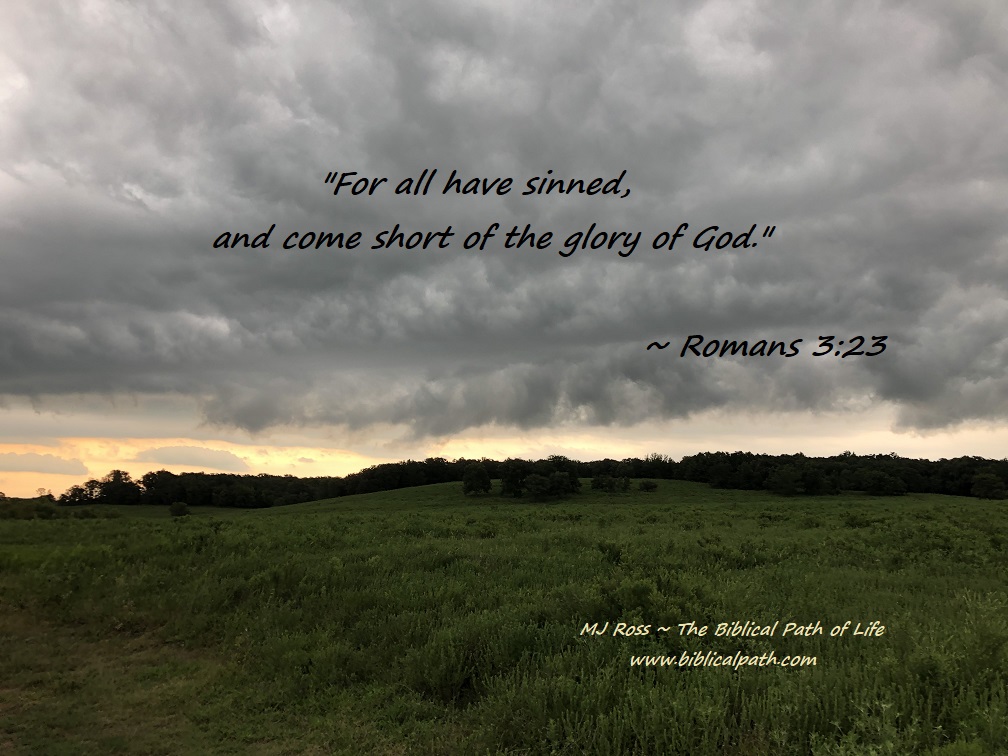
“For all have sinned, and come short of the glory of God.” Romans 3:23
‘Just as the Israelites were told of their sin and called
to repentance, the same call is extended to us today. “For all have sinned,
and come short of the glory of God” (Romans 3:23).
All are guilty of sin, and there is a penalty to pay. “For the wages of sin is
death; but the gift of God is eternal life through Jesus Christ our Lord”
(Romans 6:23). In addition, God
provided one who paid the penalty for us — if only we would receive. “But
God commendeth his love toward us, in that, while we were yet sinners, Christ
died for us” (Romans 5:8). Just as God extended a call to the Israelites,
warning them before judgment would fall, God warns us today. “And as it is
appointed unto men once to die, but after this the judgment” (Hebrews 9:27). What response does God require? “8.
But what saith it? The word is nigh thee, even in thy mouth, and in thy
heart: that is, the word of faith, which we preach; 9. That if thou shalt
confess with thy mouth the Lord Jesus, and shalt believe in thine heart that
God hath raised him from the dead, thou shalt be saved. 10. For with the heart
man believeth unto righteousness; and with the mouth confession is made unto
salvation” (Romans 10:8–10). What are we to do with that information? “Seek
ye the LORD while he may be found, call ye upon him while he is near”
(Isaiah 55:6).’
Have you called upon the Lord while he is near?
Excerpt from The Biblical Path of Life, Year Two Quarter One, Lesson 9; God’s Enduring Love. www.biblicalpath.com
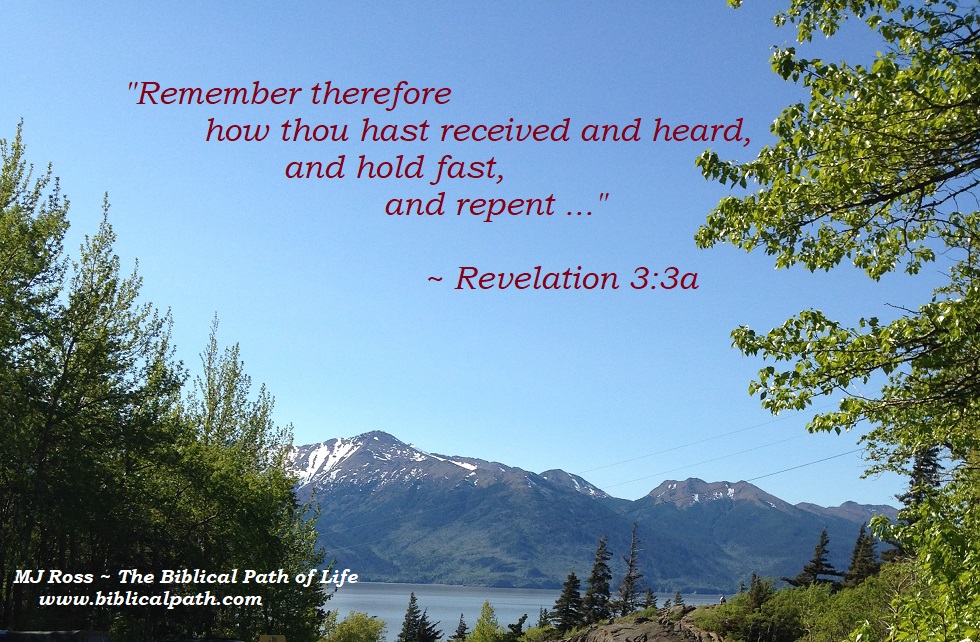
“Remember therefore how thou hast received and heard, and hold fast, and repent …” Revelation 3:3a
Do you remember anything you have learned from the Bible? It
is important to daily read God’s Word. If you do not read it, you will not
remember it. Remember is the key word. If we do not remember and hold fast to
what we learn from God’s Word, we will never grow in Christ. The more we learn
about God’s Word, the more we will want to be like Him. By learning the history
in the Bible, we will understand the significance of why things happened. God
had a plan, which is hard to understand unless you learn the Old Testament
history. While it was happening, men did not fully understand what that plan
was, but through faith, they believed. The more we learn, the more pieces of
the puzzle we can fit together. Each piece helps us become better students of
God’s Word, which helps us become better Christians.
For instance, remember the book of Judges. The dominant theme
within the book is this: “In those
days there was no king in Israel: every man did that which was right
in his own eyes” (Judges 21:25).
Notice that it doesn’t say they did wrong, men thought what they were doing was
right. But also notice this: “And
the children of Israel did evil in the sight of the LORD, and
forgat the LORD their God, and served Baalim and the groves” (Judges
3:7). Although it didn’t appear wrong to them, it was wrong in God’s eyes. They
did not obey the commands God had given them.
There was a vicious cycle that occurred in Judges:
The people forsook God.
God allowed the enemy to oppress
the people.
The people cried out to God.
God sent a deliverer (a judge) to
end the oppression.
In Judges, the people as a whole rejected God.
But then we remember the book of Ruth. It is a breath of
fresh air in a time of turmoil in the nation of Israel,
for it is a picture of redemption. Ruth was a Gentile (a Moabitess) who lived
in a pagan land. She did not know the true God. When an Israelite family moved
to Moab because
of a drought in Israel,
Ruth married into this family and heard of God. When her husband,
father-in-law, and brother-in-law died, she returned with her mother-in-law to
the land of Israel.
Because she had recognized a light in her dark world, she wanted to follow that
light. She had learned of God and did not want to lose that. Her view is
clearly stated: “16. And Ruth said, Intreat me not to leave thee, or
to return from following after thee: for whither thou goest, I will go; and
where thou lodgest, I will lodge: thy people shall be my people, and thy
God my God: 17. Where
thou diest, will I die, and there will I be buried: the LORD do so to me, and
more also, if ought but death part thee and me” (Ruth 1:16-17). It was there after being redeemed by
a kinsman, that she forever became a part of Jesus’ genealogy. She was the
great-grandmother of King David.
One important thing about studying the history in the Bible is to be aware of God’s plan for His people. As we consider what God’s Word says, we should understand how it fits together, much like pieces of a puzzle. As we try to keep in mind and hold fast to the things we learn from God’s Word, it will help us recognize God’s plan for our lives. We must remember what God’s Word says.
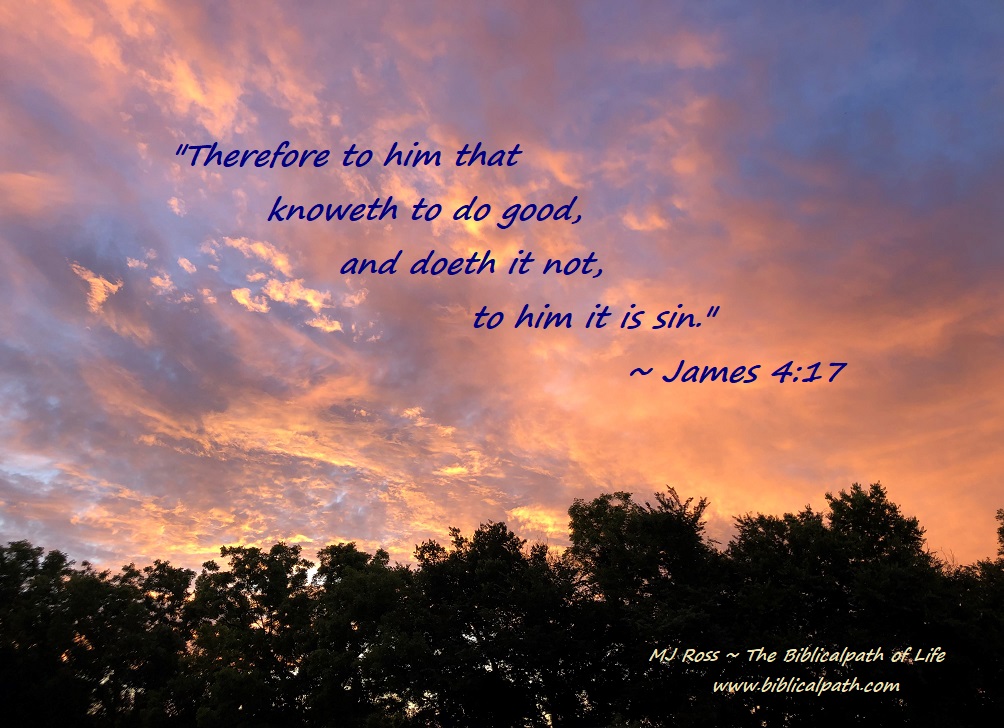
“Therefore to him that knoweth to do good, and doeth it not, to him it is sin.” James 4:17
David is one of the most famous men in the Bible. God chose
him when he was young to be the future king of His people. Although King Saul chased
David wanting to kill him, David followed God, and God took care of him.
When David became king, he was a great king. “And all the people took notice of it,
and it pleased them: as whatsoever the king did pleased all the people”
(2 Samuel 3:36). We can read many
places where David “enquired of God.” When David wasn’t sure what God would
have him to do in a situation, he would enquire of God – and God would answer
him. “And David went on, and grew
great, and the LORD God of hosts was with him” (2 Samuel 5:10). The second book of Samuel is all about
David’s kingdom.
Everyone remembers David’s great sin. If you remember, he
wasn’t where he was supposed to be. “And
it came to pass … at the time when kings
go forth to battle, that David sent Joab, and his servants with him, and
all Israel; and they destroyed the children of Ammon, and besieged Rabbah. But
David tarried still at Jerusalem”
(2 Samuel 11:1). It was at this time that he took Bathsheba, who wasn’t his
wife, and had her husband killed in battle. Although David knew this was
completely wrong in every way, he did it anyway. “And when the mourning was past, David sent and fetched her to his
house, and she became his wife, and bare him a son. But the thing that David
had done displeased the LORD” (2 Samuel 11:27). What made things worse was that after he made
Bathsheba his wife, he continued in life as if nothing was wrong.
God sent Nathan to speak to David. He told King David a story
of man who took a beloved lamb from someone else that did not belong to him and
killed it. After hearing the story, “And
David’s anger was greatly kindled against the man; and he said to Nathan, As
the LORD liveth, the man that hath done this thing shall surely die”
(2 Samuel 12:5). David recognized that this man had sinned and deserved death.
“And Nathan said to David, Thou art
the man …” (2 Samuel 12:7a). Nathan proceeded to remind King David
just what God had done for him, and his punishment for his great sin. “And David said unto Nathan, I have sinned
against the LORD. And Nathan said unto David, The LORD also hath put away thy
sin; thou shalt not die” (2 Samuel 12:13).
Although there were many consequences for this sin, because David immediately
repented of that sin, God forgave him. David truly had a heart of repentance,
and we can read his prayer to the Lord in Psalm 51.
What more does the Bible tell us about King David? “And when he had removed him, he raised up
unto them David to be their king; to whom also he gave testimony, and said, I
have found David the son of Jesse, a man after mine own heart, which
shall fulfil all my will” (Acts 13:22). Have you ever considered
that it might have been this moment in David’s life that caused God to call him
“a man after mine own heart”
knowing that when David was confronted with his sin, he would immediately
repent? We know, “For all have
sinned, and come short of the glory of God” (Romans 3:23). However, read what David understood,
long before it was written, “If we
confess our sins, he is faithful and just to forgive us our sins, and to
cleanse us from all unrighteousness” (1 John 1:9).
We can understand that God forgave David. However, see how
great of a forgiveness it was. David wrote Psalm 103, which tells of God’s
great forgiveness. “As far as the
east is from the west, so far hath he removed our transgressions from us”
(Psalm 103:12)
Remember what else God tells us of King David, “Of this man’s seed hath God according to his promise raised unto Israel a Saviour, Jesus” (Acts 13:23). God sent, through the lineage of David, His only Son who came to die for man’s sin – if only they would come to him in repentance and receive His forgiveness. “6. Seek ye the LORD while he may be found, call ye upon him while he is near: 7. Let the wicked forsake his way, and the unrighteous man his thoughts: and let him return unto the LORD, and he will have mercy upon him; and to our God, for he will abundantly pardon” (Isaiah 55:6-7).
“But his delight is in the law of the LORD; and in his law doth he meditate day and night.” Psalm 1:2
We are taught that obeying laws is important and that there
are penalties to be paid if we break them. Consider the importance of laws. We
are to understand that God has laws. His laws are significant, and obedience is
very important to God as we can see throughout His Word, and most notably in
the Old Testament. Often we recognize God’s discipline on those who break His
laws.
The first five books in the Old Testament are referred to as
“The Law.” Within these books we find the first 2,500 years of history recorded
by Moses. The first book, Genesis, begins with the creation, records the ruin
of man through sin, but it also reveals the sovereignty of God. The word sovereignty
means “supreme in power; possessing supreme dominion; as a sovereign ruler of
the universe.” We understand that God is the sovereign God of all who love and
obey Him.
One easy way to remember Genesis and the events within is to
recognize:
Four main events take place:
The Creation
The Fall
The Flood
The Tower
of Babel
Genesis deals mainly with Four People:
Abraham
Isaac
Jacob
Joseph
After about four hundred years, God’s people grew into a
nation numbering around two to three million people in Egypt.
This is where Exodus (which means “the way out” or “outgoing”) begins. At the
culmination of the ten plagues, we see the mighty deliverance of God’s people
from a land of bondage. Shortly after this they meet at the foot of Mount
Sinai. It was at Mount Sinai that the Law
was given (beginning with the Ten Commandments; Exodus 19-20). The Israelites
were taught that obedience to God is necessary. They could not be a redeemed,
set-apart people unless they obeyed God’s command.
In Leviticus, God spoke to Moses from the tabernacle instead
of Mount Sinai. The people needed to know how to live. God
instituted the offerings, the priesthood, a clean lifestyle, and the different
feasts. These things were teach the people how to live as a people wholly given
to God in every aspect of their lives. Leviticus shows the ability to have
fellowship with God when we come to Him as a sanctified people (because He is
holy, and we are a sinful people). Leviticus ends with the blessings of
obedience and the penalties for disobedience. Only about a month’s time passes
during Leviticus.
The name Numbers comes from a numbering of the people at the
beginning of the book and then again at the end. There were two groups of
people, an old generation and a new generation. When the twelve spies were sent
into the land promised to Abraham, only Joshua and Caleb brought back report
that God would allow them to conquer the land. When the Israelites disobeyed
God’s command to cross over into the Promised Land, they were disciplined. The
old generation would die and not enter because they refused to obey God. Only
Joshua and Caleb escaped God’s discipline (wandering in the wilderness for
forty years). Fewer than forty years elapse during Numbers where we see God
guiding, providing, and protecting His people.
Deuteronomy begins by looking back to what God had done for
His people and then looking forward. The entire book shows the faithfulness of
God revealing that God loves His people. Moses warned the people to not forget
the words of God’s Law, revealing the blessings for following God’s Law and the
curse of God if they failed to obey. Joshua is appointed the new leader of the
new generation, and Moses dies.
After remembering the books of “The Law,” see that they help us understand God and what He expects from His people. We also learn that it is quite impossible to obey every law that God has given us. In the New Testament we gain some insight as to why it is important to know “The Law” of the Old Testament. “24. Wherefore the law was our schoolmaster to bring us unto Christ, that we might be justified by faith. 25. But after that faith is come, we are no longer under a schoolmaster. 26. For ye are all the children of God by faith in Christ Jesus” (Galatians 3:24-26).
Have you understood “The Law” is a schoolmaster to show the need for Jesus?
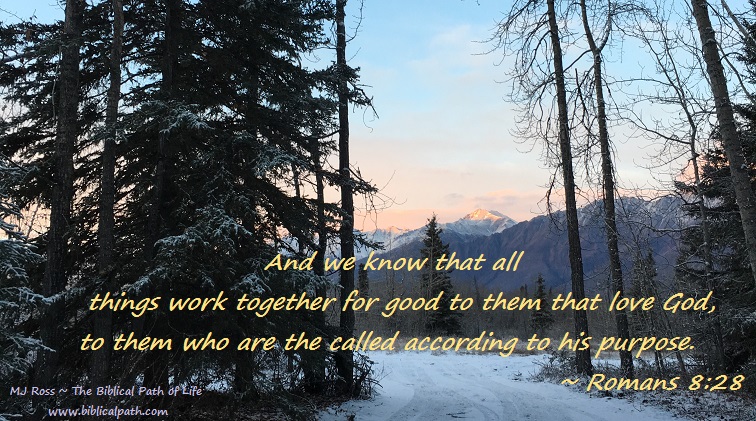
“And we know that all things work together for good to them that love God, to them who are the called according to his purpose.” Romans 8:28
Have you ever had something bad happen to you? According to
Romans 8:28, if we are Christians (have Jesus in our hearts and lives), and are
living according to God’s Word doing what God wants us to do with our lives,
everything will work out for good – even if it seems like something bad at the
time. There is a great picture of this lived out in the life of Elijah. Even
when the king and queen wanted Elijah dead, God provided for him and took care
of him.
In Elijah’s day, the nation of Israel
had already divided into two kingdoms, Israel
and Judah. The kingdom
of Israel never had a good king.
The worst was King Ahab. God called Elijah to speak to wicked King Ahab. God
sent Elijah to tell the king there would be no rain in the land; and there was
a drought for over three years. God provided for Elijah during the drought. He
sent Elijah to the brook Cherith where he had water. God sent ravens to bring
him food. When the brook dried up, God sent him to Zarephath where a widow
woman took care of him until the end of the drought. After over three years,
God sent Elijah back to King Ahab with a great challenge. Elijah told him to
have all of Israel
to meet on top of Mount Carmel. He called for a decision
from the people. Choose who the true God is. After Elijah’s great victory when
fire fell from heaven and consumed his offering, the people declared, “The Lord,
He is the God.” Because Elijah had all of the false prophets killed, Queen
Jezebel, Ahab’s wicked wife, wanted him dead. Elijah ran for his life. We learn
that God had not forgotten Elijah, for He showed Himself to Elijah in a still
small voice. Elijah thought he was the last one who loved and served God. But
God told him that there seven thousand others that had not served the false
gods. Therefore, Elijah was not alone. However, more than this reassurance, he
gave Elijah a helper – Elisha. Through all of this, we can learn that even
though the nation as a whole had forsaken God and turned to idol worship, there
were still those who had not forsaken God. Elijah was a great example of God
providing for one who was willing to give his life wholly to serve God, obeying
His every command. We should remember the encouragement God gave to Elijah when
he was greatly discouraged – and even fearful for his life (see 1 Kings 17-20).
Remember Romans 8:28: “And we know
that all things work together for good to them that love God, to them who are
the called according to his purpose.” Especially that all
things will work together for good if one is living the life God
would have them to live. It is important to trust that God will provide for our
every need.
During days where there are trying times and all seems to be
going wrong, stop and look at your heart and life. Seek God to see if you are
where you should be, doing what you should be doing. If you seek Him with all
of your heart, you can find Him. “11.
For I know the thoughts that I think toward you, saith the LORD, thoughts of
peace, and not of evil, to give you an expected end. 12. Then shall ye
call upon me, and ye shall go and pray unto me, and I will hearken unto
you. 13. And ye shall seek me, and find me, when ye shall search
for me with all your heart. 14. And I will be found of you, saith the LORD …”
(Jeremiah 29: 11-14a).
If we will obey God, God will provide for us and take care of us – no matter what.
Are you living for God, trusting that He will work all things together for good?
A “All things were made by him; and without him was not any thing made that was made.” John 1:3
Have you ever stopped to think about God’s creation? Have you
ever thought, “What is the greatest thing God created?” There are so many
wonderful and beautiful things that God made. Picture the mountains, beautiful
sunsets, the ocean, a full moon as it rises, and so many other amazing things
in God’s creation. But have you ever considered that the greatest thing God
created was you? There are a few things we can find in God’s Word that brings
us to this conclusion.
Remember first that God created the world in six days. At the
end of the first five days, God declared that it was good. Even on the sixth
day after God created all of the animals and everything that creeps on the
earth, God declared that it was good. But on that sixth day there was a special
creation. “26. And God said, Let us make
man in our image, after our likeness: and let them have dominion over the fish
of the sea, and over the fowl of the air, and over the cattle, and over all the
earth, and over every creeping thing that creepeth upon the earth. 27. So God
created man in his own image, in the image of God created he him; male
and female created he them” (Genesis 1:26-27).
God made man in His image; a man and a woman. After this, we find that God
declared that his creation was “very good.”
God created man perfect, without sin. He made man with the
intent that they would be “holy and without blame” (see Ephesians 1:4). But
more than that, God created man to have fellowship with Him. “For we are his workmanship, created in
Christ Jesus unto good works, which God hath before ordained that we should
walk in them” (Ephesians 2:10).
He wanted to walk with us.
As we read Genesis chapter three, we find
that Adam and Eve disobeyed God when Eve was beguiled by Satan, bringing sin
into the word which caused separation from God for all of mankind. This meant
that man could no longer fellowship with God as before because of this separation
(remembering that before this they had walked and talked with God in the
garden). Even though man failed greatly, God promised One would come to bridge the gap between sinful man and God
(see the first promise of this in Genesis 3:15)
which would restore that fellowship. Although Adam and Eve did not know who
that One was, they believed God’s Word.
Throughout the Old Testament, there were many
who watched for that One promised by God to come. Jesus, God’s only Son, came
into the world for me (and you). He came so that I could have the opportunity
to fellowship with God again – if only I would believe. “Who gave himself for us, that he might redeem us from all iniquity, and
purify unto himself a peculiar people, zealous of good works” (Titus 2:14).
When Jesus came, He came to destroy the work of Satan. “He that committeth sin is of the devil; for the devil sinneth from the
beginning. For this purpose the Son of God was manifested, that he might
destroy the works of the devil” (1 John 3:8).
God made each and every one
of us. If one would take time to read Psalm 139:1-18, they could understand
that even King David understood just how special each person created by God is.
One of the most important things that each person should understand is that God
created me. He made me a unique individual. And God created me to have fellowship with Him. God has
a plan for me. But because of sin
that separated man from God, each person must trust Jesus to reconcile them,
restoring that relationship.
Sadly, there are few people in the world today that truly understand their worth in God’s eyes. By remembering the importance of each person, and the great love God has for them in the sending of His only Son, Jesus, to bring them back to Him, we can once again understand the importance on our part to receive the great gift God has made available to us.
“For by him were all things created, that are in heaven, and that are in earth, visible and invisible, whether they be thrones, or dominions, or principalities, or powers: all things were created by him, and for him” Colossians 1:16
In Colossians 1:16
we read that God created everything, and it was created for Him. It is
important to understand that God created us for a purpose. God created man to
have a relationship with Him. After He created Adam and Eve, God walked with
them in the garden until they disobeyed His Word, and sin entered into the
world.
After understanding that God created us to have a
relationship with Him, we look at the Bible from beginning to end. Firstly, we
will take a bird’s eye view over all of history to see that God dealt with man
in different ways through the ages. The Bible is laid out in certain timeframes,
also called “dispensations.” A dispensation is basically a means by which God
deals with mankind throughout the ages because of sin
and employing God’s divine government. Each of the dispensations may be
regarded as a new test of the natural man, and each ends in judgment, marking man’s
utter failure in every dispensation. God dealt with His creation in
different ways at different times. God created the world as perfect, but when
man sinned, he brought the judgment of death into the world. Throughout the
ages, God gave individuals many opportunities to have a relationship with Him,
but each time they failed. They had to understand that the only way this
relationship could ever be restored would be by the atoning death of His Son,
Jesus. It is with this understanding that we look at the scriptures as a whole.
The seven dispensations allow us to see how God worked among
the people throughout the years. What began as a face-to-face relationship with
God (remember Adam and Eve in the garden) quickly turned to a sinful people
unable to approach God. But God, through His grace and mercy, promised to make
available to man the opportunity to once again have a relationship with Him. We
learn how man fell and was punished, and then how all of mankind was only evil
continually, so that God destroyed all but one family. God then gave the
governing responsibilities to mankind, and they blew it again, causing God to
confuse their language. When God selected a family, they ended up in bondage
and needed God to deliver them from Pharaoh. Yet when God laid the Promised
Land out in front of them, they were afraid to go. Once they entered the land,
they forsook God and needed judges to deliver them from the judgment God sent.
They then believed they needed a king “like the nations
around” to rule them, once again rejecting God and His plan. This kingdom ended
with the people in captivity because they did not heed the prophets God sent to
warn them. When God allowed them to return to their land, there was great sadness,
for they were not the great nation God had intended for them to be. When God
sent His Son, Jesus, the fulfillment of the promise was given, if only one
would believe. Jesus did many works to reveal God to the people and then laid
down His life for our sins. He restored that broken relationship that nothing
else through the centuries could do. When Jesus rose from the grave, He sent
His disciples to tell the world, allowing His apostles to do mighty works to
help establish the church.
Although the time of the mighty works has passed, today God still uses His people to witness to a lost and dying world. A faithful witness will tell them that the only way to have a relationship with God is through the redemptive work of His Son, Jesus.
“God is our refuge and strength, a very present help in trouble.” Psalm 46:1
Have you ever
found yourself in a place where you did not know what to do, or even where to
go? What did you do about it? Did you cry, did you grumble and complain, or
stress about the situation? Or did you take your problem to God in prayer? How
often we forget that our first response should be to take our requests to God!
As Christians,
we have the privilege to approach the throne of God with our requests. “Be careful for nothing; but in every thing
by prayer and supplication with thanksgiving let your requests be made known
unto God.” (Philippians 4:6). This should be our immediate reaction when we
need to receive an answer from God. We also must remember that He will answer
us in His timing – not ours. Have you ever asked God a question, yet did not
wait for Him to answer? How often do we miss God’s plan for our lives when we
are too impatient to wait upon Him?
Recently, I have
been a part of a group of people who were seeking God and His plan for us. We
had committed to stand by the truths found in God’s Word. However, we needed
clear direction. We prayed. We searched for answers. We waited. We continued in
the path we believed He had for us to travel. Many other people disagreed with
the decisions that we had made. Relationships were lost. New ones have been
made. We set a date that we needed an answer from the Lord, or we could not
continue. The date came, and God answered our prayer on that day, above and
beyond our hopes and expectations! We had put into practice what we had
learned: “But without faith it is
impossible to please him: for he that cometh to God must believe that he
is, and that he is a rewarder of them that diligently seek him”
(Hebrews 11:6)
Through all of
the turmoil during those days, and the negative words spoken against us for
standing for the truths found in God’s Word, we understood more about the truths of
God’s Word. “2. Therefore will not we
fear, though the earth be removed, and though the mountains be carried into the
midst of the sea; 3. Though the waters thereof roar and be
troubled, though the mountains shake with the swelling thereof. Selah.
4. There is a river, the streams
whereof shall make glad the city of God, the holy place of the
tabernacles of the most High. 5. God is in the midst of her; she shall
not be moved: God shall help her, and that right early. 6. The heathen
raged, the kingdoms were moved: he uttered his voice, the earth melted. 7. The
LORD of hosts is with us; the God of Jacob is our refuge”
(Psalm 46:2-7). We experienced that, truly: “God is our refuge and strength, a very present help in trouble”
(Psalm 46:1). We recognized that God is with us.
We witnessed
first hand what it is to do the following: “Be still, and know that I am God: I will be exalted among the
heathen, I will be exalted in the earth.” (Psalm 46:10)
Another
encouraging word… “What shall we then
say to these things? If God be for us, who can be against us?”
(Romans 8:31).
“Be of good courage, and he shall strengthen
your heart, all ye that hope in the LORD.” (Psalm 31:24).
“So shall my word be that goeth forth out of my mouth: it shall not return unto me void, but it shall accomplish that which I please, and it shall prosper in the thing whereto I sent it.” Isaiah 55:11
God called many prophets in the Old
Testament to go forth and declare His Word to people. They mostly went, no
matter what happened to them. We all remember one particular prophet who chose
to disobey God. He chose to go the opposite direction God wanted him to go. The
way he
wanted to go. Remember him? Jonah, forever known as the prophet who was
swallowed by a whale. Why did that happen to him? Because he chose to do what he
wanted, instead of obeying God. But only after he was in the belly of that
great fish for three days and three nights, praying, was he willing to go
deliver the Word of the Lord to the people of Nineveh. Even with his
begrudgingly behavior, thousands of people repented before God, and God spared
the people and the city.
Have you ever considered any of the
other prophets God sent forth? Remember Isaiah. God asked who He could send,
who would go tell the people. Isaiah said, “Here am I; send me.” God told him to
go and tell the people, but Isaiah was warned that the people would hear him,
but would not listen to him. They would not understand what he was telling
them. They would not take any of the counsel of God’s Word that he gave to
them. It might sound good for somebody else, but not them. They would not get
it. Isaiah had God’s Word, yet the people would not receive it. When Isaiah
asked God how long he would have to tell this people who wouldn’t really listen
to anything he said, God told him to continue to tell the people until there
was no one left to tell.
Do you think that would have been a
hard thing to do? Isaiah was given more prophecies concerning Jesus, the Messiah
that was to come, than any other prophet. He was instrumental in helping the
people understand that salvation is of the Lord – not of anything man can do. Isaiah’s
name even signifies this, for his name means “Salvation is of the Lord.” Nevertheless,
tradition declares that King Manasseh had him sawn in two.
Many other people declared the
truths of God’s Word. One cannot help but think of Peter as he told of Jesus,
and many thousands of people give their hearts and lives to Jesus. Paul gave
his life telling people about Jesus, and establishing churches to teach the
apostles doctrine. He also spent much time in prison. Stephen preached the
Gospel message of Jesus, and he was stoned to death. However, these men were
faithful to the end.
Today should be no different. Each
Christian is called to go and tell the Gospel message of Jesus. To tell the
difference that God’s Word has made in that Christian’s life. No one may hear.
No one may understand. They might believe that it is good for someone else, not
for them. They might not receive it. Nevertheless, we are called to go and tell
– even when people don’t want to hear about Jesus. “So then faith cometh by hearing, and hearing by the word of God”
(Romans 10:17). People must hear before they can believe.
“How then shall they call on him in whom
they have not believed? and how shall they believe in him of whom they have not
heard? and how shall they hear without a preacher?” (Romans 10:14). The word preacher here means “to herald (as a public crier), especially
divine truth (the Gospel); preach, proclaim, publish.” This means anyone can
declare or “cry out” the Gospel message. “So
shall my word be that goeth forth out of my mouth: it shall not return unto me
void, but it shall accomplish that which I please, and it shall prosper in
the thing whereto I sent it” (Isaiah 55:11). We are just required to
declare God’s Word to people. God will take care of the rest.
However, no one will know the Gospel
message of Jesus if we do not tell it.
Have you told anyone about what Jesus has done for you?
“The grass withereth, the flower fadeth: but the word of our God shall stand for ever.” Isaiah 40:8
The Bible is the Word of God. It has been preserved for us to read, but very few people read and understand what the Bible has to say to us today.
According to most statistics, young people are growing up and leaving the church and faith in God by the droves. The main reason can be found in the lack of knowledge and understanding of what one believes about God and why. There is a mighty gulf between the level of spiritual training in children, youth, and even adults, and the knowledge one needs to live in today’s world.
Growing up in a Christian home is no guarantee that one understands the Bible or how to live a Christian life. Being saved as a young child, I learned many Bible “stories,” but it wasn’t until later that I began to understand how all of these stories fit together. My parents had a book of pictures revealing a timeline throughout Bible history. It helped me begin to understand how all of those “stories” were connected together. It also helped me begin to see that Jesus was planned from the beginning of time to redeem mankind because of sin. I wanted to know and understand the Bible, so I began to study.
The most important thing about studying the Bible should be to learn the basics of the Biblical interpretation and how it should be applied to our lives. A good Bible study needs to be more than a compilation of “stories” we have always heard. The word “story” even brings to the hearers’ mind that they are make-believe. Many people don’t really understand that the Bible is not just a compilation of popular Bible “stories” or favorite Bible passages. The Bible is not full of “stories” but real events in real people’s lives. Children, as well as adults, need to understand that each of these events all fit together as part of a bigger picture – much like pieces of a puzzle. Not only do these events interlock, but they have a purpose: to reveal Jesus and why He came.
All people, especially children, are capable of learning so much more. The Biblical Path of Life is one such study meant to simplify the understanding of the reader and making the Bible relevant to a Christian’s life — young or old — by comparing Scripture to Scripture. The most important thing one can understand is just how important their Bible is. One needs to learn how to take care of their Bible and become familiar with it. Everyone should understand the importance of reading God’s Word! Even beginning readers should be encouraged to read their Bible. At first, even the youngest readers will be hesitant to read. But with a little encouragement and help, they can become excited about reading their Bible. Each week they can become a little more proficient at reading, and that fact will encourage them greatly. No one is too young (or old) to begin to love the Word of God or to learn the principles found within God’s Word!
The Bible means nothing to us if we do not apply the principles within to our lives to become more like Christ. In order to understand how to live a Christian life pleasing to God in the world today, we must first know what His Word says.
This website stores cookies on your computer. These cookies are used to provide a more personalized experience and to track your whereabouts around our website in compliance with the European General Data Protection Regulation. If you decide to to opt-out of any future tracking, a cookie will be setup in your browser to remember this choice for one year.