Blog

  • Lesson 8: Growing in Grace: 2 Peter

    Key Verse

    But grow in grace, and in the knowledge of our Lord and Saviour Jesus Christ. To him be glory both now and for ever. Amen.

    —2 Peter 3:18

    Key Verse Thought: Read the Key Verse. Do you realize what it means to grow (examples may be: to become stronger, taller, bigger, smarter, better at something, etc.)? It is important to recognize that one grows in more ways that just physically. In this lesson, we will learn the importance of growing in our Christian life – spiritually. It is important for Christians to grow in their Christian life – just as in the physical life.

    Emphasis: We are to understand the importance of continually growing in the Christian life, watching and waiting for Jesus to return. Christians are to remember that when one grows in the Christian life, the relationship with Jesus grows as well. But especially: if Christians are not growing, they are digressing in that Christian life, becoming ineffective Christians.

    Lesson Summary: The book of 2 Peter is the fourth book in the fifth division of the New Testament: Nine Letters to the Jewish Church. The Apostle Peter wrote it to Christians, encouraging them to grow in their Christian life. It is relevant to Christians today, just as it was to the Jewish Christians during the New Testament period.

    Peter began by reminding them of their like faith in Jesus. He then taught them the importance of growing in that Christian faith. We will learn that as we grow in the knowledge of Jesus, our relationship with Him grows as well. There is also a warning for one who lacks the qualities of a growing, Christian life: he is compared to one who is blind and cannot see afar off.

    As always, there is a warning of false teachers. Peter then cites examples of angels, and even some from the Old Testament, of those whom God “spared not.” Peter included a warning of those who had a “knowledge of the Lord”, who after they knew, turned from it, whose “latter end is worse with them than the beginning.”

    Before Peter closed, he reminded the Christians not to forget that the Day of the Lord would come as a thief in the night for those who were not watching for His return. However, before that day came, Christians had much to do: live a holy and godly life, look for Jesus’ return, hasting the return of Jesus by winning others to the Lord (remembering that Jesus is longsuffering, not willing that any perish), and so much more. Most importantly, Christians are to “grow in grace, and in the knowledge of our Lord and Saviour Jesus Christ” (2 Peter 3:18).

    Y3Q4 – Lesson 8 Questions

    Y3Q4 – Lesson 8 Children’s Worksheets

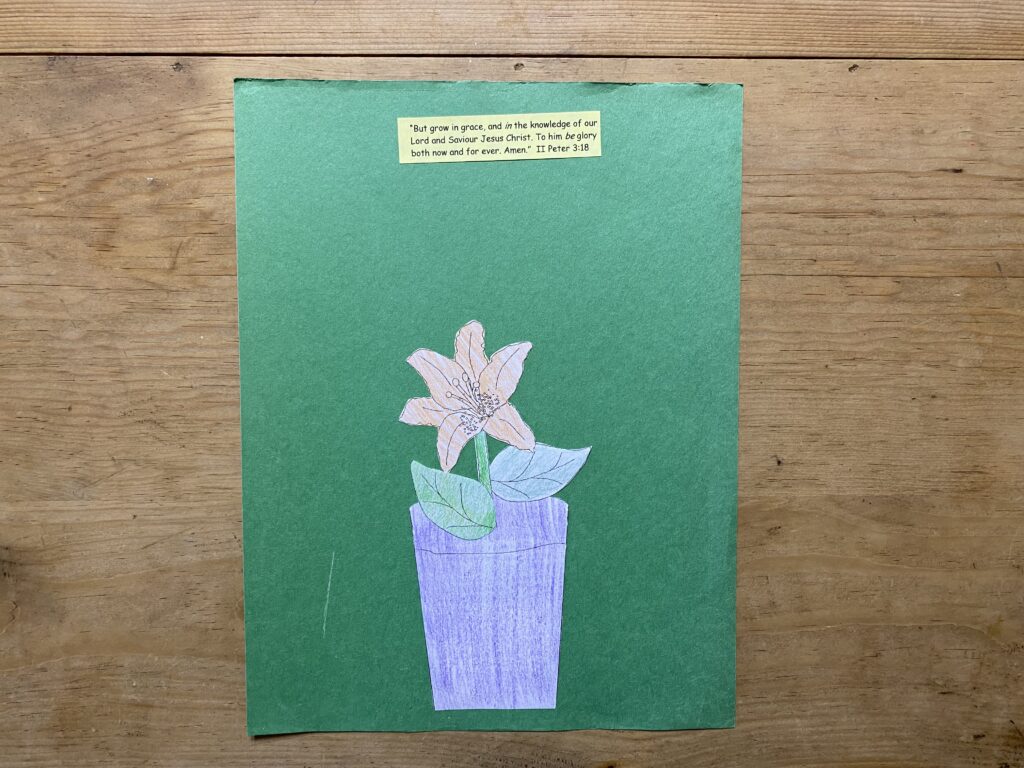
    If you are teaching this to younger children, the following is a craft idea to help them remember this lesson:

    We colored and cut out a flower and flower pot. We then cut a slit in the construction paper where we glued the pot. We entered the flower stem into that slit, enabling us to cause the flower to “grow”. We included the verse 2 Peter 3:18.

    The Biblical Path of Life Year Three – Quarter Four is available through Amazon.

  • Lesson 7: Become Lively Stones: 1 Peter

    Key Verse

    Ye also, as lively stones, are built up a spiritual house, an holy priesthood, to offer up spiritual sacrifices, acceptable to God by Jesus Christ.

    —1 Peter 2:5

    Key Verse Thought: Read today’s Key Verse. As you read this verse, understand it better with the following definitions:

    • Lively stones means “to live as Christians
    • Spiritual house means “spoken of things in a higher and spiritual sense, not literal, as in: Christians as the spiritual house or temple of God
    • Holy priesthood means “referring to all Christians who are said to offer spiritual sacrifices
    • Spiritual sacrifices means “spoken of things in a higher and spiritual sense, not literal, as in Christians in their service, obedience, praise offered to God; an offering or oblation (see Romans 12:1 and Hebrews 13:15-16)

    In this lesson, we will learn how to become “lively stones”.

    Emphasis: In this lesson, we are to remember the hope we have in Jesus that allows us to become “lively stones”, living a Christ-like life: no longer living in the flesh, but according to the will of God. We are to know Christians must learn to think and act discreetly, using sound judgment and become self-disciplined – in order to resist the devil, for he wants to destroy Christians.

    Lesson Summary: Peter was one of Jesus’ twelve disciples. He became a great leader in establishing the church after Jesus’ ascension. He wrote this letter to the Jewish Christians who scattered during persecutions.

    Peter began by reminding them of what Jesus had done by his life, death, and resurrection, which gave all Christians a “lively hope”: the assurance of salvation and eternal life in heaven. Because of that “lively hope”, Peter taught Christians not only how to be holy, but to become “lively stones”: just how to live as Christians. He then called upon Christians, as dearly beloved, teaching them how to live: as citizens, employees, in sufferings, with spouses, and in fellowship with other believers, etc. A Christian’s life should be lived so that no one doubts that that one is really a Christian – and in that life, each Christian is a witness for Jesus, leading others into a life with Christ. Peter gave Jesus as our ultimate example, and then gave Noah’s faith as an example from the Old Testament.

    Finally, Peter taught to live soberly: to think and act soberly, discreetly, and to use sound judgment and moderation; to be self-disciplined. By standing fast in our faith, living soberly, Christians are enabled to resist the devil, our adversary. And God promised to help.

    Y3Q4 – Lesson 7 Questions

    Y3Q4 – Lesson 7 Children’s Worksheets

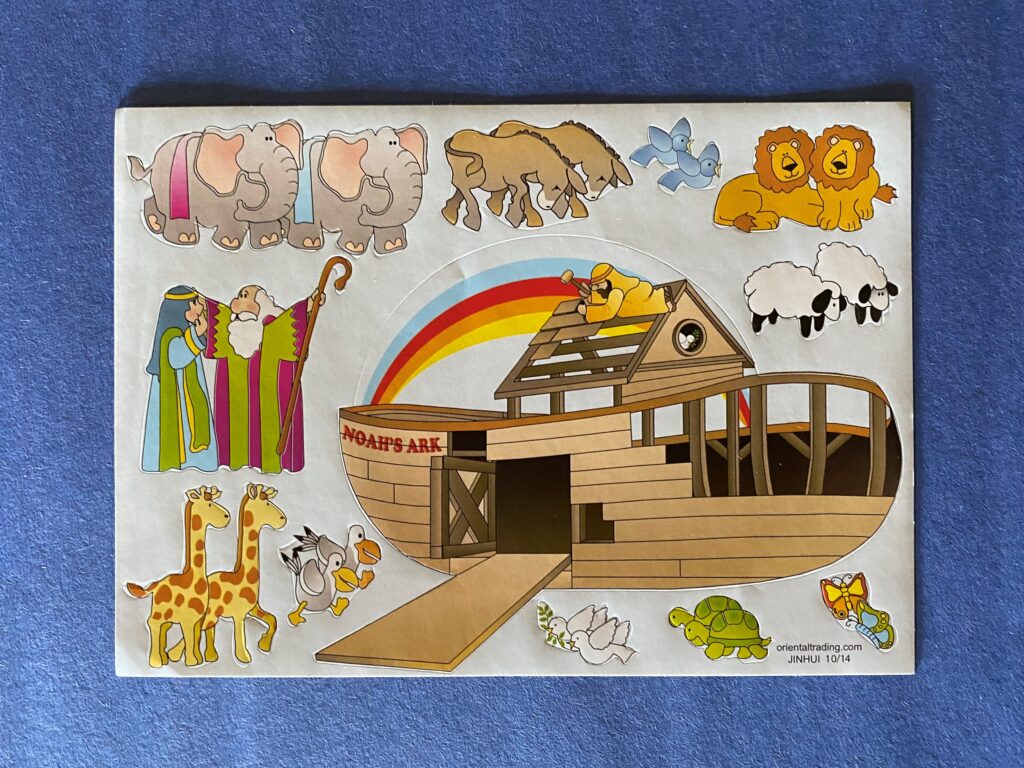
    If you are teaching this lesson to younger children, the following is a craft idea to help them remember this lesson:

    We decorated a paper with Noah’s Ark Stickers remembering Noah’s faith as an example from the Old Testament given in 1 Peter 3 .

    The Biblical Path of Life – Year Three, Quarter Four is available through Amazon.

  • Lesson 6: Christians Show Faith by Works: James

    Key Verse

    But be ye doers of the word, and not hearers only, deceiving your own selves.

    —James 1:22

    Key Verse Thought: Read today’s Key Verse. What is the difference between hearing about something and actually doing it? Which is more real? How important is it for children to actually do what their parent has told them to do compared to just hearing what was said and not fulfilling the task (i.e.: taking out the trash, making their bed, cleaning their room, coming home at the appointed time, etc.). Will there be reward, or trouble? Depends on whether they did what was commanded of them, or if they just “heard” what was said. In this lesson, we will look at the difference. We will learn it is most important to do what God’s Word teaches, and not just hear what God’s Word teaches.

    Emphasis: In this lesson, we are to understand the importance of not only hearing what God’s Word teaches, but doing what God’s Word teaches. It is important for the world to see a person is truly a Christian by the way that one lives their life – as a life pleasing to God, obeying the Bible. Remember that Abraham was considered righteous and called the friend of God when he did what God asked of Him.

    Lesson Summary: After learning in Hebrews again that salvation is by faith, we will recognize in this lesson that that faith is coupled with works.

    James, the half brother of Jesus, wrote the book of James to the Jews scattered abroad, but it is also relevant to Christians today. Many think this may be the earliest written New Testament book. James did not become a Christian until after Jesus’ death, burial, and resurrection. He witnessed Jesus’ ascension and returned to wait in the upper room (see Acts 1:14). We will begin this lesson by remembering who James was.

    Throughout the book of James, we will find many wise things applicable to the Christian life – much like the book of Proverbs in the Old Testament. James taught practical ways to live a Christian life. He began by teaching one to understand the difference between trials and temptations. One must also understand that faith alone is dead; however, faith is justified by works. Two Old Testament examples are given to reveal this. James encourages Christians to choose to be wise, learning how to live right, compared to living wrong. He reminds Christians that they cannot live like the world, for friendship with the world is enmity with God. Instead, a Christian is to draw nigh unto God, enabling that Christian to resist the devil. We will read a warning that when a Christian knows to do what is right but does not do it, it is sin. A Christian will show his faith by the Christ-like life he leads. Finally, we will learn about effectual prayer that avails much.

    Y3Q4 – Lesson 6 Questions

    Y3Q4 – Lesson 6 Children’s Worksheets

    The Biblical Path of Life – Year Three, Quarter Four is available through Amazon.

  • Lesson 5: The Shadow Revealed: Hebrews 8-13

    Key Verse

    For the law having a shadow of good things to come, and not the very image of the things, can never with those sacrifices which they offered year by year continually make the comers thereunto perfect.

    —Hebrews 10:1

    Key Verse Thought: After reading the Key Verse, consider what a shadow is (an outline, an image with no definition, a similarity to a real object, etc.). Remember the sacrifices that had to be offered in the Old Testament by the priest to cover the sin of man until a perfect sacrifice could be made. Those sacrifices had to be made every year – but their sins were never taken away; only covered for another year. In this lesson, we will learn how those sins were taken away.

    Emphasis: We are to recognize that the Old Testament tabernacle and religious system was only a shadow of what God had planned. Jesus was the fulfillment of God’s plan. All those who believed by faith – from the Old Testament through to today, will be saved. Once believing in Jesus, by faith, Christians are to live right.

    Lesson Summary: Hebrews is the first book in the fifth, and final division, of the New Testament. Although the author is undeclared, many agree Paul wrote it. It was written specifically to the Jewish Christians, but is very relevant to Gentiles Believers as well. As we began Hebrews last week, we learned that after speaking to His people in many different ways during the Old Testament timeframe, God had then chosen to speak through His Son, Jesus. We also learned that Jesus is the High Priest. As we begin today, the writer of Hebrews began with a summary of what had already been taught in the first half of the book.

    In this lesson, we learn that the tabernacle of the Old Testament was to be a shadow, or a prefiguring of something perfect. That shadow was to give God’s people a glimpse of heaven. Not only that, but also each part of the tabernacle (Temple) was to reveal Jesus – including the sacrificial system. We will find out how Jesus was revealed in the different parts of the tabernacle. The tabernacle and the sacrificial system was to continually remind the Jewish people of the promise God had made of sending One who would restore the severed relationship between man and God.

    After remembering the stringency of the Old Testament sacrificial system, we will learn another reason the book of Hebrews was written: to help the Jewish Christians understand that Jesus’ death on the cross was the promised sacrifice that they had been looking forward to all of those years. They were to believe by faith. Moreover, many of the men and women from the Old Testament did believe by faith – and were saved. We will remember many as they are listed in Hebrews chapter eleven. With the encouragement that so many have believed and lived by faith, Christians are to be encouraged by them: for they are called “so great a cloud of witnesses.” Finally, Christians are encouraged, again, to run the race by living a godly Christian life.

    Y3Q4 – Lesson 5 Questions

    Y3Q4 – Lesson 5 Children’s Worksheets

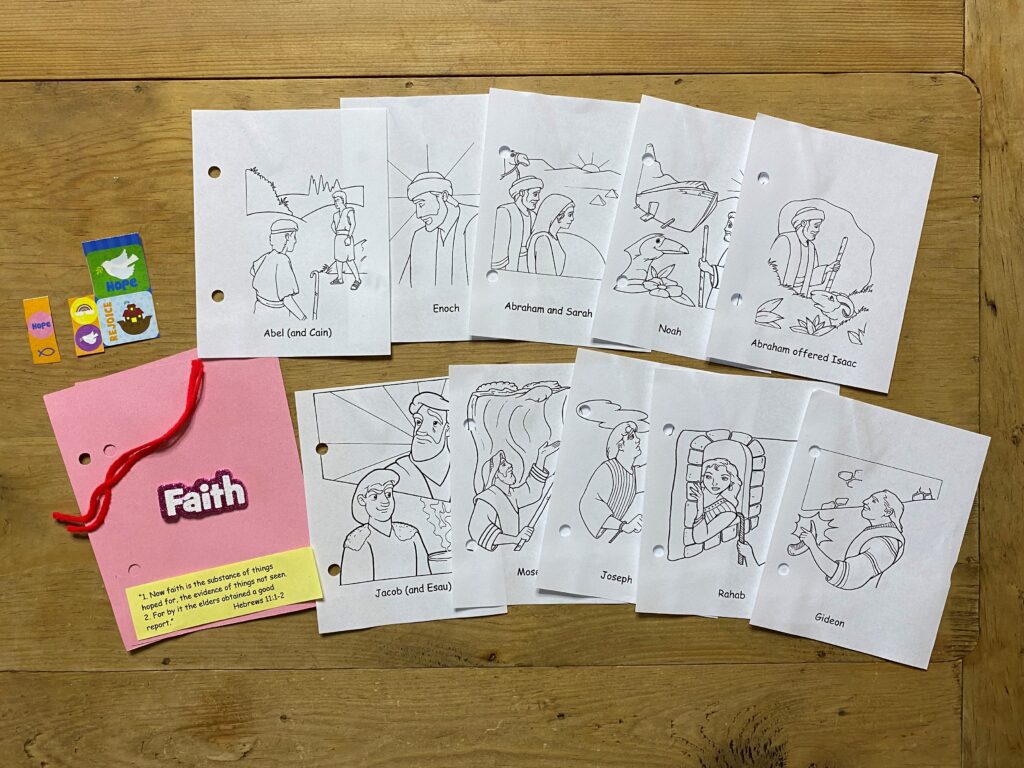
    If you are teaching this to children, the following is a craft idea to help them remember this lesson:

    We made a coloring book of different Old Testament people mentioned in Hebrews 11: the chapter of many faithful.

    The Biblical Path of Life – Year Three, Quarter Four is available through Amazon.

  • Lesson 4: Jesus, our High Priest: Hebrews 1-7

    Key Verse

    Wherefore in all things it behoved him to be made like unto his brethren, that he might be a merciful and faithful high priest in things pertaining to God, to make reconciliation for the sins of the people.

    —Hebrews 2:17

    Key Verse Thought: Read today’s Key Verse. Behoved means “to be fit and proper.” It was God’s plan that Jesus became a human being, like unto his brethren, so that He could be the appropriate offering that would appease the wrath of God: thereby making “reconciliation for the sins of the people.” That means that Jesus, by His death on the cross, caused God to be merciful toward sinful man. Moreover, because Jesus was human, He is merciful and faithful to any who would believe in Him.

    Emphasis: We are to understand what Jesus did: He became a human and died on the cross for the sins of man so that He could become our faithful High Priest, taking our sins away forever. Because of that, Christians are to learn how to grow, being able to handle the meat of the Word so that we can discern good and evil.

    Lesson Summary: In our last lesson, we completed the fourth division in the New Testament: Four Letters by Paul Instructing Pastors. In this lesson, we begin the final, and fifth division, in the New Testament: Nine General Letters to the Jewish Churches. Hebrews is the first book in the final division. There are differing opinions as to the author of Hebrews, but many agree that Paul wrote it. The name indicates to whom the book is primarily directed, helping us understand it better: it was written specifically to the Jews. It begins by reminding the Hebrew people that God had spoken to them in many different ways (as we learned throughout the Old Testament), but it was an assurance that God now chose to speak to them through His Son, Jesus.

    First, one must remember that in the Old Testament’s religious system, a blood sacrifice was used to cover the sins of the people until a better sacrifice could be provided. Hebrews was written to help the Jews understand that Jesus’ death on the cross was the promised sacrifice, that “better sacrifice,” that they had been looking forward to all of those years. They were to believe by faith. Remembering this will help us as the writer of the book of Hebrews explains this concept to any who would receive. He compared Jesus to Melchisedec.

    As we look into Hebrews, we will highlight some important things: who Jesus is, what He did, the call for anyone to understand and believe, and even the obligation as to what believers are to do with this information. We will learn the importance of growing in our Christian life, not having to constantly be reminded of the foundational truths, and to be able to handle the meat of the Word, learning to discern good from evil.

    Y3Q4 – Lesson 4 Questions

    Y3Q4 – Lesson 4 Children’s Worksheets

    If you are teaching this to children, the following is a craft idea to help them remember this lesson:

    We made a hanging frame with puzzle pieces around the verse Hebrews 4:12.

    The Biblical Path of Life – Year Three, Quarter Four is available through Amazon.

  • Lesson 3: Maintain Christian Living: Titus and Philemon

    Key Verse

    This is a faithful saying, and these things I will that thou affirm constantly, that they which have believed in God might be careful to maintain good works. These things are good and profitable unto men.

    —Titus 3:8

    Key Verse Thought: Read the Key Verse for this lesson. We will learn that the message within this lesson is one that Paul found necessary to “affirm constantly,” so that they would not forget. It is important for Christians continually to live a Christ-like life (“be careful to maintain good works”). It is profitable for all: for those who maintain those good works; and for those who see Christians living right.

    Emphasis: We are to understand the importance not only of becoming a Christian, but the expectations of Christians within the church. But more than that, the decision each Christian must make to choose to continually live for Christ; “to maintain good works.”

    Lesson Summary: In our last couple of lessons, we have learned that Christians are to live as soldiers, fighting the good fight of faith. We also discovered that it is not always easy. In this lesson, we continue with the importance of maintaining “good works.”

    Titus: Paul won Titus to the Lord early in his ministry. Titus was a Gentile. He went with Paul on a missionary journey, and Paul left him in Crete to help organize a church. Paul wrote this letter to help Titus understand the office of a pastor (bishop), to beware of false teachers in the church, and the basics of Christian living. Paul continued with the description of the kind of behavior expected of Christians, particularly to specific individuals and their obligations in teaching others. Paul encouraged them to remember the importance of knowing that their salvation was a gift of God, and it was not something they could gain by doing works. Christians were to maintain good works, living a right life in Christ.

    Philemon: Philemon was another close friend of Paul’s. This letter was specifically written to encourage Philemon to forgive and receive his runaway slave, Onesimus – for Onesimus had become a Christian. He had ministered to Paul, and now Paul was sending him to Philemon as a brother in Christ. In this letter, notice that Philemon is called to put into practice some of the Christ-like qualities of which we have learned. It is not always easy to choose to do what is right, but it is very important – as Paul made clear to Philemon.

    If you are teaching this to a class, Teachers Note: In this lesson, there is much information of how the different people within the church are to live. Choose the information that would be most relevant, and informative, to your individual class. There is much too much information to be thoroughly studied in one lesson to cover it all. Be sure your students understand the importance of maintaining right Christian living.

    Y3Q4 – Lesson 3 Questions

    Y3Q4 – Lesson 3 Children’s Worksheets

    If you are teaching this to children, the following is a craft idea to help them remember this lesson:

    We decorated a foam cross with stickers and the Key Verse for this lesson.

    The Biblical Path of Life – Year Three, Quarter Four is available through Amazon.

  • Lesson 2: Be Faithful: 2 Timothy

    Key Verse

    Thou therefore endure hardness, as a good soldier of Jesus Christ.

    —2 Timothy 2:3

    Key Verse Thought: Read today’s key verse. As you read it, keep in mind the Key Verse from our last lesson (“Fight the good fight of faith, lay hold on eternal life, whereunto thou art also called, and hast professed a good profession before many witnesses” 1 Timothy 6:12). As we learned in our last lesson to fight the good fight of faith, in this lesson we will learn to endure hardness as a good soldier. Use the following definitions to help in the understanding:

    • Endure hardness means “to sustain afflictions; endure.”
    • Good means “good in a moral sense; virtuous; in reference to the performance of duty.”
    • Soldier means “a Christian minister.”

    In this lesson, we will learn that each Christian is to learn how to live just like this.

    Emphasis: Just as God had a plan for Timothy’s life, He has a plan (a job) for each Christian to accomplish with his or her life. It was not easy for Timothy or Paul – for they suffered persecution. Nevertheless, Christians are to endure as a good soldier, fighting the fight of faith, faithfully, until they complete their life here on earth.

    Lesson Summary: The book of 2 Timothy is the second of the letters Paul wrote that we group together as “Four Letters of Instruction to Pastors.” In this lesson, we learn a little more about Timothy, and how he came to become a Christian. Timothy had a Gentile father and Jewish mother. He had been taught about Jesus from his childhood by his grandmother and mother, and Paul led him to the Lord. Timothy joined Paul on some of his missionary journeys and was a very close friend of Paul’s.

    Paul wrote the letter to Timothy while Paul was in prison. It was a letter of encouragement – for although Paul was in prison, Timothy was never to forget the faith instilled within him from childhood, nor to be ashamed of the testimony of the Lord. To help Timothy understand the difficulty and determination needed, Paul gave him some picture examples: a faithful teacher; endure hardness as a good soldier; a workman; a servant of the Lord; a student of God’s Word; a patient preacher under trying circumstances.

    Not only did Paul teach picture examples, he gave many warnings: he would suffer afflictions, many (if not all) would forsake, and evil men would wax worse and worse – deceiving many.

    However, through it all, Timothy was to remain faithful – just as Paul had.

    Each Christian today, is to remain faithful, enduring hardness as a soldier of Jesus Christ.

    Y3Q4 – Lesson 2 Questions

    Y3Q4 – Lesson 2 Children’s Worksheets

    If you are teaching this to children, the following is a craft idea to help them remember this lesson:

    We made Bible Markers with the scratch off book marks. Each wrote or drew a different message to help them remember.

    The Biblical Path of Life – Year Three, Quarter Four is avaliable through Amazon.

  • Lesson 1: Fight the Good Fight: 1 Timothy

    Key Verse

    Fight the good fight of faith, lay hold on eternal life, whereunto thou art also called, and hast professed a good profession before many witnesses.

    —1 Timothy 6:12

    Key Verse Thought: Read today’s Key Verse. Use the following definitions to understand this verse better:

    • Fight means “the task of faith in persevering amid temptation and opposition.”
    • Fight means“contest for victory or mastery; the evangelical contest against the enemies of man’s salvation.”
    • Faith means “a technical term indicative of the means of appropriating what God in Christ has for man resulting in the transformation of man’s character and way of life; i.e.: namely, Christian faith; a firm and confiding belief in Jesus and His gospel.”
    • Lay hold on means “to lay hold of in order to obtain and possess.”
    • Called means “to call someone in order that he may come or go somewhere; here, of God calling one.”
    • Professed means “to confess publicly; acknowledge openly; profess.”

    Each person who is saved (been called by God) is to persevere (with a fight) in that Christian life – for that life has been transformed by a confidence and belief in Jesus and His Gospel. It takes much work.

    Emphasis: We are to understand that all Christians, but especially the leaders, are to protect the integrity of God’s Word, never allowing false teaching. Each Christian is to learn how to function together as a Church, knowing their duty. But especially to learn how to fight the good fight of faith – live a strong Christian life before the world.

    Lesson Summary: The next four letters Paul wrote we group together as “Four Letters of Instruction to Pastors.” The first two are letters to Timothy. He was led to the Lord by Paul, joined Paul on some of his missionary journeys, and was a very close friend of Paul’s. Within the book of 1 Timothy, we will read again that the Law was given to reveal sin to man, but that it is by God’s mercy that forgiveness is gained. In this letter, Paul wrote the responsibility of leading a church, describing the offices of pastor and deacon, as well as the duties of God’s people within the church. Throughout 1 Timothy, we will understand the importance of teaching the truths of God’s Word to others. An emphasis is placed upon the necessity of keeping the integrity of the Gospel message, not allowing false teachers to teach other doctrines, or twist the truths of God’s Word. Paul warned that some had already turned from God’s Word, and that some would depart from the faith, but he also taught them how to prepare for that time, and what must be done in order to keep the faith: teach the truths of God’s Word, faithfully, and to exercise unto godliness. Christians are to fight the good fight, learning how to live a right Christian life – for God gave each one the ability to do so.

    Paul was an encouragement to young Christians who serve God through the church – then and today.

    Y3Q4 – Lesson 1 Questions

    Y3Q4 – Lesson 1 Children’s Worksheets

    If you are teaching this to younger children, the following is a craft idea to help them remember this lesson:

    We made cards for the Pastor of our church, remembering that he is “worthy of double-honor”.

    The Biblical Path of Life – Year Three, Quarter Four is now available through Amazon.

  • Lesson 13: Review Third Division of the New Testament: Romans – 2 Thessalonians

    Key Verse

    All scripture is given by inspiration of God, and is profitable for doctrine, for reproof, for correction, for instruction in righteousness:

    —2 Timothy 3:16

    Key Verse Thought: Read the Key Verse. After reading this verse, understand that this verse is the basis of the study for this lesson. We will begin to recognize the importance of God’s Word.

    Emphasis: We are to allow God’s Word to teach us, become known to us, correct any wrong living, and instruct us in the right way to live a life pleasing to God. Next, we are to recognize the importance of becoming less like the world and more like Christ.

    Lesson Summary: As we complete the third division of the New Testament (Nine Letters by Paul to the Gentile Church), we have learned much. One important thing is that the message of salvation never changed from the writings in the Old Testament to the New Testament (remember that Abraham looked forward to Jesus before the Law was even written, and people today look back to Jesus). Another important thing is that God has always expected His people to obey His Words (from Adam and Eve in the garden, to the Israelites in the wilderness, to Christians today).

    In this lesson, we will begin to understand how organized God’s Word is in His instructions to Christians. First, we learned the foundational truths of Salvation by faith in Jesus (Romans). After which, the basic principles of Christian living are recorded, including correction for failures in living a Christ-like life. In addition, when false doctrine was being taught, letters of correction were written to stop the damaging effects before they could begin. When Christians began to live right lifestyles, deeper doctrinal truths were revealed to continue their growth in that Christian life. Each Christian is to understand the importance of continually growing stronger in their relationship with Jesus, becoming more Christ-like in order to be a better witness to others (a light to the world so others can be saved). Paul wrote that Christians are to never become weary in living a true, Christ-like life. Moreover, each Christian is to work until Jesus comes (for He could return at any moment!).

    To help us understand all of these things, we will begin with 2 Timothy 3:16. This verse is almost an outline for the writings in the Third Division of the New Testament. In this verse, we can recognize God’s hand in not only the writings themselves, but also the order we find them in our Bible. Each book can be understood as progressive steps of growth for each Christian life.

    Y3Q3 – Lesson 13 Questions

    Y3Q3 – Lesson 13 Children’s Worksheets

    The Biblical Path of Life – Year Three, Quarter Three is available through Amazon.
  • Lesson 12: Work Until Jesus Comes: 2 Thessalonians

    Key Verse

    But ye, brethren, be not weary in well doing.

    —2 Thessalonians 3:13

    Key Verse Thought: Read the Key Verse. It would be good to understand that sometimes Christians get tired of always doing what God’s Word teaches. It can even become hard to choose to do what is right. In this lesson, we will learn of some of the encouraging words that Paul wrote to help the Christians understand they should never get tired of following Jesus. Christians are to work until Jesus comes again – for there are many people who do not yet know Jesus personally.

    Emphasis: We are to recognize that Christians must work hard to choose to live a right life pleasing to Jesus. We are to never become tired of living a true Christian life, remembering that Jesus could return at any time.

    Lesson Summary: In Paul’s first letter to the church at Thessalonica, he wrote words of encouragement after receiving a good report about the church. Paul wrote this letter instructing them in doctrine (principle truths each Christian should apply to their life). He also reminded them that Jesus would come again.

    Paul wrote a second letter to the Thessalonians. He first wrote because he heard they had been growing in Christ in spite of persecutions and tribulations. For that, he commended them. Paul also wrote in response to the report he received that the people were troubled – for they heard that the Day of Christ had come. Paul reassured them that it had not, and he proceeded to tell them about things that would have to happen before that day came. There are many important verses telling about Jesus’ coming in the clouds in the second chapter of Second Thessalonians. It is referred to as “the day of Christ” (see 2 Thessalonians 2:2).

    Paul was greatly encouraged by the church at Thessalonica, and asked for their prayers. And, as usual, Paul wrote words of instruction. Because of how well the church had been doing, Paul warned them to withdraw from those who walked disorderly (who did not live like a Christian). He taught they were to follow his example (and the example of his fellow ministers), and they were to work as he worked – for “if any would not work, neither should he eat” (2 Thessalonians 3:10).

    Apparently, there were busybodies in the church. These were people who looked and acted very busy, but who did not accomplish any work. Paul taught they were to avoid such people, and instead each Christian was to work – for there are many jobs to be done in the church. He also encouraged them to be “not weary in well doing” (2 Thessalonians 3:13). No matter what, a Christian is to never become tired of choosing to do what is right. Every Christian is to live a life pleasing to Jesus, remembering that He could return at any time.

    Y3Q3 – Lesson 12 Questions

    Y3Q3 – Lesson 12 Children’s Worksheets

    If you are teaching this lesson to younger children, the following is a craft idea to help them remember this lesson:

    We made a small booklet of coloring pages (we cut the pictures apart to make a booklet) of things Christians can do until Jesus comes.

    The Biblical Path of Life – Year Three, Quarter Three is available through Amazon.