Tag: Truth

  • It is Good to Remember

    Yea, I think it meet, as long as I am in this tabernacle, to stir you up by putting you in remembrance
    2 Peter 1:13

    As you read the following verse, think of your favorite Bible teacher. “Yea, I think it meet, as long as I am in this tabernacle, to stir you up by putting you in remembrance” (2 Peter 1:13). The word tabernacle means “the body as a frail tenement of the soul”; stir you up means “of the mind; to excite.” The job of a good teacher (in their frailty), is to stir up their students (excite them) by putting them in remembrance (to help them remember the heroes of our faith). A good teacher’s goal should be to excite students to learn of these great men and women in the Bible. One fun way to learn is in the remembrance of some of the people listed in the genealogies in the Old Testament – even learning of a few new people along the way.

    Many people skip over the genealogies listed in the Bible. They can seem tedious and somewhat boring. However, sometimes when one reads the genealogies, there is an interesting interjection. See the following example: “9. And Jabez was more honourable than his brethren: and his mother called his name Jabez, saying, Because I bare him with sorrow. 10. And Jabez called on the God of Israel, saying, Oh that thou wouldest bless me indeed, and enlarge my coast, and that thine hand might be with me, and that thou wouldest keep me from evil, that it may not grieve me! And God granted him that which he requested” (1 Chronicles 4:9-10). Notice that this child was born in sorrow. In his name, Jabez (this name meaning “to grieve; sorrowful”), his mother doomed him to remember that fact for all of his life. It would behoove all children to remember that it is in much pain and sorrow that each and every child is brought into this world (remember Genesis 3:16a: “Unto the woman he said, I will greatly multiply thy sorrow and thy conception; in sorrow thou shalt bring forth children …”). In that remembrance, due respect and honor should be given. “Honour thy father and thy mother, as the LORD thy God hath commanded thee; that thy days may be prolonged, and that it may go well with thee, in the land which the LORD thy God giveth thee” (Deuteronomy 5:16). Moreover, read what Jesus said in Matthew 15:4: “For God commanded, saying, Honour thy father and mother: and, He that curseth father or mother, let him die the death.”    

    Jabez took an important step that changed his life: he called upon the God of Israel. Over and over we can read in the Bible where God wants people to call upon Him – for He promises that He will answer. “For what nation is there so great, who hath God so nigh unto them, as the LORD our God is in all things that we call upon him for?” (Deuteronomy 4:7). In addition, “The LORD is nigh unto all them that call upon him, to all that call upon him in truth” (Psalm 145:18). Knowing these truths, see what Jabez asked of God: 

    • …  Oh that thou wouldest bless me indeed,
    • and enlarge my coast,
    • and that thine hand might be with me,
    • and that thou wouldest keep me from evil, that it may not grieve me!

    The word grieve in this verse means “the same as the great sorrow God felt when He looked down upon sinful man in Genesis 6 – just before He destroyed the earth by a flood. It also comes from the same word as “sorrow” in which his mother bore him.” From this definition, we can understand that Jabez wanted no more sorrow in his life. Instead, he wanted God’s blessings to be upon his life.

    … And God granted him that which he requested” (1 Chronicles 4:10).           

    Christians should learn the importance of calling out to God for His blessings upon our lives, being willing to obey His commands (think of Jabez). It is only then that we can recognize as God blesses our lives.

    Do you call out to God, asking for God’s blessing to be upon your life?

  • Be Not Deceived

    Be not deceived; God is not mocked: for whatsoever a man soweth, that shall he also reap.
    Galatians 6:7

    If you read the history of Israel (the Northern Kingdom) in the Old Testament, keep in mind that none of the kings of Israel was considered good because they led Israel to sin against God. They had established a religion worshiping golden calves in Dan and Bethel, not the one true God. The Israelites sinned against God when they forsook Him and worshiped creatures (golden calves, Baal, etc.) like the nations around them. They also walked in the ways of the heathen (the wicked and idolatrous nations around) instead of walking in God’s Laws and statutes they had been taught. At any point in Israel’s history, the kings could have sought God (remember the prophets constantly preached for the people to seek God!). Instead, we read that they continued in the sin of Jeroboam I, who made Israel to sin. Read what is recorded in Proverbs that they should have known: “He that diligently seeketh good procureth favour: but he that seeketh mischief, it shall come unto him” (Proverbs 11:27). Because they sought mischief, they got it. (Mischief means: “bad; wicked; evil; of inferior quality.”) Remember the turning point in the nation Israel, the point from which they did not return: when they refused to hear the Word of the Lord from the prophets of God. At any point, the kings of Israel could have remembered God’s laws and commandments, kept them, and encouraged the people to keep them. They lived the way they wanted instead of the way God taught them. Because of this, they were conquered, losing their kingdom. “Be not deceived; God is not mocked: for whatsoever a man soweth, that shall he also reap” (Galatians 6:7).

    Since we are to learn from history, we must notice the progression of sin in the nation Israel. One of the best examples of this progression is in Psalm 1. First, one walks with sinners, then stops and talks with them, and finally sits with them. Desiring sin and walking with sinners begins with lust. Lust means “a strong desire; a longing; to satisfy carnal appetites.” Read what James 1:14–15 says, “14. But every man is tempted, when he is drawn away of his own lust, and enticed. 15. Then when lust hath conceived, it bringeth forth sin: and sin, when it is finished, bringeth forth death.” This is a great reminder to seek the things of God, not the things of this world. When we know what is right, we should do it. “Therefore to him that knoweth to do good, and doeth it not, to him it is sin” (James 4:17). If one is not sure, seek God. Remember Amos’ plea, “Seek the LORD, and ye shall live …” (Amos 5:6). We should never sin away our lives — as Israel did. For, “… There is a sin unto death …” (1 John 5:16).

    Notice that in the New Testament, Paul preached to people in the same condition. He warned that the wrath of God would fall upon those who knew the truth, but did not live it out in their lives: “18. For the wrath of God is revealed from heaven against all ungodliness and unrighteousness of men, who hold the truth in unrighteousness; 19. Because that which may be known of God is manifest in them; for God hath shewed it unto them. 21. Because that, when they knew God, they glorified him not as God, neither were thankful; but became vain in their imaginations, and their foolish heart was darkened. 22. Professing themselves to be wise, they became fools, 23. And changed the glory of the uncorruptible God into an image made like to corruptible man, and to birds, and fourfooted beasts, and creeping things. 24. Wherefore God also gave them up to uncleanness through the lusts of their own hearts, to dishonour their own bodies between themselves: 25. Who changed the truth of God into a lie, and worshipped and served the creature more than the Creator, who is blessed for ever. Amen” (Romans 1:18–19, 21–25). Search your heart to see if you are guilty of knowing the way of righteousness, yet not living in the truth of it. This is an important question for each Christian to consider!

    Do you live out the truth of God’s Word in your life?

  • Choose to do Good

    Seek the LORD, and ye shall live …
    Amos 5:6

    ‘The Israelites sinned against God when they forsook Him and worshiped creatures (golden calves, Baal, etc.). They also walked in the ways of the heathen (the wicked and idolatrous nations around) instead of walking in God’s Laws and statutes they had been taught. Notice that in the New Testament, Paul preached to people in the same condition. He warned that the wrath of God would fall upon those who knew the truth, but did not live it out in their lives: “18. For the wrath of God is revealed from heaven against all ungodliness and unrighteousness of men, who hold the truth in unrighteousness; 19. Because that which may be known of God is manifest in them; for God hath shewed it unto them. 21. Because that, when they knew God, they glorified him not as God, neither were thankful; but became vain in their imaginations, and their foolish heart was darkened. 22. Professing themselves to be wise, they became fools, 23. And changed the glory of the uncorruptible God into an image made like to corruptible man, and to birds, and fourfooted beasts, and creeping things. 24. Wherefore God also gave them up to uncleanness through the lusts of their own hearts, to dishonour their own bodies between themselves: 25. Who changed the truth of God into a lie, and worshipped and served the creature more than the Creator, who is blessed for ever. Amen” (Romans 1:18–19, 21–25).’

    Notice that Paul portrayed a progressive departure from the truth of righteousness they knew. It was not a sudden departure. Search your heart to see if you are guilty of knowing the way of righteousness, yet not living in the truth of it. This is an important question for each Christian to consider!

    ‘What should we learn from Israel’s obstinacy? Jesus should be our ultimate example. “21. … [B]ecause Christ also suffered for us, leaving us an example, that ye should follow his steps: 22. Who did no sin, neither was guile found in his mouth: 24. Who his own self bare our sins in his own body on the tree, that we, being dead to sins, should live unto righteousness: by whose stripes ye were healed” (2 Peter 2:21–22, 24). 

    When we know what is right, we should do it. “Therefore to him that knoweth to do good, and doeth it not, to him it is sin” (James 4:17). Seek God if one is not sure — remember Amos’ plea, “Seek the LORD, and ye shall live …” (Amos 5:6). We should never sin away our lives — as Israel did. For, “… There is a sin unto death …” (1 John 5:16).’

    Have you chosen to do good and to seek the Lord?

    Excerpts from The Biblical Path of Life, Year Two Quarter One, Lesson 10; Shallum – Hoshea. www.biblicalpath.com

  • The Time Will Come, and May Already Be…

    Paul wrote encouraging words to Timothy, for he was to never forget the faith instilled within him or to be ashamed of the testimony of the Lord. But he also wrote Timothy words of warning that are relevant – especially today!

    Paul told Timothy to “Hold fast the form of sound words, which thou hast heard of me, in faith and love which is in Christ Jesus” (2 Timothy 1:13). The word sound here means “sound doctrine; as in true, pure, uncorrupted.” Timothy was encouraged to hold on tightly, or possess, the pure doctrine that Paul had taught him. The same sound doctrine that we have recorded in God’s Word, the Bible. But in order to know what that sound doctrine is, we must read and study God’s Word. That is why Paul taught Timothy to “Study to shew thyself approved unto God, a workman that needeth not to be ashamed, rightly dividing the word of truth” (2 Timothy 2:15). It was important that Timothy understood that he had to not only study the Bible, but he must “rightly” divide the word of truth. One must compare Scripture with Scripture. He had to understand and know the true doctrines written within the Bible in order to recognize false teaching and stay away from it.

    Paul warned, “This know also, that in the last days perilous times shall come” (2 Timothy 3:1). He wanted Timothy to understand that times would become difficult and dangerous. Paul went on to warn: “Having a form of godliness, but denying the power thereof: from such turn away” (2 Timothy 3:5). Times would come when things would look and sound good, having the form of something real, but it would deny the power that would make it real – faith in Jesus. By having a form of something real or true, many could be deceived or tricked into believing they had something real. Most people (or churches) are prepared for an attack on them from the outside. But when it comes from within, people are surprised – caught off guard. There is something to be said about “conquering from within.” We are prepared for the enemy outside of the camp, but woefully unprepared when the enemy comes from within. False doctrine is often able to creep in unaware until it is too late. True doctrine must be known in order to defend it against false doctrine. The only way to know the difference is to study God’s Word and know it.

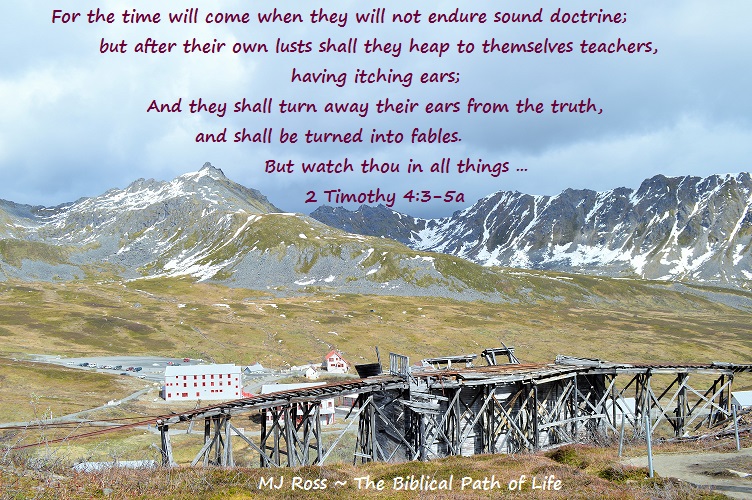
    3. For the time will come when they will not endure sound doctrine; but after their own lusts shall they heap to themselves teachers, having itching ears; 4. And they shall turn away their ears from the truth, and shall be turned unto fables. 5. But watch thou in all things …” (2 Timothy 4:3-5a). Today it is too easy to listen to teachers (or preachers) tell us what good people we are and what good things we are doing for the kingdom of God. They sound so nice and make us feel so good about ourselves. But words like these turn ears away from the truth of God’s Word; for there is nothing good in mankind – unless one has given their heart and life to Jesus, living according to the Bible and its teachings. Any other teaching is a fable – fiction, not real. Knowing this would happen, Paul warned Timothy to “watch” in all things. He was to be ready by knowing the Bible and its true teachings.

    Do you hold fast to true doctrine?

    Have you studied to show yourself approved and not ashamed?

    Do you endure sound doctrine or have itching ears?

    Be sure to watch!

  • The Only Way

    Each Christian needs to know, and even memorize, these scriptures in order to tell someone else how to be saved. Tell someone today!

    1. Lostness:  Romans 3:23:  “For all have sinned, and come short of the glory of God;”
    2. Penalty: Romans 6:23:  “For the wages of sin is death; but the gift of God is eternal life through Jesus Christ our Lord.”
    3. Price:  Romans 5:8:  “But God commendeth his love toward us, in that, while we were yet sinners, Christ died for us.”
    4. Response:  Romans 10:9-10:  “9. That if thou shalt confess with thy mouth the Lord Jesus, and shalt believe in thine heart that God hath raised him from the dead, thou shalt be saved. 10. For with the heart man believeth unto righteousness; and with the mouth confession is made unto salvation.”
    5. Security:  Romans 8:38-39:  “38. For I am persuaded, that neither death, nor life, nor angels, nor principalities, nor powers, nor things present, nor things to come, 39. Nor height, nor depth, nor any other creature, shall be able to separate us from the love of God, which is in Christ Jesus our Lord.”
    6. New Life:  Romans 12:1-2:  “1. I beseech you therefore, brethren, by the mercies of God, that ye present your bodies a living sacrifice, holy, acceptable unto God, which is your reasonable service. 2. And be not conformed to this world: but be ye transformed by the renewing of your mind, that ye may prove what is that good, and acceptable, and perfect, will of God.”