Tag: Christian

  • Paul’s Encouragement and Warning

    We then that are strong ought to bear the infirmities of the weak, and not to please ourselves.
    Romans 15:1

    Excerpt from Y3Q2 Lesson 10: Paul’s Third Missionary Journey:

    “The leaders in the church of Ephesus, of whom Paul had called to himself to speak, needed to realize that Paul would no longer be there physically to rely upon. They had to step up and take care of God’s church. “… 27. For I have not shunned to declare unto you all the counsel of God. 28. Take heed therefore unto yourselves, and to all the flock, over the which the Holy Ghost hath made you overseers, to feed the church of God, which he hath purchased with his own blood” (Acts 20:25-28). Paul had done the job God had given him to do: he declared to all of the people the counsel of God (counsel means “God’s purpose, or plan”). He had taught them. Knowing that Paul would not be able to return to them, these men had to be prepared. “29. For I know this, that after my departing shall grievous wolves enter in among you, not sparing the flock. 30. Also of your own selves shall men arise, speaking perverse things, to draw away disciples after them” (Acts 20:29-30). They must not only be prepared themselves, but they must take care of, and prepare, the church over which they were the leaders. Not only would some (“grievous wolves”) come in and try to destroy new Christians, as well as the church, but also there would be leaders arise that would be filled with “perverse things” (perverse things means “perverted; corrupt; vicious; or ‘to turn aside divine truth’”). Some leaders would try to cause people to follow them – not Jesus. What were they to do? “31. Therefore watch, and remember, that by the space of three years I ceased not to warn every one night and day with tears. 32. And now, brethren, I commend you to God, and to the word of his grace, which is able to build you up, and to give you an inheritance among all them which are sanctified” (Acts 20:31-32). They were to do just as Paul had done – for he had lived his life as an example. Paul warned that after teaching the new Christians how to live a Christian life (following Jesus), they would then have to warn the people, day and night, of these “grievous wolves” who would come “speaking perverse things” and to recognize them. Also, see what else Paul revealed. “I have shewed you all things, how that so labouring ye ought to support the weak, and to remember the words of the Lord Jesus, how he said, It is more blessed to give than to receive” (Acts 20:35). Support means “to take hold of another mutually as by the hand; i.e. figuratively to support from falling as by the hand; to support, help, assist.” Weak means “without strength, powerless; weak; to be afflicted, distressed as by want, oppression, calamity, and such.” Newer Christians (as well as newer churches) need extra support, for they are weak in their new Christian life. Many new Christians (and even some older ones) are often afflicted and distressed by their want (things they desire, or want, as opposed to things God would have for them), or even what seems to be a calamity in their life. Paul warned that these people needed “support from falling as by the hand,” or assistance, from stronger Christians.

    “After teaching them face-to-face one last time … one cannot help but recognized the impact that Paul had upon these Christians’ lives. These people loved Paul for the life he had lived, faithfully teaching them the things of Jesus.

    “A Deeper Path: It is the responsibilities of church leaders to help new Christians (those who are “weak”) grow in Christ. However, it is not only the responsibility of the leaders, but it is the duty of all Christians. See the following verses. “1. We then that are strong ought to bear the infirmities of the weak, and not to please ourselves. 2. Let every one of us please his neighbour for his good to edification” (Romans 15:1-2). That are strong means “one who is strong, firm, fixed, established” – referring to the things of Christ. Infirmities means “to be weak or powerless; the result of being weak: i.e. referring to the scruples which arise by being weak in the faith of Jesus.” As Christians, we are not to please ourselves, for we must always remember that there are newer Christians who may not understand the things we do – for a newer Christian may not always know what the right thing to do in a situation is. It is the responsibility of every Christian to live a life according to God’s Word, so that newer Christians are not confused. We are to live a life that is right “for his good to edification.Good means “good, in respect to operation or influence on others; i.e.: useful, profitable, beneficial.” Edification means “building as a process; i.e.: edification, spiritual profit or advancement.” Christians are to live lives that cause other Christians to become better Christians by living a life that pleases Jesus.”

    Do you live a Christian life that helps newer Christians understand how to please Jesus, growing stronger?

  • Great is Thy Faithfulness

    22. It is of the LORD’S mercies that we are not consumed, because his compassions fail not. 23. They are new every morning: great is thy faithfulness.
    Lamentations 3:22-23

    Today is a day of uncertainty. The news is full of earthquakes, fires, hurricanes, tornadoes, illnesses, the possibility of food shortages, wars and rumors of wars, and so many other things of which to be fearful. This leads to much apprehension in the world today. I have never known a time when so many people are anxious about almost everything. The constant onslaught can be almost overwhelming!

    Why should a Christian not be afraid?

    What does God’s Word teach us about fear? We are to remember that God is with us. “1. God is our refuge and strength, a very present help in trouble. 2. Therefore will not we fear, though the earth be removed, and though the mountains be carried into the midst of the sea; 3. Though the waters thereof roar and be troubled, though the mountains shake with the swelling thereof” (Psalm 46:1-3). If we walk with God, He will be with us.

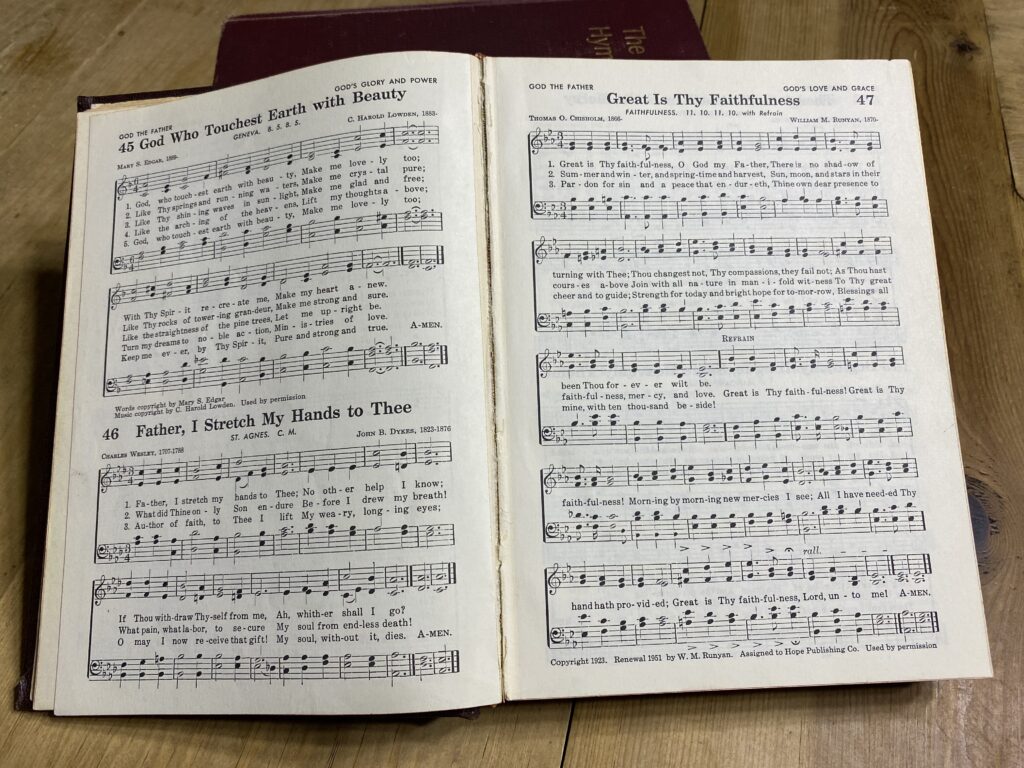
    Jeremiah was a prophet who spoke God’s Word to the Israelite people for around forty years. The people were not walking with God, and it was a time of much trouble in the land. Eventually, the enemies came, destroyed Jerusalem, and carried the people away captive. Jeremiah witnessed these events. Although he had warned the people of the coming invasion, they had not heeded his warnings to turn back to God. The whole nation suffered because of this – even Jeremiah. Understandably, Jeremiah was greatly saddened with these events. Jeremiah wrote the following as he witnessed God’s judgment upon His people for their continual rejection of His Word: “The LORD is righteous; for I have rebelled against his commandment: hear, I pray you, all people, and behold my sorrow …” (Lamentations 1:18a). He wrote the book of Lamentations, revealing the horrors he witnessed, and the sorrow in his heart. Yet in the midst of that sad book, he reminded us of a very pleasant hope. “22. It is of the LORD’S mercies that we are not consumed, because his compassions fail not. 23. They are new every morning: great is thy faithfulness. 24. The LORD is my portion, saith my soul; therefore will I hope in him. 25. The LORD is good unto them that wait for him, to the soul that seeketh him” (Lamentations 3:22-25). Jeremiah knew God was with him. He understood that God is a forgiving God – even when we fail Him miserably! Have you heard the song we often sing in churches written from these verses? Great is Thy Faithfulness. Read the following encouraging words:

    1. Great is Thy faithfulness, O God my Father, There is no shadow of turning with Thee;

    Thou changest not, Thy compassions they fail not; As Thou has been Thou forever wilt be.

    2. Pardon for sin and a peace that endureth, Thine own dear presence to cheer and to guide;

    Strength for today and bright hope for tomorrow, Blessings all mine, with ten thousand beside!

    Refrain: Great is Thy faithfulness! Great is Thy faithfulness! Morning by morning new mercies I see;

    All I have needed Thy hand hath provided; Great is Thy faithfulness, Lord, unto me! Amen!

    It is easy to constantly be distracted by the relentless onslaught of bad news. As one hears the new potential crisis almost every day, it is hard to focus one’s thoughts upon God and the things of God. When we forget God and begin to focus upon the troubles of the world, the problems can appear to be overwhelming. It is before one reaches this point that a decision must be made. What must a Christian decide? To trust God! It is then that when all of the troubles of the world seem to come against us, we can stop and be at rest knowing God is in control. “Be still, and know that I am God: I will be exalted among the heathen, I will be exalted in the earth” (Psalm 46:10). We will then remember that God will take care of His own. “5. Trust in the LORD with all thine heart; and lean not unto thine own understanding. 6. In all thy ways acknowledge him, and he shall direct thy paths. 7. Be not wise in thine own eyes: fear the LORD, and depart from evil” (Proverbs 3:5-7). We are to fear the Lord, doing what His Word says to do. That should be rather easy – for if we walk with God, we will depart from evil.

    Christians should not be so entangled in the troubles of the day that one forgets to walk with (and especially trust) God. Turn off the news and read the Bible. Remember: “… his compassions fail not. 23. They are new every morning: great is thy faithfulness” (Lamentations 3:22-23). Also keep in mind: “The LORD is good unto them that wait for him, to the soul that seeketh him” (Lamentations 3:25). It is important for Christians to seek the Lord and not the potential troubles of the day.

    Do you seek the Lord, understanding that if we walk with Him, He will be faithful?

  • Be Faithful

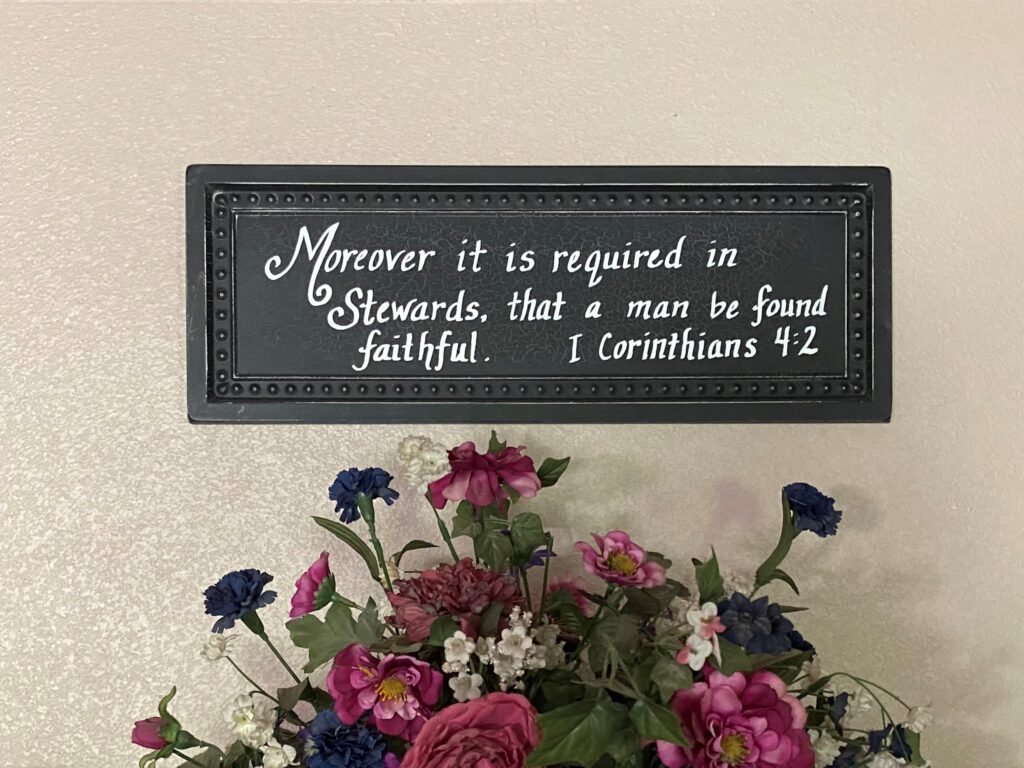
    Moreover it is required in stewards, that a man be found faithful
    1 Corinthians 4:2

    God has a special plan for each Christian’s life. It is important to read God’s Word (Bible), hearing from God, to learn what that plan is. It is then a choice to either follow God’s plan for that life, or choose to disregard what God has planned. There are many examples of this in the Bible. Consider the following events.

    Saul had been with the religious leaders when Stephen was stoned because he spoke of Jesus. In Acts chapter nine, we read that Saul went to Damascus to find anyone who followed Jesus so he could take them bound to Jerusalem. “And Saul, yet breathing out threatenings and slaughter against the disciples of the Lord, went …” (Acts 9:1). However, on the way, Saul saw the glory of the Lord revealed to him and was told to go to Damascus and wait. It is here that we are introduced to a “certain disciple at Damascus” whose name was Ananias. He lived in Damascus at this time. The Lord came to Ananias in a vision, and told him to go, “… and enquire in the house of Judas for one called Saul, of Tarsus: for, behold, he prayeth, 12. And hath seen in a vision a man named Ananias coming in, and putting his hand on him, that he might receive his sight” (Acts 9:11-12). 

    Once again God called one of his disciples (a Christian) to go and speak His Words to one particular individual (remember Philip who was sent to the Ethiopian Eunuch). Saul would be expecting Ananias to come see him. What did Ananias do? “13. Then Ananias answered, Lord, I have heard by many of this man, how much evil he hath done to thy saints at Jerusalem: 14. And here he hath authority from the chief priests to bind all that call on thy name” (Acts 9:13-14). Ananias was understandably afraid. He had heard of Saul. He also knew what Saul was doing to anyone who believed in Jesus. “But the Lord said unto him, Go thy way: for he is a chosen vessel unto me, to bear my name before the Gentiles, and kings, and the children of Israel” (Acts 9:15). Chosen vessel means “a person as the instrument of usefulness for someone.” God had plans for Saul – just as He has plans for each person who belongs to Him. God told Ananias what His plans for Saul were – to tell the Gentiles, kings, and the children of Israel about Jesus.

    Ananias was asked to do something very difficult. He had a choice to make. Obey God, or walk away in fear. “And Ananias went his way, and entered into the house; and putting his hands on him said, Brother Saul, the Lord, even Jesus, that appeared unto thee in the way as thou camest, hath sent me, that thou mightest receive thy sight …” (Acts 9:17). Recognize that Ananias trusted in God, more than he was afraid of Saul. Ananias believed the Lord when He said that Saul was a chosen vessel for God, and he greeted Saul as, “Brother Saul.” What happened to Saul? He received his sight. This sight was more than physical sight. Read how Saul (later called Paul) described the lost condition of a life apart from Jesus and His Gospel message: “3. But if our gospel be hid, it is hid to them that are lost: 4. In whom the god of this world hath blinded the minds of them which believe not, lest the light of the glorious gospel of Christ, who is the image of God, should shine unto them. 5. For we preach not ourselves, but Christ Jesus the Lord; and ourselves your servants for Jesus’ sake. 6. For God, who commanded the light to shine out of darkness, hath shined in our hearts, to give the light of the knowledge of the glory of God in the face of Jesus Christ” (2 Corinthians 4:3-6). Saul’s (Paul’s) eyes and his heart had been blinded. Yet he received the Truth of God’s Word and believed. He not only believed in Jesus, but he became a servant who told many others about Christ Jesus the Lord. What did Saul do after he believed in Jesus and received his sight? “And straightway he preached Christ in the synagogues, that he is the Son of God” (Acts 9:20). There was a change that took place in Saul’s heart that was pictured in his life when he was blinded and then received his sight. He had been brought out of the darkness into the “light of the knowledge of the glory of God in the face of Jesus Christ.

    This is a great testimony to the faithfulness of Ananias. He chose to go speak to Saul – just as the Lord had told him to do. This event should encourage us never to be afraid to obey God’s will. “1. Let a man so account of us, as of the ministers of Christ, and stewards of the mysteries of God. 2. Moreover it is required in stewards, that a man be found faithful” (1 Corinthians 4:1-2). The mystery of God is the introduction into the truths of the Gospel message. Never undervalue the importance of sharing the Gospel message with one individual who may be brought to Christ. Saul (Paul) was important to God.

    Are you a faithful steward of the mysteries of God, willing to share the Gospel message when God asks?

  • We are His Workmanship

    For we are his workmanship, created in Christ Jesus unto good works, which God hath before ordained that we should walk in them.”
    Ephesians 2:10

    John the Baptist prepared the way for Jesus by preaching repentance. In that message, John was preparing the people’s hearts to understand their need for Jesus. After John the Baptist introduced the people to Jesus, read what happened. “35. Again the next day after John stood, and two of his disciples; 36. And looking upon Jesus as he walked, he saith, Behold the Lamb of God!” (John 1:35-36). John again declared Jesus as the Lamb of God. “And the two disciples heard him speak, and they followed Jesus” (John 1:37). Recognize that these men left John the Baptist to follow the One for which John had come to prepare the way. John had done His job: he had directed the people’s attention to the Savior of the world, Jesus. These men left John, and they followed Jesus.

    38. Then Jesus turned, and saw them following, and saith unto them, What seek ye? They said unto him, Rabbi, (which is to say, being interpreted, Master,) where dwellest thou? 39. He saith unto them, Come and see. They came and saw where he dwelt, and abode with him that day … 40. One of the two which heard John speak, and followed him, was Andrew, Simon Peter’s brother” (John 1:38-40). John’s disciples called Jesus Rabbi (Master); yet another indication that they had turned their focus from John to Jesus. They were ready to hear the teachings of Jesus now that they had met Him. Rabbi means “a doctor, teacher, master; a title of honor in the Jewish schools.” After Andrew believed in Jesus, he immediately found his brother, Simon (Peter), and took him to meet Jesus.

    The day following Jesus would go forth into Galilee, and findeth Philip, and saith unto him, Follow me” (John 1:43). Jesus called Philip, too. What did Philip do? “Philip findeth Nathanael, and saith unto him, We have found him, of whom Moses in the law, and the prophets, did write, Jesus of Nazareth, the son of Joseph” (John 1:45). Philip recognized who this man was that called him. Philip understood that Jesus was the Promised One that Moses and the prophets had written about in the Old Testament. Immediately he went and found Nathanael to bring him to Jesus. (Remember, that is what Andrew had done. Andrew immediately went and found his brother, Simon.) Today, when a person meets Jesus, becoming a Christian, the immediate response should be to introduce others to Jesus, too.

    Nathanael was a skeptic – at first. Nevertheless, after Jesus told him where he had been, Nathanael believed. Remember that each person has the choice – to believe or not to believe. Nathanael believed.

    Many people followed Jesus because they wanted to hear His teachings – so many that they crowded Him. Jesus saw the empty ships, and asked Simon to thrust the ship out a little from the shore. Jesus taught the people from the ship. After finishing teaching, Jesus told Simon (Peter) to go out to the deep water and throw out their nets again to fish. Simon (Peter) initially objected – but then he obeyed Jesus. They caught so many fish that their nets broke, and then both ships began to sink because of the number of fish caught. How did Peter respond? “8. When Simon Peter saw it, he fell down at Jesus’ knees, saying, Depart from me; for I am a sinful man, O Lord. 9. For he was astonished, and all that were with him, at the draught of the fishes which they had taken” (Luke 5:8-9). Especially notice that Peter was not the only one affected by this miraculous catch of fish. “10. And so was also James, and John, the sons of Zebedee, which were partners with Simon. And Jesus said unto Simon, Fear not; from henceforth thou shalt catch men. 11. And when they had brought their ships to land, they forsook all, and followed him” (Luke 5:10-11). It was at this point that these four men forsook their old occupation as fishermen of fish, and followed Jesus as fishers of men. If you notice, it said, “they forsook all.” In Matthew, chapter four it tells us that James and John were working with their father. They left him, too. 

    People were trying not only to hear Jesus’ teachings, but also to be healed. Many people followed Jesus. He was drawing the people from a religious practice to a commitment of the heart – a heart committed to Jesus. Jesus saw the need of the people. Read what Jesus did. “12. And it came to pass in those days, that he went out into a mountain to pray, and continued all night in prayer to God. 13. And when it was day, he called unto him his disciples: and of them he chose twelve, whom also he named apostles” (Luke 6:12-13). Apostle means “an ambassador; it indicates the distinctive relation of the 12 men Jesus chose to be His witnesses of Him before the world.” This was the third call of these men. They were initially called to believe in Jesus. Then they were called to follow Jesus. Finally, Jesus called them for a special purpose – to be His apostles.

    Just as Jesus called the twelve disciples (Apostles) for a special purpose, when someone today is saved (asks Jesus into their heart), Jesus has a special purpose for them as well. “8. For by grace are ye saved through faith; and that not of yourselves: it is the gift of God: 10. For we are his workmanship, created in Christ Jesus unto good works, which God hath before ordained that we should walk in them” (Ephesians 2:8, 10). Not only are Christians His workmanship (workmanship means “the result of work; something produced; something made”), but God has before ordained (before ordained means “to make ready beforehand; used of God’s foreordaining for good, referring to glory and good works”) that new Christian to walk in that new life Jesus has for them. Jesus has a job for each Christian.

    Have you believed in Jesus, becoming a Christian?

    Do you follow Jesus and His teachings?

    Have you recognized the job that Jesus has for your life?

  • Thoroughly Furnished

    That the man of God may be perfect, throughly furnished unto all good works.
    2 Timothy 3:17

    After learning of Paul and his missionary journeys in the book of Acts, we can read the letters he wrote to the Gentile churches – many of which he started while on those missionary journeys recorded in the book of Acts. When we study these letters, we begin to recognize a pattern that develops. This pattern is revealed in an important verse found in Second Timothy. “All scripture is given by inspiration of God, and is profitable for doctrine, for reproof, for correction, for instruction in righteousness” (2 Timothy 3:16).  Look at this verse more in depth by using the following definitions to help in the understanding of it: 

    • Scripture means “every part of the whole and all of it together; that which has been written once and for all and constitutes the final authority of God’s revelation.”
    • Given by inspiration of God means “prompted by God; divinely inspired; appears only in 2 Timothy 3:16.”
    • Profitable means “to be useful, profitable, or advantageous.”
    • Doctrine means “teaching or instruction with the meaning of warning.”
    • Reproof means “to convict; in the sense of refutation of adversaries; not merely the charge on the basis of which one is convicted, but the manifestation of the truth of that charge and the results to be reaped; the acknowledgement of its truth on the part of the accused.”
    • Correction means “to set right again; to correct or make straight.”
    • Instruction means “to instruct; rectification; including discipline.”

    Recognize that this verse cites the four benefits (profitableness) of the Word of God: doctrine, reproof, correction, and instruction. The different parts of this verse reveal that each of these components are interdependent and are all necessary in the process of sanctification of a Christian’s life. First, the Word of God is presented as doctrine or instruction as in authoritative teaching. Then as truth, which is ethically persuasive, convincing one of error. Next, it places that person in a correct moral position, which allows one to be brought to the final place where that one can be provided the discipline, chastisement, or training needed to bring about righteousness. This verse summarizes the third division of the New Testament:  Romans – 2 Thessalonians. It is with this insight that Paul spent much of his time writing to the new churches, so that they would know how to become righteous.

    Remember theses letters of Paul that are important for each Christian to study:

    • Romans: the teaching of doctrine,
    • 1 and 2 Corinthians: reproof for failure to live right,
    • Galatians: correction, rectifying wrong doctrine that had permeated the church,
    • Ephesians: the revealing of deeper doctrinal truths intended for growing Christians,
    • Philippians: reproof for wrong living, the rectifying of a potential problem,
    • Colossians: correction to rectify wrong doctrine,
    • 1 and 2 Thessalonians: the teaching of doctrine and instructions.   

    Did you notice the pattern of how these books, or letters, can be used as doctrine, reproof, correction, and instruction? As we read about the churches as they received these letters from Paul, some of them immediately put into practice what was taught therein. When that happened, we read that Paul received encouraging words about the growth of the churches. After reading theses letters (books), can you recognize the different stages of implementation each one was designed to teach? Remember, that these books (letters) are for Christians to use even today. Remember what the very next verse in Second Timothy says. “That the man of God may be perfect, throughly furnished unto all good works” (2 Timothy 3:17). The words throughly furnished means “to equip fully; completely.” This is the purpose of God’s Word. To equip Christians completely to be able to do what God wants us to do.

    Do you read understanding that all Scripture, when it is implemented into one’s life, will furnish you unto all good works?

  • Jesus, our Redeemer

    But now in Christ Jesus ye who sometimes were far off are made nigh by the blood of Christ.
    Ephesians 2:13

    In the book of Ruth, after reading about Ruth and Boaz, we see the parallel to the redemption Jesus did for us on the cross. Ruth was drawn to God and His people. She found out about a kinsman redeemer; Ruth was to go to him, uncover his feet, and lie down, and he would tell her what to do. The same thing happens when we come to Christ. Notice the ones who came to Jesus’ feet and what He did for them. “And great multitudes came unto him, having with them those that were lame, blind, dumb, maimed, and many others, and cast them down at Jesus’ feet; and he healed them” (Matthew 15:30). When they believed, they were not only healed but redeemed (saved).   

    God brings us to Him (sometimes through unusual circumstances):

    Wherefore the law was our schoolmaster to bring us unto Christ, that we might be justified by faith” (Galatians 3:24). There is another verse to see. “12. That at that time ye were without Christ, being aliens from the commonwealth of Israel, and strangers from the covenants of promise, having no hope, and without God in the world: 13. But now in Christ Jesus ye who sometimes were far off are made nigh by the blood of Christ” (Ephesians 2:12–13).

    Jesus is our Redeemer:

    The LORD redeemeth the soul of his servants: and none of them that trust in him shall be desolate” (Psalm 34:22). There is another verse to see. “13. Who hath delivered us from the power of darkness, and hath translated us into the kingdom of his dear Son: 14. In whom we have redemption through his blood, even the forgiveness of sins” (Colossians 1:13–14).  

    God reveals the need for redemption, if only we will ask:

    6. They that trust in their wealth, and boast themselves in the multitude of their riches; 7. None of them can by any means redeem his brother, nor give to God a ransom for him: 8. (For the redemption of their soul is precious, and it ceaseth for ever)” (Psalm 49:6–8). See also the following. “Seek ye the LORD while he may be found, call ye upon him while he is near” (Isaiah 55:6). There are more verses to see. “8. But what saith it? The word is nigh thee, even in thy mouth, and in thy heart: that is, the word of faith, which we preach; 9. That if thou shalt confess with thy mouth the Lord Jesus, and shalt believe in thine heart that God hath raised him from the dead, thou shalt be saved. 10. For with the heart man believeth unto righteousness; and with the mouth confession is made unto salvation(Romans 10:8–10).

    God reveals the price for redemption was paid by Jesus’ death on the cross and we are then made His own:

    18. Forasmuch as ye know that ye were not redeemed with corruptible things, as silver and gold, from your vain conversation received by tradition from your fathers; 19. But with the precious blood of Christ, as of a lamb without blemish and without spot: 20. Who verily was foreordained before the foundation of the world, but was manifest in these last times for you” (1 Peter 1:18–20). See also: “8. But God commendeth his love toward us, in that, while we were yet sinners, Christ died for us. 9. Much more then, being now justified by his blood, we shall be saved from wrath through him. 10. For if, when we were enemies, we were reconciled to God by the death of his Son, much more, being reconciled, we shall be saved by his life. 11. And not only so, but we also joy in God through our Lord Jesus Christ, by whom we have now received the atonement” (Romans 5:8–11).  

    Why and what should we do?

    11. For the grace of God that bringeth salvation hath appeared to all men, 12. Teaching us that, denying ungodliness and worldly lusts, we should live soberly, righteously, and godly, in this present world; 13. Looking for that blessed hope, and the glorious appearing of the great God and our Saviour Jesus Christ; 14. Who gave himself for us, that he might redeem us from all iniquity, and purify unto himself a peculiar people, zealous of good works” (Titus 2:11–14). Then we are to show the world what Jesus can do for them. “To open their eyes, and to turn them from darkness to light, and from the power of Satan unto God, that they may receive forgiveness of sins, and inheritance among them which are sanctified by faith that is in me” (Acts 26:18).

    Have you believed in Jesus by faith, having then been redeemed, becoming a Christian?

  • Stand and Learn to Trust

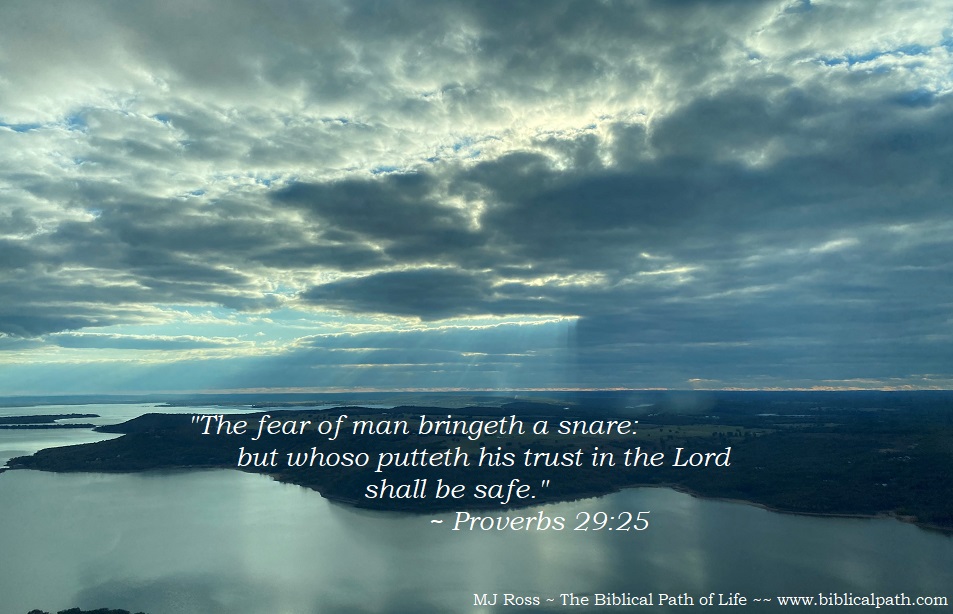
    The fear of man bringeth a snare: but whoso putteth his trust in the LORD shall be safe.
    Proverbs 29:25

    Esther is an amazing book in the Bible. One cannot read the name of God in the book (except in hidden places). Yet, God moves in unobvious ways in the affairs of men to bring about the salvation of His people. As you read the events, one can recognize a few noticeable things.

    Mordecai is the cousin of the young woman who became the Persian King Ahasuerus’s queen. Her name was Esther. Mordecai had raised her after her parents died. Mordecai had not revealed that he was a Jew in Shushan, and had told Esther not to reveal that she was a Jew. However, there was a day when Mordecai was told he must bow to Haman, the enemy of the Jews (see Esther 3:10). “Now it came to pass, when they spake daily unto him, and he hearkened not unto them, that they told Haman, to see whether Mordecai’s matters would stand: for he had told them that he was a Jew” (Esther 3:4). It was then that Mordecai chose to stand. He would not bow to Haman, the enemy of God’s people.

    Shortly after this, Haman lied to the king about the Jewish people and convinced him to make a law to kill all of the Jewish people. When Mordecai heard, he cried and fasted. When Queen Esther heard of Mordecai’s condition, she sent clothes asking why he was crying and fasting. He sent a copy of the law to Queen Esther. He told her she needed to go to the king and ask for the lives of her people, the Jews. Esther understood the Persian law – if she went to the king without first being called, he could have her put to death. Mordecai encouraged her that she could not keep her peace at this time saying, “and who knoweth whether thou art come to the kingdom for such a time as this?” (Esther 4:14b). What was Esther’s reply to Mordecai? “… And so will I go in unto the king, which is not according to the law: and if I perish, I perish” (Esther 4:16b). Esther then fasted for three days (most likely asking for God’s wisdom and mercy).  

    For those who have read the events, you know that Esther went to the king and he did not kill her. Esther risked her life, willing to die, and was able to save her people from death. Reading the timing of the events that took place, one cannot help but recognize God moving in the events of these people at this time and place in history, bringing about the salvation of his people from certain death.

    What does this have to do with a Christian who lives in the world today?

    There is a point in each Christian’s life that they must stand. They are to stand for the Lord and His people, against the enemy of God’s people. “Watch ye, stand fast in the faith, quit you like men, be strong” (1 Corinthians 16:13). Christians are to watch, stand fast in the faith, and be strong. How is a Christian to stand for Biblical principles? “That your faith should not stand in the wisdom of men, but in the power of God” (1 Corinthians 2:5). It is then that we are to remember some amazing things.

    In each of the four Gospels (Matthew, Mark, Luke and John), Jesus said some very important things that we should recognize and implement into our lives.

    • For whosoever will save his life shall lose it: and whosoever will lose his life for my sake shall find it” (Matthew 16:25).
    • For whosoever will save his life shall lose it; but whosoever shall lose his life for my sake and the gospel’s, the same shall save it” (Mark 8:35).
    • For whosoever will save his life shall lose it: but whosoever will lose his life for my sake, the same shall save it” (Luke 9:24).
    • He that loveth his life shall lose it; and he that hateth his life in this world shall keep it unto life eternal” (John 12:25).

    What is a Christian to do with this information? Recognize the following: “I am crucified with Christ: nevertheless I live; yet not I, but Christ liveth in me: and the life which I now live in the flesh I live by the faith of the Son of God, who loved me, and gave himself for me” (Galatians 2:20). A Christian’s life is no longer their own, it belongs to Christ who died for that life.

    Christians are not to live in fear of man, but place their trust in the Lord. “The fear of man bringeth a snare: but whoso putteth his trust in the LORD shall be safe” (Proverbs 29:25). Esther trusted God, and she was able to save her people.

    Have you learned to stand, not saving your own life, but losing your life for Jesus’ sake?

  • The Preaching of the Cross

    For the preaching of the cross is to them that perish foolishness; but unto us which are saved it is the power of God.
    1 Corinthians 1:18

    Many times in the Old Testament, we read of the promise of Jesus. No one knew His name, yet God’s people were to be looking for Him the same. At times, God revealed specific things He wanted the people to understand. “Behold, my servant shall deal prudently, he shall be exalted and extolled, and be very high” (Isaiah 52:13). “Behold, my servant” is speaking of Jesus. God said Jesus would “deal prudently” meaning Jesus would succeed in completing what God expected Him to do. Continuing through that verse, see that it says that Jesus will be “exalted and extolled” which means “to raise, or lift up; to carry off; take away; it is the idea of one who is a substitution bearing the guilt or punishment of sin.” So just from that one verse we understand that God told Isaiah that He would send Jesus who would complete the task of being lifted up as the one who would take away the guilt and punishment of sin by becoming the substitute – the one who took sinful man’s place. This is what God had promised Adam and Eve in the garden (see Genesis 3:15).

    They were to be aware of the suffering death that this One would have to endure. Remember that when Jesus came, He was scourged and delivered to be crucified (see Matthew 27:26, 29-30). Why did this happen? “So shall he sprinkle many nations; the kings shall shut their mouths at him: for that which had not been told them shall they see; and that which they had not heard shall they consider” (Isaiah 52:15). Understand that this verse tells us that Jesus’ death would enable Him to “sprinkle” many nations. “Sprinkle many nations” means “to cleanse from sin; the Servant of the Lord came to make an atonement for the sins of even the Gentiles.” In the Old Testament, the people understood the high priest had to sprinkle the blood of the ram upon the altar to cover their sins for another year (see Exodus 29:20). God sent His Son to take away the sin (not cover), and allowed the entire world to “see” and then to “consider.” “See” means “to gain understanding”; and “consider” means “to observe; to pay attention to; to gain insight or understanding.” Each person has to see and decide (believe) for himself.

    Immediately after Jesus death, burial, and resurrection, there were still many who did not understand what had happened, and many did not believe Jesus had even risen from the dead. There were two in particular who were on the road to Emmaus, not far from Jerusalem. On the evening of Jesus’ resurrection, they were walking and discussing all they had heard. Jesus joined them, walking and talking with them, yet they did not recognize Him (see Luke 24:15-16). When He asked what things they were discussing, they explained, “Concerning Jesus of Nazareth, which was a prophet mighty in deed and word before God and all the people: 20. And how the chief priests and our rulers delivered him to be condemned to death, and have crucified him. 21. But we trusted that it had been he which should have redeemed Israel: and beside all this, to day is the third day since these things were done” (Luke 24:19b-21). They were trying to “consider” but did not yet understand. After walking with them, listening to them as they continue their discussion, Jesus responded: “25. Then he said unto them, O fools, and slow of heart to believe all that the prophets have spoken: 26. Ought not Christ to have suffered these things, and to enter into his glory? 27. And beginning at Moses and all the prophets, he expounded unto them in all the scriptures the things concerning himself” (Luke 24:25-27). They needed to believe, by faith. “But to him that worketh not, but believeth on him that justifieth the ungodly, his faith is counted for righteousness” (Romans 4:5).   

    It is almost amazing to those today, who are Believers, to understand how they could not have recognized Jesus. However, many times in the Old Testament people should have understood and recognized what God was doing, yet they most of the time, they did not. All throughout the Old Testament, the people were taught of God, but they had a hard time understanding that He had been speaking of Jesus, who was to come. They lacked faith.

    For the preaching of the cross is to them that perish foolishness; but unto us which are saved it is the power of God” (1 Corinthians 1:18). See the following to help understand what this verse means: 

    • preaching means to speak intelligently about the word of the cross 
    • cross means the whole passion of Christ and the merit of His sufferings and death 
    • them that perish means exposed to eternal death 
    • foolishness means foolishness or absurdity
    • saved means those who have obtained salvation through Christ and are kept by Him 
    • power means a person in whom the power of God is manifested  

    The “power of God” was revealed when Jesus came and finished what God had for Him to do. Jesus came to pay the penalty for sin, taking it away from any who would only believe.

    Have you believed the preaching of the cross, becoming a Christian?

  • The Biblical Path of Life

    Thou wilt shew me the path of life: in thy presence is fulness of joy; at thy right hand there are pleasures for evermore.” Psalm 16:11

    Do you read the Bible?  Do you understand what you read when you do take time to read it?

    The Bible is the Word of God. It has been preserved for us to read, but very few people read and understand what the Bible has to say to us today. According to most statistics, young people are growing up and leaving the church and faith in God by the droves. The main reason can be found in the lack of knowledge and understanding of what one believes about God and why. Not many people take time to gain the information only found in the Bible that one needs to live in today’s world.

    Growing up in a Christian home is no guarantee that one understands the Bible, or knows how to live a Christian life. Being saved as a young child, I learned many Bible “stories,” but it wasn’t until later that I began to understand how all of these stories fit together. When I saw a timeline throughout Bible history, it helped me begin to understand how all of those “stories” were connected together. I also began to understand that Jesus was planned from the beginning of time to redeem mankind because of sin. I wanted to know and understand more of the Bible, so I began to study.

    The most important thing about studying the Bible should be to learn the basics of the Bible and how it should be applied to Christians’ lives. A good Bible study needs to be more than a compilation of “stories” we have always heard. The word “story” even brings to the hearers’ mind that they are make-believe. Many people do not even understand that the Bible is not just a compilation of popular Bible “stories” or favorite Bible passages. The Bible is not full of “stories” but actual events in real people’s lives. Children, as well as adults, need to understand that each of these events all fit together as part of a bigger picture – much like pieces of a puzzle. Not only do these events interlock, but they also have a purpose: to reveal Jesus and why He came.

    It is very important to read God’s Word and be in a good Bible study where you can learn more about Jesus. One important goal each Christian should have is to know and understand more about the Bible. The more you learn about the Bible, the more you begin to understand that it is so much more than just a collection of events in people’s lives that lived long ago. In the Bible Study called The Biblical Path of Life, you can search and find out why the people who lived in the Old Testament times wanted to obey God. You can learn how they knew He would one day send Jesus. It is there one can see what happened to His people when they obeyed God’s Word, and even what happened when they forgot God’s Word. As you read the New Testament, you begin to recognize when people began to understand that Jesus was the One who was to come (the one promised in the Old Testament). These events will be an encouragement to you, for it is then that one can understand God is with those who love Him, seek to please Him, and that God takes care of His people. “Thou wilt shew me the path of life: in thy presence is fulness of joy; at thy right hand there are pleasures for evermore” (Psalm 16:11). It is then that one begins to understand how to live a Christian life pleasing to God in the world today. The Bible means nothing to us if we do not apply the principles within to our lives to become more like Christ.

    All people, especially children, are capable of learning so much more. The Biblical Path of Life is one such study meant to simplify the understanding of the Bible making it relevant to a Christian’s life — young or old — by comparing Scripture to Scripture. Christians should understand just how important their Bible is and become familiar with it. Everyone should understand the importance of reading God’s Word!

    Even beginning readers should be encouraged to read their Bible. At first, even the youngest readers will be hesitant to read. Nevertheless, with a little encouragement and help, they can become excited about reading their Bible. No one is too young (or old) to begin to love the Word of God or to learn the principles found within God’s Word!

    In order to encourage people to know more of the Bible, I have posted blogs to motivate people to dig a little deeper into their Bible’s and study. Feedspot has recognized www.biblicalpath.com as one of the top 100 Bible Study Blogs. My hope is that by being listed here, many more people will be encouraged to read and understand what God’s Word has for people who are searching in these days.

    Do you take time to read your Bible, discovering God’s plan in these days?

  • Do You Love the Wages of Unrighteousness?

    For where your treasure is, there will your heart be also.
    Matthew 6:21

    Have you ever encountered one called a Christian, who chooses the ways and riches of this present world instead of walking a Christ-like life? This brings to mind a very real man named Balaam from the book of Numbers in the Old Testament.

    Balak, king of Moab, (along with all of the Moabites) were afraid of the Israelites, God’s people. Balak sent for Balaam. He wanted Balaam to curse God’s people. Balak had heard that whomever Balaam cursed was cursed, and whomever he blessed was blessed. Balak sent money with men to give Balaam as payment to come to him and curse the Israelites. God spoke to Balaam and told him not to go with the men and not to curse God’s people, for they were a blessed people. Balaam told the princes of Balak to go home. God would not allow him to go with them.

    Balak sent more men to tell him not to let anything keep him from coming to him – even giving promises of great honor. “And Balaam answered and said unto the servants of Balak, If Balak would give me his house full of silver and gold, I cannot go beyond the word of the LORD my God, to do less or more” (Numbers 22:18). Yet Balaam told the men to stay the night, and wait to see what God would tell him that night. “And God came unto Balaam at night, and said unto him, If the men come to call thee, rise up, and go with them; but yet the word which I shall say unto thee, that shalt thou do” (Numbers 22:20).

    God had already told Balaam not to go. God’s people were only to be blessed, for they were a blessed people. Yet when Balaam was offered honor, a house full of silver and gold, he told the men to wait. Why is that? Do you think he was hoping God would let him go so he could have all of that honor and gold? That night, God told him to go. Do you think that maybe this could have been a test to see what was in Balaam’s heart? Balaam went. “And God’s anger was kindled because he went: and the angel of the LORD stood in the way for an adversary against him …” (Numbers 22:22a). Balaam heard what God said, but he was not listening to what God had told him. God was angry with him for going.

    Balaam rode his donkey, heading to see Balak, king of Moab. The donkey saw the angel of the Lord standing in the way, but Balaam did not. The donkey understood that he was not to continue forward. Balaam was angry at his donkey, and began to hit the donkey when it sat down (Numbers 22:23). The donkey was trying to save his master’s life. God opened the mouth of that donkey, and he spoke to Balaam. And Balaam answered the donkey. He told the donkey that if he had a sword in his hand, he would kill him. “Then the LORD opened the eyes of Balaam, and he saw the angel of the LORD standing in the way, and his sword drawn in his hand: and he bowed down his head, and fell flat on his face” (Numbers 22:31). The angel told Balaam that if it hadn’t been for the donkey, he would have been killed. Why? “behold, I went out to withstand thee, because thy way is perverse before me” (Numbers 22: 32b). Balaam was not supposed to go to speak with King Balak. The angel of the Lord told Balaam to go on to see King Balak, but only speak the words God gave him to speak. Balaam went, told King Balak God’s Words, and blessed God’s people.

    If the events ended here, it might have seemed good. Nevertheless, at some point, Balaam gave King Balak counsel of the way to cause the Israelites to trespass against the Lord (Numbers 31:16). Balaam had not obeyed God. He was to have only spoken the words God gave him to King Balak. He chose to do disobey God, apparently greedy for reward and wages.

    Read the insight about the life of Balaam in the New Testament: “15. Which have forsaken the right way, and are gone astray, following the way of Balaam the son of Bosor, who loved the wages of unrighteousness; 16. But was rebuked for his iniquity: the dumb ass speaking with man’s voice forbad the madness of the prophet. 17. to whom the mist of darkness is reserved for ever. 18. For when they speak great swelling words of vanity, they allure through the lusts of the flesh, through much wantonness 19. While they promise them liberty, they themselves are the servants of corruption: for of whom a man is overcome, of the same is he brought in bondage” (2 Peter 2:15-19). He loved the wages of unrighteousness, and people like him allure through the lusts of the flesh, wantonness, promising liberty, but they are servants of corruption. They end up in bondage. 

    Another insight we read in the New Testament about Balaam: “10. But these speak evil of those things which they know not: but what they know naturally, as brute beasts, in those things they corrupt themselves. 11. Woe unto them! for they have gone in the way of Cain, and ran greedily after the error of Balaam for reward, and perished in the gainsaying of Core. 12. These are spots in your feasts of charity, when they feast with you, feeding themselves without fear: clouds they are without water, carried about of winds; trees whose fruit withereth, without fruit, twice dead, plucked up by the roots” (Jude 1:10-12). It declares that Balaam was in error and went after reward. His end was described as “twice dead, plucked up by the roots.”

    Would you want to be remembered as one who loved the wages of unrighteousness, ending up twice dead?