For I reckon that the sufferings of this present time are not worthy to be compared with the glory which shall be revealed in us.
—Romans 8:18
Key
Verse Thought: Read the key verse. Have you ever suffered? Suffered
means “endured affliction (hardships, troubles, misery, etc.).” This
verse is comparing suffering here in this life with the eternal “glory” that we
will know one day. (Glory means “the ideal condition God created man –the
condition that was lost in the fall, but that can be recovered in Jesus.”)
We will learn about a prophet who suffered greatly, yet remained faithful to
God. He understood that sufferings now “are not worthy to be compared” to what
we will be in heaven one day.
Emphasis:
We are to be faithful to God (just like Jeremiah was) – no matter what
“sufferings” we think we endure.
Lesson
Summary: In our last lesson, as we began the book of Jeremiah, we learned
that God knew him before he was even born. And that he would be a prophet to
the nations! We read many of the words that Jeremiah spoke to God’s people, and
even to the kings of Judah.
As we continue in our study of Jeremiah, we
will read about some of his rejections and sufferings. We will begin to
understand why Jeremiah is known as the “Weeping Prophet.” Jeremiah faithfully
proclaimed God’s Words to the people, warning them of the coming destruction
and captivity, if they did not repent and return to God. When the people failed
to repent, God allowed the Babylonians to besiege them. Jeremiah witnessed the
captivity of Judah
by Babylon and the destruction of Jerusalem,
the city where God had chosen to place His name. Even through all of this,
Jeremiah faithfully shared the Word of the Lord with the people. We will learn
of God’s protection of Jeremiah, allowing him to remain in the land to continue
delivering God’s Words to the remnant that was left behind.
God gave Jeremiah many words on the future of the nation Israel. We will look at a few of them today. He also reminded the people that God would keep His promise and send that Promised One, Jesus. See one of those promises. Jeremiah called Jesus the Branch of David. “In those days, and at that time, will I cause the Branch of righteousness to grow up unto David; and he shall execute judgment and righteousness in the land” (Jeremiah 33:15).
Tradition has it that Jeremiah was stoned to death.
If you are teaching this lesson to younger children, the following is an idea for a craft that may go with this lesson:
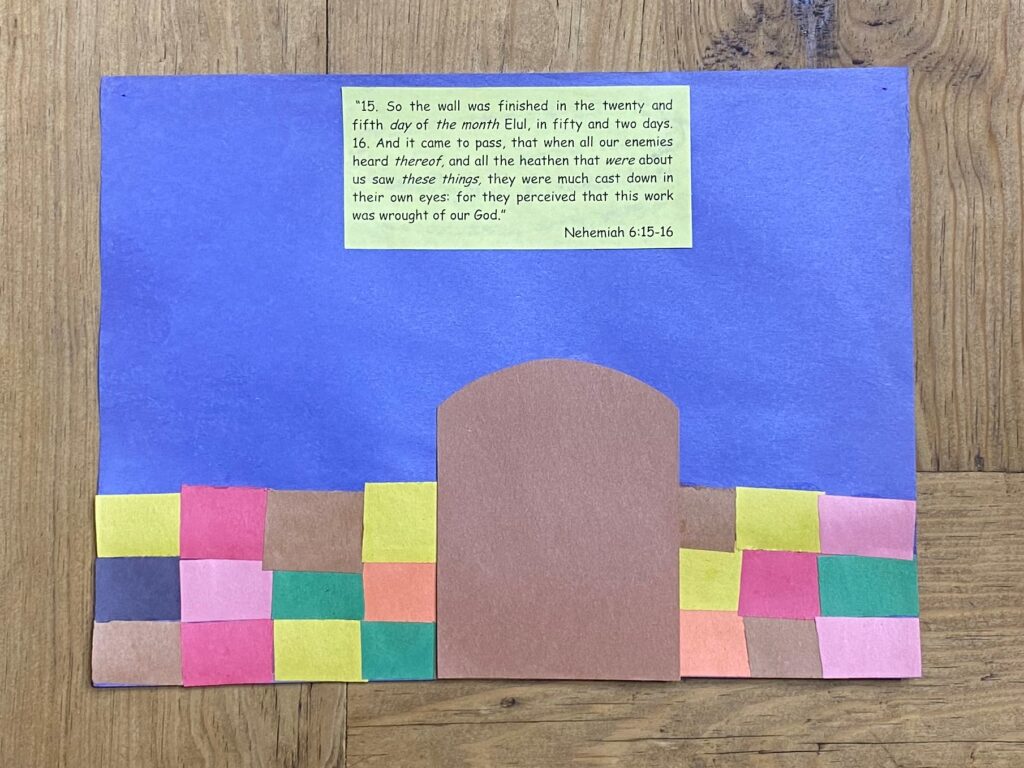
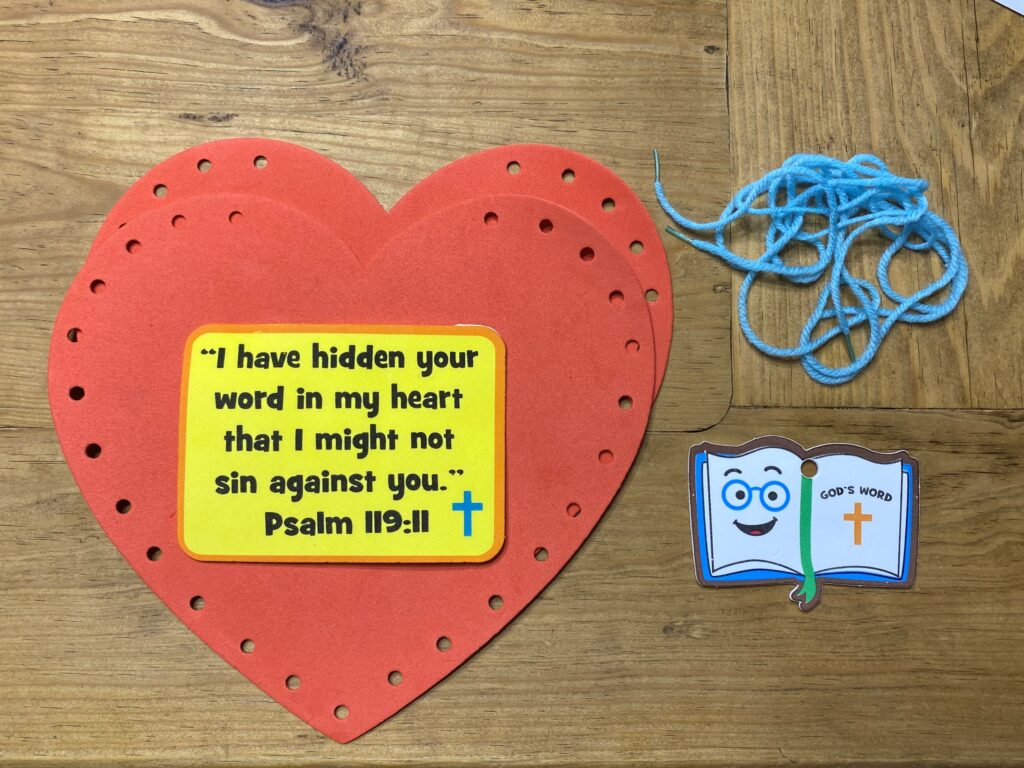
We made wall hangings with stickers and a verse (Jeremiah 38:6) to remind us of Jeremiah and his faithfulness to proclaim the Word of God no matter what they did to him.
“But if from thence thou shalt seek the LORD thy God, thou shalt find him, if thou seek him with all thy heart and with all thy soul.” Deuteronomy 4:29
Not many people today were born into a Christian family. What does this
mean? Most often, they do not understand or know God. How can one find God? How
can one know God?
In the life of King Hezekiah, we can read of a hope for someone whose
family does not know of God or the things of God. King Hezekiah was the son of
a terrible king of Judah, King Ahaz. King Ahaz had not only forsaken God, but
he also worshiped idols – even sacrificing some of his sons to the false god
Molech. Still through all of that, Hezekiah came to know God, and
he pleased God in all that he did. When Hezekiah became king, he removed all of
those high places where his father worshiped and even broke down all of those
images the people worshiped.
How was Hezekiah able to come to know God, knowing the family into which
he was born? Read the following verses: “But if from thence thou shalt seek
the LORD thy God, thou shalt find him, if thou seek him with all thy
heart and with all thy soul” (Deuteronomy 4:29).
One has to seek God. Also read the following: “The LORD looked down from
heaven upon the children of men, to see if there were any that did understand, and
seek God” (Psalm 14:2). God knows when someone
seeks after Him, for He is watching and waiting! Hezekiah opened the doors of
the house of the Lord at the beginning of his reign (see 2 Chronicles 29:2).
That was the place to begin. He then followed God’s Word.
According to the following verses, we can understand that King Hezekiah
took the time to seek God’s Word so he would know what God required to
reestablish the relationship that had been severed. “22. And if ye have
erred, and not observed all these commandments, which the LORD hath spoken unto
Moses … 24. Then it shall be, if ought be committed by ignorance without
the knowledge of the congregation, that all the congregation shall offer one
young bullock for a burnt offering, for a sweet savour unto the LORD, … 25. And
the priest shall make an atonement for all the congregation of the children of Israel,
and it shall be forgiven them; for it is ignorance: … 26. And it shall
be forgiven all the congregation of the children of Israel,
and the stranger that sojourneth among them; seeing all the people were
in ignorance” (Numbers 15:22-26).
That was what God required in the Old Testament times, while the kings ruled.
It is always important to know what God requires – and it is recorded in His
Word. As we read the New Testament, Jesus came to set us free from the rigorous
duties of the Law. “For the law having a shadow of good things to come, and
not the very image of the things, can never with those sacrifices which they
offered year by year continually make the comers thereunto perfect”
(Hebrews 10:1). See simply what Jesus did: “8. Above when he said, Sacrifice
and offering and burnt offerings and offering for sin thou wouldest not,
neither hadst pleasure therein; which are offered by the law; 9. Then
said he, Lo, I come to do thy will, O God. He taketh away the first, that he
may establish the second. 10. By the which will we are sanctified through the
offering of the body of Jesus Christ once for all” (Hebrews 10:8-10).
Jesus came to set us free from the continual sacrificial system of the Law.
Read what God did for Hezekiah for seeking Him with all of his heart. “And
in every work that he began in the service of the house of God, and in the law,
and in the commandments, to seek his God, he did it with all his heart,
and prospered” (2 Chronicles 31:21). Because King Hezekiah sought God, doing
just what God’s Word required, he not only found God, but God was honored. God then
caused King Hezekiah to prosper. God was then free to bless His people openly –
revealing Himself to not only Judah,
but also the nations around. King Hezekiah became one of the greatest kings of Judah.
Anyone who seeks God can know God. However, what does it take to know
God? “But without faith it is impossible to please him: for he
that cometh to God must believe that he is, and that he is a rewarder of
them that diligently seek him” (Hebrews 11:6). It takes faith.
“For ye are all the children of God by faith in Christ Jesus” (Galatians
3:26). One can know God only by faith
in Christ Jesus.
King Hezekiah is a great example of one who can give us hope. A hope that when God is sought, He will hear – as long as one comes to Him with a repentant heart. God can forgive anyone who will ask. “8. But what saith it? The word is nigh thee, even in thy mouth, and in thy heart: that is, the word of faith, which we preach; 9. That if thou shalt confess with thy mouth the Lord Jesus, and shalt believe in thine heart that God hath raised him from the dead, thou shalt be saved. 10. For with the heart man believeth unto righteousness; and with the mouth confession is made unto salvation …For whosoever shall call upon the name of the Lord shall be saved” (Romans 10:8-10, 13).
Have you come to know God, understanding knowledge of God only comes by faith in Jesus?
Preach the word; be instant in season, out of season; reprove, rebuke, exhort with all longsuffering and doctrine.
—2 Timothy 4:2
Key Verse Thought: Read
the Key Verse and use the following definitions to help you understand it
better:
preach means to herald (as a
public crier) especially the divine truth (the gospel); proclaim
instant means to stand upon,
that is, be present; be at hand, present, stand
in season means conveniently. From the word that means well timed, that is,
opportune.
out of season means inopportunely. From the word that means to be inopportune
(for oneself)
reprove means to confute,
admonish: convict, convince, tell a
fault, rebuke, reprove
rebuke means to tax upon,
that is, censure or admonish; by implication forbid; (straitly) charge
exhort means to call near,
that is, invoke (by imploration, or consolation): beseech, call for, intreat,
pray
We will see today that Jeremiah had this call upon his life.
It wasn’t an easy message he had to deliver, but he remained faithful through
much!
Emphasis: We are
to hear and understand the call of God upon our life. Christians are to be
faithful, as Jeremiah was, to obey that call no matter how difficult it may
seem.
Lesson Summary:
There is so much information found in the book of Jeremiah (much like the book
of Isaiah), that we could never fully understand it in a couple of lessons. The
next couple of lessons are meant to help one grasp a few of the important
things found in the book of Jeremiah. In addition, one should recognize that
Jeremiah too, preached Jesus.
Jeremiah lived about one hundred years after Isaiah. Jeremiah
was both a priest and prophet. God ordained Jeremiah as a prophet before he was
even born (see Jeremiah 1:4-5). He lived during the last five kings of Judah;
the kings we studied the last couple of lessons. Remember that only one of them
was a good king and that was King Josiah. Jeremiah preached during his reign
(see Jeremiah 2-12) during which time King Josiah began eliminating idolatry
and cleaning out the temple. Remember that while repairing the temple, a copy
of the Law was found. King Josiah read the law, leading Judah
to one final time of repentance and reformation. Today we will find new
information about the heart of the people during this time of reformation in Judah.
Jeremiah was given many signs for God’s people, and he had many messages from God for the people. We will take time to look at some of the words he spoke to the kings. We will especially remember the time that Jeremiah wrote the words of the Lord, and the evil king Jehoiakim cut it up with a penknife and threw it into a fire.
Jeremiah was a prophet to Judah before they were carried into captivity, and he prophesied that the people would be held in captivity for seventy years. We will continue to consider Jeremiah in our next lesson.
“Study to shew thyself approved unto God, a workman that needeth not to be ashamed, rightly dividing the word of truth.” 2 Timothy 2:15
The Gospel message began to spread out of Jerusalem
after Stephen’s death. This event let to the church being persecuted. One of
the great persecutors of the church, Saul, met Jesus and was saved on the road
to Damascus. There was a drastic
change in Saul when he met Jesus – for even his name was later changed to Paul.
However, it took time for the Believers in the church to recognize and
understand this fact.
God gave a couple of men that helped during
that time. One was Ananias, whom God sent to speak with Saul first. This was
important. Remember that Ananias had a message from God that Saul was chosen by
God to “bear my name before the Gentiles, and kings,
and the children of Israel” (Acts 9:15). Keep in mind that Saul had been one of
the religious leaders, a Pharisee, having been trained and taught in the Old
Testament Scriptures. Saul later declared before the council, “… Men and brethren, I am a Pharisee, the son of a
Pharisee …” (Acts 23:6). He was a Pharisee, taught in the ways of
the Pharisees in the “Jews’ religion.” Although
he knew the Old Testament Scriptures, he needed to understand them anew after
having believed Jesus was a fulfillment of those Scriptures. It would take time
and much study to prepare for the task Jesus had for Paul’s life – to be the
Apostle sent to the Gentile people. As we can read in Galatians, when he left Damascus,
there was a three-year period that Saul was taught by Jesus, enabling him to
preach the Gospel (see Galatians 1:10-19).
Those three years were very important. He had to know and understand the Gospel
message before he would be able to share it with others.
After those three years of learning from
Jesus, Saul returned to Jerusalem.
“And when Saul was come to Jerusalem,
he assayed to join himself to the disciples: but they were all afraid of him,
and believed not that he was a disciple” (Acts 9:26). Saul was an unusual case – for he had been a
viable threat to Believers, also called disciples of Jesus. Remember: he had
been on a mission to arrest and kill them. Because of this, most Believers were
afraid of Saul. Understand that they did not believe that he had become a
disciple. “But Barnabas took him, and brought him to the apostles,
and declared unto them how he had seen the Lord in the way, and that he had
spoken to him, and how he had preached boldly at Damascus in the name of Jesus”
(Acts 9:27). Nevertheless, see that God gave Saul an ally, a friend, in
Barnabas. Do you remember Barnabas? He was one of the many Believers who sold
their possessions, lands and houses and brought the money to the apostles (see
Acts 4:36-37). The early Believers
helped one another. This is yet another opportunity that Jesus was able to use
Barnabas: he was a vocal friend of Saul’s.
Although the new Believers were going out
from Jerusalem into the surrounding
areas, they still only told Jewish people about Jesus. There was a report that
was sent back from Antioch to Jerusalem
declaring many believed and turned to the Lord. When the report was received,
they sent Barnabas to go to Antioch.
Recognize how Barnabas is described here: “23. Who, when he came, and had
seen the grace of God, was glad, and exhorted them all, that with purpose of
heart they would cleave unto the Lord. 24. For he was a good man, and full of the Holy Ghost and of faith: and
much people was added unto the Lord” (Acts 11:23-24). He faithfully taught the people, and many more
believed in Jesus.
Read what happened next: “25. Then
departed Barnabas to Tarsus,
for to seek Saul: 26. And when
he had found him, he brought him unto Antioch. And it came to pass, that a whole year
they assembled themselves with the church, and taught much people. And the
disciples were called Christians first in Antioch”
(Acts 11:25-26). Barnabas went and
found Saul. They worked together, teaching the people about Jesus. It was at
this time in Antioch that the
disciples were first called Christians.
Shortly thereafter, we understand that God
had a special job for Barnabas and Saul. “As they ministered to the Lord,
and fasted, the Holy Ghost said, Separate me Barnabas and Saul for the work
whereunto I have called them” (Acts 13:2). And the people sent them – just
as God wanted. When Saul begins his ministry to the Gentiles, he is no longer
known as Saul, but Paul. “Then Saul, (who also is called Paul,)
filled with the Holy Ghost …” (Acts 13:9). This began the First Missionary
Journey of Paul and Barnabas.
It is very important for each person who becomes a Christian, to learn
the truths found in God’s Word – so they will be able to share those truths
with others (“Study to shew
thyself approved unto God, a workman that needeth not to be ashamed, rightly
dividing the word of truth” 2 Timothy 2:15). This takes time, and
much reading of the Bible. A good Christian friend helps tremendously! Just as
Barnabas helped Saul (Paul).
Are you one who has shown
yourself approved unto God, a workman, and even a friend, who will share the
Gospel of Jesus?
For mine eyes are upon all their ways: they are not hid from my face, neither is their iniquity hid from mine eyes.
—Jeremiah 16:7
Key
Verse Thought: Read the Key Verse and understand that God sees and knows
all. God knows when His people do wrong.
Nothing can be hidden from God. Keep that thought in mind as we remember the
final kings of Judah
today. God saw and knew of their wickedness, and He did not let it go
unpunished.
Emphasis: We are to understand that God sees and knows all – there is nothing hidden from God. He sees mankind’s sin. We will remember again in this lesson, that there is a penalty for sin. Nevertheless, God left them with hope.
Lesson Summary: In our last lesson, we read of the last good king of Judah, King Josiah. He did that which was right in the sight of the Lord. King Josiah made many great reformations, including repairing the house of the Lord. While repairs were being made, a book of the Law was found. When the king heard the Words read, he rent his clothes in repentance. He led all of Judah to make a covenant with the Lord to obey His commands. King Josiah died, and we then come to the final four kings of Judah: Jehoahaz, Jehoiakim, Jehoiachin, and Zedekiah. Jehoahaz did evil and only reigned for three months because the king of Egypt took him. Jehoahaz died in Egypt. The king of Egypt made his brother, Eliakim (changing his name to Jehoiakim) king instead. He too, was an evil king, and King Jehoiakim reigned for eleven years. During his reign, Babylon became known as their enemy, and King Jehoiakim served them for three years. “So Jehoiakim slept with his fathers: and Jehoiachin his son reigned in his stead” (2 Kings 24:6). Babylon began to besiege Jerusalem during his reign, “and the king of Babylon took him in the eighth year of his reign” (2 Kings 24:12). After carrying away everything of value (including the king, his family, princes, and servants), the king of Babylon made Jehoiakim’s brother, Mattaniah, the king – changing his name to Zedekiah. Zedekiah was a bad king and he reigned for eleven years. None of these men were good kings, and all of them led Judah further from God’s commands – until God allowed Nebuchadnezzar, king of Babylon, to invade the land. He destroyed the house of the Lord, broke down the walls of Jerusalem and burned the city gates. He killed many and took more hostages to his land, making them his servants. Babylon besieged Judah in the 9th year of King Zedekiah, and then they took Judah captive. Nevertheless, we find a word of promise – God touched the heart of a king seventy years later, sending God’s people home to rebuild the house of the Lord.
If you are teaching this lesson to younger children, the following is a craft idea to reinforce this leson:
We made a door knocker with stickers and the verses from 2 Chronicles 36:22-23. Although they were carried captive, God left them with the hope of return to Jerusalem.
“22. It is of the LORD’S mercies that we are not consumed, because his compassions fail not. 23. They are new every morning: great is thy faithfulness.” Lamentations 3:22-23
Today is a day of uncertainty. The news is full of earthquakes,
fires, hurricanes, tornadoes, illnesses, the possibility of food shortages, wars
and rumors of wars, and so many other things of which to be fearful. This leads
to much apprehension in the world today. I have never known a time when so many
people are anxious about almost everything. The constant onslaught can be almost
overwhelming!
Why should a Christian not be afraid?
What does God’s Word teach us about fear? We are to remember
that God is with us. “1. God is our refuge and strength, a very present
help in trouble. 2. Therefore will not we fear, though the earth be
removed, and though the mountains be carried into the midst of the sea; 3. Though the waters thereof roar and
be troubled, though the mountains shake with the swelling thereof”
(Psalm 46:1-3). If we walk with God, He will be with us.
Jeremiah was a prophet who spoke God’s Word to the Israelite
people for around forty years. The people were not walking with God, and it was
a time of much trouble in the land. Eventually, the enemies came, destroyed Jerusalem,
and carried the people away captive. Jeremiah witnessed these events. Although
he had warned the people of the coming invasion, they had not heeded his
warnings to turn back to God. The whole nation suffered because of this – even
Jeremiah. Understandably, Jeremiah was greatly saddened with these events. Jeremiah
wrote the following as he witnessed God’s judgment upon His people for their
continual rejection of His Word: “The
LORD is righteous; for I have rebelled against his commandment: hear, I pray
you, all people, and behold my sorrow …” (Lamentations 1:18a). He
wrote the book of Lamentations, revealing the horrors he witnessed, and the
sorrow in his heart. Yet in the midst of that sad book, he reminded us of a
very pleasant hope. “22. It is of the LORD’S mercies that we are not
consumed, because his compassions fail not. 23. They are new every
morning: great is thy faithfulness. 24. The LORD is my portion,
saith my soul; therefore will I hope in him. 25. The LORD is good unto them that wait for him, to the soul that
seeketh him” (Lamentations 3:22-25).
Jeremiah knew God was with him. He understood that God is a forgiving God –
even when we fail Him miserably! Have you heard the song we often sing in
churches written from these verses? Great is Thy Faithfulness. Read the
following encouraging words:
“1.Great is Thy faithfulness, O God my Father,
There is no shadow of turning with Thee;
Thou changest not, Thy compassions they fail not; As Thou
has been Thou forever wilt be.
2.Pardon for sin and a peace that endureth, Thine
own dear presence to cheer and to guide;
Strength for today and bright hope for tomorrow,
Blessings all mine, with ten thousand beside!
Refrain:Great is Thy faithfulness! Great is Thy
faithfulness! Morning by morning new mercies I see;
All I have needed Thy hand hath provided; Great is Thy
faithfulness, Lord, unto me! Amen!”
It is easy to constantly be distracted by the relentless
onslaught of bad news. As one hears the new potential crisis almost every day,
it is hard to focus one’s thoughts upon God and the things of God. When we
forget God and begin to focus upon the troubles of the world, the problems can
appear to be overwhelming. It is before one reaches this point that a decision
must be made. What must a Christian decide? To trust God! It is then that when
all of the troubles of the world seem to come against us, we can stop and be at
rest knowing God is in control. “Be
still, and know that I am God: I will be exalted among the heathen, I
will be exalted in the earth” (Psalm 46:10). We will then remember that God
will take care of His own. “5. Trust in the
LORD with all thine heart; and lean not unto thine own understanding. 6. In all
thy ways acknowledge him, and he shall direct thy paths. 7. Be not wise in thine own eyes: fear the
LORD, and depart from evil” (Proverbs 3:5-7). We are to fear the
Lord, doing what His Word says to do. That should be rather easy – for if we
walk with God, we will depart from evil.
Christians should not be so entangled in the troubles of the
day that one forgets to walk with (and especially trust) God. Turn off
the news and read the Bible. Remember: “… his compassions fail not.
23. They are new every morning: great is thy faithfulness” (Lamentations
3:22-23). Also keep in mind: “The LORD is good unto them that wait
for him, to the soul that seeketh him” (Lamentations 3:25). It is important for Christians to seek
the Lord and not the potential troubles of the day.
Do you seek the
Lord, understanding that if we walk with Him, He will be faithful?
Depart from evil, and do good; seek peace, and pursue it.
—Psalm 34:14
Key
Verse Thought: As you read the Key Verse, think about what it means to
“depart from evil.” Read the following to help in the understanding: depart means “to turn away; to remove; to put away” and the word evil comes
from the word that means “to make
useless, to break; to live wickedly or contrary to God’s will; i.e. an attitude
that rejects God’s authority.” Instead of evil, we are to do good (means “right; correct; virtuous”). Not only that, but we are to seek peace
(remember that seek means “to look, search”). Christians are to stay away from things contrary to God’s
will and instead search, choosing to do what is right or virtuous. We will
learn about a king who rejected the evil things of his fathers, and instead
chose to seek after the things of God – and he pursued them.
Emphasis:
In this lesson, we will learn the importance of departing from evil, much
like King Josiah, and choosing instead to do what is right.
Lesson
Summary: After learning about the prophets Zephaniah and Habakkuk in our
last two lessons, we can now better understand the condition of the people of Judah.
Especially remember the reign of King Manasseh and King Amon and there will be
no question about the state of Judah.
They were living very wicked, idolatrous lives. Amon was a bad king and did
evil in the sight of the Lord. He never humbled his heart as his father,
Manasseh had. Remember that there was a conspiracy against bad King Amon after
only two years. When he was killed, his son Josiah became king of Judah.
“1. Josiah was eight years old when he began
to reign, and he reigned thirty and one years in Jerusalem … 2. And he did that
which was right in the sight of the LORD, and walked in all the way of
David his father, and turned not aside to the right hand or to the left”
(2 Kings 22:1-2).
King Josiah was the last good king of Judah. We will learn today that he sought God while he was still young, and he removed much of the wickedness out of the land. He did that which was right in the sight of the Lord. King Josiah made many great reformations, including repairing the house of the Lord. While repairs were made, a book of the Law was found. When the king heard God’s Word read, he rent his clothes in repentance. After the book of the Law was read to all of the people, a covenant was made before God, and King Josiah reinstituted the temple worship. He led all of Judah to make a covenant with the Lord to obey His commands. Not only did King Josiah remove idol worship out of Judah and Israel, he led the people to keep the Passover in Jerusalem.
King Josiah died in battle with Egypt, and his son, Jehoahaz, became king in his stead.
If you are teaching this lesson to younger children, the following is a craft idea to go with this lesson:
We used rolls of paper and dowel rods to make scrolls. We then glued different Bible verses inside (and wrote a few) to remember the importance of having and reading God’s Word.
“Moreover it is required in stewards, that a man be found faithful” 1 Corinthians 4:2
God has a special plan for each Christian’s life. It is
important to read God’s Word (Bible), hearing from God, to learn what that plan
is. It is then a choice to either follow God’s plan for that life, or choose to
disregard what God has planned. There are many examples of this in the Bible.
Consider the following events.
Saul had been with the religious leaders when Stephen was
stoned because he spoke of Jesus. In Acts chapter nine, we read that Saul went
to Damascus to find anyone who
followed Jesus so he could take them bound to Jerusalem.
“And Saul, yet breathing out threatenings and slaughter against the
disciples of the Lord, went …” (Acts 9:1). However, on the way, Saul saw
the glory of the Lord revealed to him and was told to go to Damascus
and wait. It is here that we are introduced to a “certain disciple at Damascus”
whose name was Ananias. He lived in Damascus
at this time. The Lord came to Ananias in a vision, and told him to go, “… and enquire in the house of Judas for one called Saul,
of Tarsus: for, behold, he prayeth, 12. And hath seen in a vision a
man named Ananias coming in, and putting his hand on him, that he might
receive his sight” (Acts 9:11-12).
Once again God called one of his disciples (a Christian) to go and speak
His Words to one particular individual (remember Philip who was sent to the
Ethiopian Eunuch). Saul would be expecting Ananias to come see him. What did
Ananias do? “13. Then Ananias answered, Lord, I have heard by many of this
man, how much evil he hath done to thy saints at Jerusalem:
14. And here he hath authority from the chief priests to bind all that call on
thy name” (Acts 9:13-14). Ananias
was understandably afraid. He had heard of Saul. He also knew what Saul was
doing to anyone who believed in Jesus. “But the Lord said unto him, Go thy way: for he is a
chosen vessel unto me, to bear my name before the Gentiles, and kings, and the
children of Israel” (Acts 9:15). Chosen
vessel means “a person as the
instrument of usefulness for someone.” God had plans for Saul – just as He
has plans for each person who belongs to Him. God told Ananias what His plans
for Saul were – to tell the Gentiles, kings, and the children of Israel
about Jesus.
Ananias was asked to do something very difficult. He had a choice to
make. Obey God, or walk away in fear. “And Ananias went his way, and entered
into the house; and putting his hands on him said, Brother Saul, the Lord, even
Jesus, that appeared unto thee in the way as thou camest, hath sent me, that thou
mightest receive thy sight …” (Acts 9:17). Recognize that Ananias trusted
in God, more than he was afraid of Saul. Ananias believed the Lord when He said
that Saul was a chosen vessel for God, and he greeted Saul as, “Brother
Saul.” What happened to Saul? He received his sight. This sight was more
than physical sight. Read how Saul (later called Paul) described the lost
condition of a life apart from Jesus and His Gospel message: “3. But
if our gospel be hid, it is hid to them that are lost: 4. In whom the god of
this world hath blinded the minds of them which believe not, lest the light of
the glorious gospel of Christ, who is the image of God, should shine unto them.
5. For we preach not ourselves, but Christ Jesus the Lord; and ourselves your
servants for Jesus’ sake. 6. For God, who commanded the light to shine out of
darkness, hath shined in our hearts, to give the light of the knowledge
of the glory of God in the face of Jesus Christ” (2 Corinthians
4:3-6). Saul’s (Paul’s) eyes and his heart had been blinded. Yet he received
the Truth of God’s Word and believed. He not only believed in Jesus, but he
became a servant who told many others about Christ Jesus the Lord. What did
Saul do after he believed in Jesus and received his sight? “And straightway
he preached Christ in the synagogues, that he is the Son of God” (Acts 9:20). There was a change that took place in
Saul’s heart that was pictured in his life when he was blinded and then received
his sight. He had been brought out of the darkness into the “light
of the knowledge of the glory of God in the face of Jesus Christ.”
This is a great testimony to the faithfulness of Ananias. He chose to go speak to Saul – just as the Lord had told him to do. This event should encourage us never to be afraid to obey God’s will. “1. Let a man so account of us, as of the ministers of Christ, and stewards of the mysteries of God. 2. Moreover it is required in stewards, that a man be found faithful” (1 Corinthians 4:1-2). The mystery of God is the introduction into the truths of the Gospel message. Never undervalue the importance of sharing the Gospel message with one individual who may be brought to Christ. Saul (Paul) was important to God.
Are you a faithful steward of the mysteries of God, willing to share the Gospel message when God asks?
For therein is the righteousness of God revealed from faith to faith: as it is written, The just shall live by faith.
—Romans 1:17
Key
Verse Thought: Read the key verse, and understand the “faith to faith.” The
first faith is believing in Jesus and He saves you. The second is living a life
obeying Jesus and his commands. For as we will learn today (as it is written),
the just (those who conform to God’s standard and authority) shall live by faith.
Emphasis:
We must learn to seek the Lord, learning to live a life of faith. It is
then we realize we can take our burdens to God – for He will answer!
Lesson
Summary: In this lesson, we will continue our break from the kings of Judah
to study a minor prophet, Habakkuk, keeping in mind that we will study them as
close to where they belong in Judah’s
history as possible. Remember the last kings about whom we learned: King
Manasseh and King Amon. Both of them were bad kings – actually King Amon
continued in his wickedness and never humbled himself before God. Therefore, we
are to remember that the nation of Judah
was in a deplorable condition.
As we learn about Habakkuk this week, we will find he was a unique prophet because he recognized the condition of God’s people, and it disturbed him. When something troubled him, he took his trouble to God. He was a prophet who asked God a question, and God answered him. God knew the problem, and He would deal with it. God was going to do such a mighty work among His people; they would hardly be able to believe it. Probably the most important verse in Habakkuk is Habakkuk 2:4, where it says: “Behold, his soul which is lifted up is not upright in him: but the just shall live by his faith” (Habakkuk 2:4). We will discover that Habakkuk learned to have faith in God. We also should be as bold as Habakkuk – when we have a problem, we should know to take it to God first!
As we learned Zephaniah’s message last week, we find much of the same message for God’s people from Habakkuk this week: Both warned the people of God’s coming judgment, but both prophets left the nation with the hope that God promised to restore His people.
“Therefore they that were scattered abroad went every where preaching the word.” Acts 8:4
Stephen preached Jesus from the Old Testament
to the religious leaders, but instead of receiving the truths he taught, they
rejected those Words and killed him. He was the first person who was killed
because he believed in, and preached, Jesus. It was at the time of his death
that we were also introduced to one of the religious men present at Stephen’s
death – a young man named Saul.
“And Saul was consenting unto his death. And at that time
there was a great persecution against the church which was at Jerusalem;
and they were all scattered abroad throughout the regions of Judaea
and Samaria, except
the apostles” (Acts 8:1). Recognize that this incident was the catalyst for
a great persecution against the church. After learning of Stephen’s death,
people became afraid. Because of this fear, many of the people scattered
abroad. Did you notice to whom the persecution was initially directed? The
church. And they scattered abroad. The people of the church who scattered were
new Believers. They had just believed upon Jesus a short time before, and they
were just beginning to learn and grow in this new life. These new Believers
were encouraged to continue, “stedfastly in the apostles’ doctrine and
fellowship, and in breaking of bread, and in prayers” (Acts 2:42). When Stephen was killed, many fled Jerusalem.
What did the Apostles do? They stayed in Jerusalem.
It would be later that the persecution would come directly to them. They stayed
in Jerusalem, available, where the
people could find them.
Some people remained in Jerusalem,
mourning the death of Stephen. Because “Saul was consenting unto his death,”
read his response to this new “church” that was being formulated. “As for
Saul, he made havock of the church, entering into every house, and haling men
and women committed them to prison” (Acts 8:3). We read that Saul “made
havock” of the church. Made havock
means “destruction; to ravage, waste; to
disgrace as by insult; treat with indignity; injure or destroy.” Saul
entered into houses and took men and women to prison – all because they
belonged to the church.
There is something very important that Christians today can
learn from this event. Who is the enemy of a Christian? “Be sober, be vigilant; because your
adversary the devil, as a roaring lion, walketh about, seeking whom he may
devour” (1 Peter 5:8). The devil (Satan) is the enemy. We can read
from this verse that he attacks and wants to destroy Christians. Our adversary,
the devil, will attack all Christians. And he uses people to do his job.
Remember that in the early establishment of the church, the first persecution
was directed at one (Stephen) who was vocal, teaching Jesus aloud to the
religious leaders. Stephen was physically silenced. Next, the persecution was
against the church. This was all new. They had just experienced the most
wonderful event in their lives. They had believed in Jesus, who had died for
their sin paying their debt. They had experienced what we can now read in the
following verse: “Therefore if any
man be in Christ, he is a new creature: old things are passed
away; behold, all things are become new” (2 Corinthians 5:17). I am sure that they had not expected
this great persecution! We can read of a warning that was later written to the
leaders of the church: “For I know
this, that after my departing shall grievous wolves enter in among you, not
sparing the flock” (Acts 20:29).
It is easy to see an event, like the death of Stephen, as
tragic. And it was! He was a great man of God who did much good for the church
in his short ministry. In addition, the persecution of the church was a
terrible event, for people were imprisoned because they believed in Jesus. However,
in hindsight, we can see much good that came from the martyrdom of Stephen and
the persecution of the early church. The church that was in Jerusalem
began to scatter abroad – throughout Judea and Samaria.
Do you remember what Jesus wanted the Believers to do? “… And ye shall be witnesses unto me both in Jerusalem, and in all Judaea, and in Samaria, and unto the uttermost part of the earth” (Acts
1:8b). Thus far, the church was growing in Jerusalem.
Once this started, the people began to scatter. “Therefore they that were
scattered abroad went every where preaching the word” (Acts 8:4). As they
scattered abroad, they began to spread the Gospel message everywhere, all
because of the persecution that came after the tragic death of Stephen. Where
did they go? The persecuted church “… all scattered abroad throughout the
regions of Judaea and Samaria
…” (Acts 8:1b). Now that persecution had begun, God’s Word was spreading
specifically into the areas into which God had told His people to spread the
Gospel message.
Read some encouraging Words that Christians need to understand if, or when, we face persecution: “10. Therefore I endure all things for the elect’s sakes, that they may also obtain the salvation which is in Christ Jesus with eternal glory. 11. It is a faithful saying: For if we be dead with him, we shall also live with him: 12. If we suffer, we shall also reign with him: if we deny him, he also will deny us” (2 Timothy 2:9-12). Did you notice why Christians are to understand why we must endure troubles and sufferings? So that people could “obtain the salvation which is in Christ Jesus.”
Do you live a Christian life enduring, so others may obtain the salvation, which is in Christ Jesus?