Author: mjross

  • Do You Confess, or Deny Jesus?

    32. Whosoever therefore shall confess me before men, him will I confess also before my Father which is in heaven. 33. But whosoever shall deny me before men, him will I also deny before my Father which is in heaven.
    Matthew 10:32-33

    As you read the Gospels (Matthew, Mark, Luke, and John), you learn of Jesus’ Teachings. More than that, as you read of Jesus’ Miracles, one can see the compassion of Jesus and the call to faith – to believe in Jesus. In Jesus’ Parables, He specifically wanted to teach His followers about heavenly things. However, more than that, in those parables, there was another call for a time of decision – to follow Jesus and His teachings, or to refuse them and thereby reject Him.

    But did all believe? “But though he had done so many miracles before them, yet they believed not on him” (John 12:37). Many did not believe though they saw many great miracles. Often times, those who did believe were afraid to admit that belief in Jesus. “42. Nevertheless among the chief rulers also many believed on him; but because of the Pharisees they did not confess him, lest they should be put out of the synagogue: 43. For they loved the praise of men more than the praise of God” (John 12:42-43). Notice the reason those who believed because of Jesus’ words but were hesitant to admit that belief. They were afraid of their “friends” or “colleagues,” the Pharisees. It is important to recognize that no one should be afraid to acknowledge their belief in Jesus – no matter what one’s friends might say. (Remember what Jesus said in the book of Matthew. “32. Whosoever therefore shall confess me before men, him will I confess also before my Father which is in heaven. 33. But whosoever shall deny me before men, him will I also deny before my Father which is in heaven” Matthew 10:32-33.) 

    See how Jesus responded to the lack of any of the chief rulers to confess. (Confessmeans to agree with; confess publicly, acknowledge openly; profess ‘the Lord being Jesus.’”)  As you continue reading, see that Jesus cried out. One can almost sense His frustration in consistently declaring the truth, yet the refusal of most to act upon it. “44. Jesus cried and said, He that believeth on me, believeth not on me, but on him that sent me. 45. And he that seeth me seeth him that sent me. 46. I am come a light into the world, that whosoever believeth on me should not abide in darkness. 47. And if any man hear my words, and believe not, I judge him not: for I came not to judge the world, but to save the world” (John 12:44-47). Understand that Jesus directed the people’s attention to God. When the people saw Jesus, they were in fact seeing God – for Jesus had come to the earth to be revealed to mankind, as the “light into the world” for He had the words of life – if only one would hear them. However, if one refused, read what He declared. “48. He that rejecteth me, and receiveth not my words, hath one that judgeth him: the word that I have spoken, the same shall judge him in the last day. 49. For I have not spoken of myself; but the Father which sent me, he gave me a commandment, what I should say, and what I should speak. 50. And I know that his commandment is life everlasting: whatsoever I speak therefore, even as the Father said unto me, so I speak” (John 12:48-50).

     God knew their hearts. If they rejected Jesus, God would judge them one day. Notice that Jesus declared that He spoke the words of God to the people.

    The following is a great example of one who heard of Jesus, went to see Him, and openly believed. We can read of this man, named Zacchaeus. Most people remember the children’s song that tells of him. And it is quite accurate with what the Bible teaches us. Jesus was passing through Jericho. “And, behold, there was a man named Zacchaeus, which was the chief among the publicans, and he was rich” (Luke 19:2). He was a short man who could not see Jesus as He passed because of the crowd. So, “he climbed up in a sycamore tree for the Lord he wanted to see. And as the Saviour passed that way, He looked up in that tree, and He said, ‘Zacchaeus, you come down. For I’m going to your house today.’” Jesus went to his house, and Zacchaeus believed in Jesus. We understand this because Jesus declared, “This day is salvation come to this house …” (Luke 19:9b). Jesus added something very important for all to remember. “For the Son of man is come to seek and to save that which was lost” (Luke 19:10). Remember that this is why Jesus came into the world.

    Have you openly believed in Jesus, or are you like the religious leaders of Jesus’ day who were afraid?

  • Isaiah: The Lord Saves Lesson 1

    Key Verse

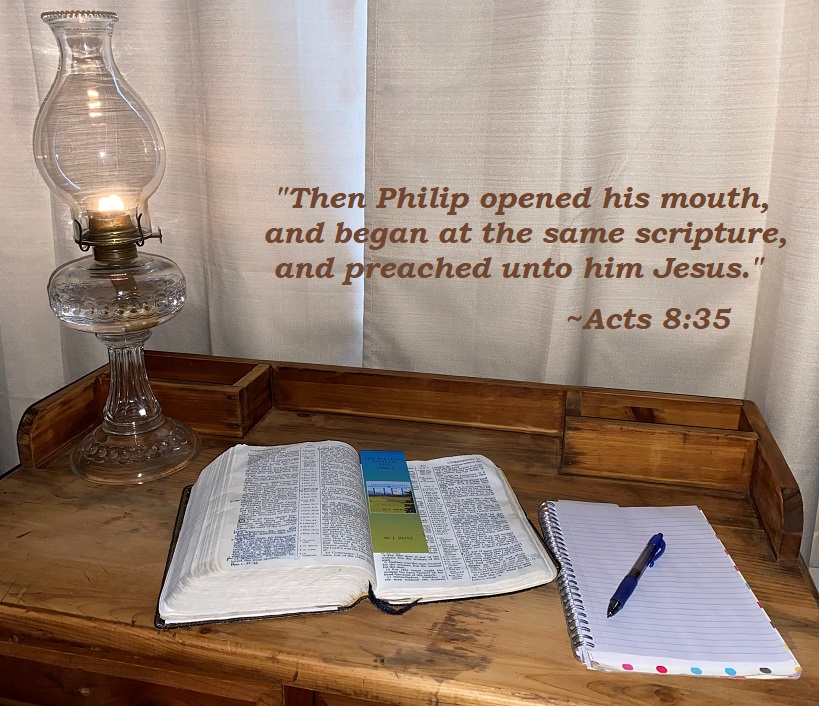
    Then Philip opened his mouth, and began at the same scripture, and preached unto him Jesus.

    —Acts 8:35

    Key Verse Thought: Have you ever told anyone about Jesus, and what he has done in your life? Is it an important thing to do?  Today we will look at Isaiah.  Not only did he speak God’s Words to the kings of Judah, but he also wrote about Jesus.  We will learn of a time recorded in the Bible that someone was saved by reading the book of Isaiah.  

    Emphasis: Just as Isaiah wrote about Jesus, we are to tell everyone that Jesus came to save the lost. 

    Lesson Summary: The name Isaiah means the Lord saves; or the Lord is Savior. Isaiah was called to be a prophet the year King Uzziah (Azariah) died (Isaiah 6). He saw God upon His throne. God asked, “Whom shall I send, and who will go for us?” and Isaiah answered, “Here am I; send me” (Isaiah 6:8). 

    Isaiah examined the sins of Judah, speaking to the kings in their courts. He spoke during the days of King Ahaz, a very bad king, who made himself and the nation of Judah servants to their enemy, Assyria (2 Kings 16:7-9). Isaiah warned against such alliances in Isaiah chapters seven through nine. He also strongly influenced King Hezekiah, a very good king, (see Isaiah 36-37) encouraging him to hold out against the Assyrian threat, and God supernaturally won the battle for them. He prophesied about 40 years (or more), and lived into the reign of Manasseh, one of the worst kings that ruled Judah. Tradition says that Manasseh had Isaiah “sawn asunder” (see Hebrews 11:37). He was a prophet to Judah before they were carried into captivity into Babylon and he warned them of that pending captivity. He saw Israel, the Northern Kingdom, carried away into captivity by Assyria.

    Many comparisons can be made from other places in the Bible to the book of Isaiah. We will look at a few of those comparisons along with some interesting things referred to in the book of Isaiah. Isaiah is often quoted in the New Testament, and Jesus quoted from the book of Isaiah often. Remember, the Ethiopian Eunuch was reading the book of Isaiah when Philip showed him how to be saved. We can read much about Jesus in the book of Isaiah.

    Isaiah records many specific prophecies concerning the coming Messiah (Jesus) and his suffering death – more than any other book in the Old Testament.

    We will take three lessons to look at the book of Isaiah.

    Y2Q3 – Lesson 1 Questions

    Y2Q3 – Lesson 1 Children’s Worksheets

    If you are doing the lesson with younger children, the following is a craft idea to go with the lesson.

    We made Bible markers to remember the importance of the Gospel message that is even found in the book of Isaiah.
  • Follow Me

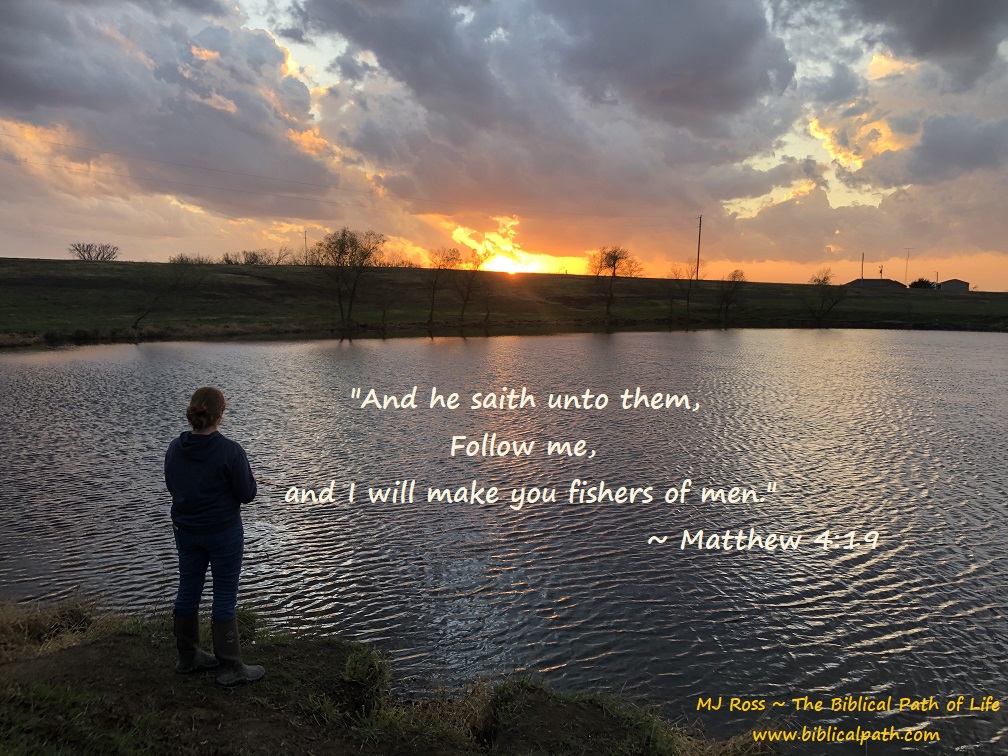
    And he saith unto them, Follow me, and I will make you fishers of men.
    Matthew 4:19

    Have events ever transpired that left you uncertain of the future? Did you wonder what would happen next? Were you unsure of where to go or what to do? Often times, one will just go through the motions of everyday life, not sure what else to do.

    Many of the disciples were fishermen when Jesus called them to follow Him. While Peter, Andrew, James and John were fishing (Matthew 4:18-22), Jesus walked by the Sea of Galilee and called them to follow Him. “And he saith unto them, Follow me, and I will make you fishers of men” (Matthew 4:19). To remember the full circumstances, reread Luke 5:4-11. They had been fishing all night and caught nothing. Jesus asked Peter to push his boat out so Jesus could teach the people. When He finished, Jesus told Peter to “Launch out into the deep, and let down your nets for a draught” (Luke 5:4b). When Peter obeyed, he caught so many fish that his net was breaking! He called for the men in the other boat to come help him bring them into the boat. The fish filled both boats. It was then that Jesus called them to leave fishing and follow Him. And they did!

    Three years later, Jesus was crucified.

    Immediately after Jesus died on the cross and was buried, the disciples must have felt much uncertainty. They may have also been in fear for their lives because they were followers of Jesus. Three days after Jesus was put into the tomb, some women approached and saw that the tomb was empty. Angels told them that Jesus was alive, and to go tell His disciples. The women went and told the eleven disciples. Jesus appeared first to Mary Magdalene. She went and told the disciples that she had seen Jesus. He then appeared to the other women who had gone to the tomb. Remember the guards were paid to spread the rumor that Jesus’ disciples had stolen His body. At this time, we can understand most people did not know what to believe.

    Jesus appeared to the disciples in a room where the doors were shut, but one disciple was missing. They could not believe their eyes. Jesus was standing before them – alive! Jesus explained to His disciples what He had done. “44. And he said unto them, These are the words which I spake unto you, while I was yet with you, that all things must be fulfilled, which were written in the law of Moses, and in the prophets, and in the psalms, concerning me. 45. Then opened he their understanding, that they might understand the scriptures” (Luke 24:44-45). Jesus taught the disciples about Himself from the Old Testament: the Law, the Psalms and the Prophets. Keep in mind that throughout the Old Testament the promise of Jesus was given, and why He was to come. Now they understood what Jesus had been telling them. Jesus then revealed the plans He had for them. And the missing disciple (Thomas)? Jesus appeared again – just for Him.

    Before we go any further, remember something Jesus told them on that night He was arrested. “But after I am risen again, I will go before you into Galilee.” (Matthew 26:32). Jesus had appeared to them twice now. However, Jesus promised them that after He had risen again, He would go before them into Galilee. What were they to do? Having remembered this, it would only make sense that when the disciples heard that Jesus was alive, they would go to Galilee. It would be important for them to act upon the words that Jesus gave to them.

    When Peter said he would go fishing, the others went with him. They knew how to fish. The disciples fished all night and caught nothing. When a man (Jesus) on the shore told them to cast on the other side, they caught a lot of fish. It was then that they recognized Jesus. As soon as Jesus was recognized, Peter jumped into the sea to swim to shore. Recognize the blessing those who were fishing together on that day received! They saw Jesus alive, again. Jesus once again went to the Sea of Galilee to see them – just as He had told them He would. Before this day ended, Jesus called Peter, again, to “Follow me” (John 21:19b). Once again, they were reminded to continue with the same mission – to follow Jesus.

    Jesus often meets with His people as they are about every day life activities – especially when they are where they supposed to be. It is then that one can be encouraged through the turmoil of life’s events and remember to “Follow Jesus!

    Do you remember to follow Jesus, no matter what uncertain circumstances come into your life?

  • Lesson 13: Jesus in the Old Testament The Last Adam

    Key Verse

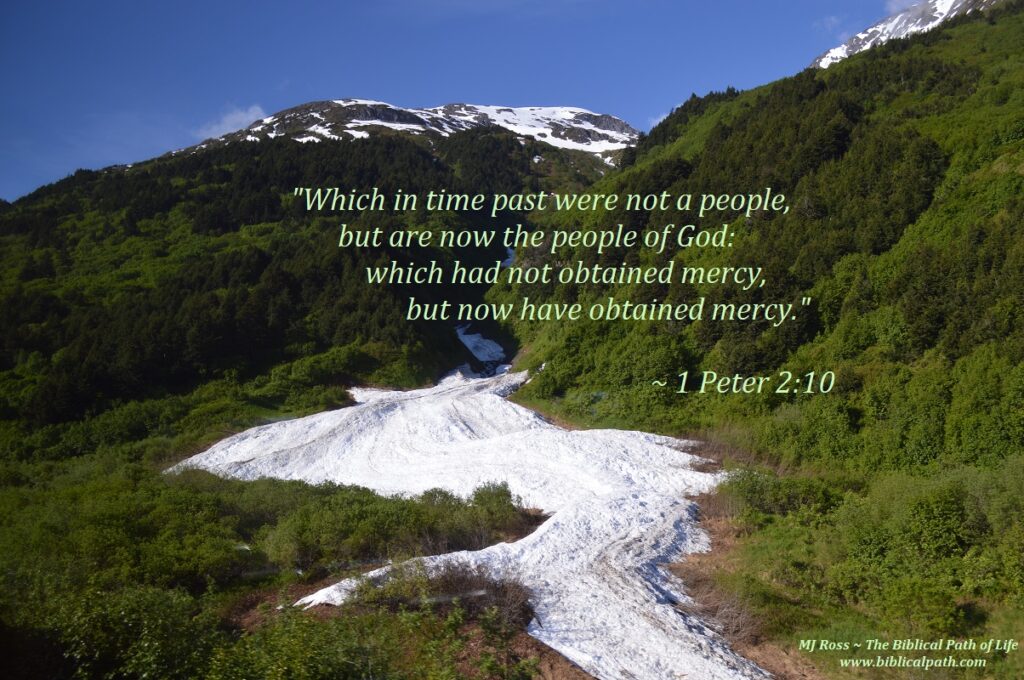
    Which in time past were not a people, but are now the people of God: which had not obtained mercy, but now have obtained mercy.

    —1 Peter 2:10

    Key Verse Thought: Read the key verse. As we began our study of the Southern Kingdom, Judah, we learned that they had very few good kings. Although the good kings sought to please God, they, too, failed. The kingdom did not live up to the plan God had for them. Nevertheless, we will learn today that God had a better plan for His people – to be His people. It was not in obedience to the Law (as they thought), but by His mercy. Mercy means “God’s pity for man in his sin, and which reveals itself in God’s will for man’s salvation.” Today we will see God’s plan was for them to believe in His Son, Jesus. We will also understand that plan was not only for the Israelites, but also for all of mankind.

    Emphasis: We are to recognize that just as one man, Adam, brought sin into the world, God sent One, Jesus, to set us free from that sin – free to have eternal life with Him, if we only believe.

    Lesson Summary: In this quarter, we have studied the books of the Kings and Chronicles, learning about the scriptures from Adam until King Hezekiah of the kingdom of Judah. We know God created Adam and that Adam sinned, bringing sin upon every man. With that sin came separation from God. However, at the same time, God gave man a promise that He would send one to restore that broken relationship. 

    We then remember Abraham, and the promise God gave him – the promise of a son through whom all of the world would be blessed (the promise of Jesus). Abraham lived by faith, looking forward to Jesus. He believed the promise God gave, and Abraham was called the friend of God. We are to have the faith of Abraham.

    After Moses led the people out of bondage in Egypt, God gave Moses the Law. Without the Law, mankind did not know how sinful they were, or how far they were from God. In that Law, sin was revealed. They also learned that with obedience comes blessing, but with disobedience comes a curse.

    As we remembered the kings of Judah, we saw how few good kings there were. We could recognize good kings, for they sought to obey God’s Laws. Nevertheless, at some point, they all failed. It was then that the sin was even worse in the land. After learning of the kings, we learned that it is impossible to obey all of God’s Laws – for people are sinners.   

    In this lesson, we will learn that, “21. For since by man came death, by man came also the resurrection of the dead. 22. For as in Adam all die, even so in Christ shall all be made alive …” (1 Corinthians 15:21-22).

    Y2Q2 – Lesson 13 in full

    Y2Q2 – Lesson 13 Questions

    Y2Q2 – Lesson 13 Children’s Worksheets

    If you are teaching this to younger children, the following is a craft idea to go with this lesson:

    We made a wall hanging with the verse 1 Corinthians 15:22, framing it with puzzle pieces.
  • Do you Understand?

    And they said one to another, Did not our heart burn within us, while he talked with us by the way, and while he opened to us the scriptures?
    Luke 24:32

    Have you ever had an event happen in your life that brought great sadness? Did that same event bring confusion as to the plan God had at that time? One cannot help but remember an event from the Bible.

    Jesus had been crucified. The disciples, scattered. After three days, the tomb was empty. The soldiers, who had been placed guard over that tomb, were declaring that the disciples had stolen Jesus’ body. The women who went to the sepulcher with spices found the stone rolled away from an empty tomb. These same women saw two men with shining faces who declared Jesus was alive. When Peter and John ran to see the tomb, it was empty. There was much confusion. No one knew what to believe.

    There were a couple of people walking from Jerusalem on the road to Emmaus. “And they talked together of all these things which had happened” (Luke 24:14). Understand that these two were followers of Jesus who had witnessed His death in Jerusalem. Remember the following facts: the tomb was empty, Jesus’ body was gone, some claimed to have seen Him alive, and there was a “rumor” being spread that the disciples had stolen Jesus’ body. Think of how they felt as they discussed the fact that the One in whom they believed and followed had died at the hands of the Romans. Why did this happen? What were they to do? Where were they to go? What happened to Jesus’ body? As they continue from Jerusalem on their way to Emmaus, a man joined them. “And it came to pass, that, while they communed together and reasoned, Jesus himself drew near, and went with them” (Luke 24:15). This man was Jesus, whom they did not recognized (see Luke 24:16). He began to ask them questions about why they were so sad. The two were surprised that He did not know what had happened. So they began to tell Him, “… Concerning Jesus of Nazareth, which was a prophet mighty in deed and word before God and all the people: 20. And how the chief priests and our rulers delivered him to be condemned to death, and have crucified him. 21. But we trusted that it had been he which should have redeemed Israel: and beside all this, to day is the third day since these things were done” (Luke 24:19b-21). They proceeded to tell Him of the women who claimed to have seen angels who said Jesus was alive. They revealed what they understood (“trusted”).

    What did Jesus (the man who had joined the two walking) say to them? As they relayed the events that had transpired, recognize Jesus’ frustration as He replied, “25. Then he said unto them, O fools, and slow of heart to believe all that the prophets have spoken: 26. Ought not Christ to have suffered these things, and to enter into his glory? 27. And beginning at Moses and all the prophets, he expounded unto them in all the scriptures the things concerning himself” (Luke 24:25-27). Fool in this verse means “lacking intelligence; one without the organ by which divine things are comprehended and known or ignored.” Jesus also told them that they were slow of heart to believe. They should have understood, thereby believing, but because they did not, Jesus explained it to them. They should not have been surprised that Jesus had been crucified on the cross, or that His body was no longer in the tomb. If they had only believed what they had been taught from the Old Testament, they would have understood. Take note that Jesus preached to them the Gospel Message (Jesus’ death, burial, and resurrection) from the Old Testament (Moses and all the prophets) of which they knew. They lacked faith.

    Just imagine the blessing they would have missed if they had not invited this One who had walked and talked with them to stay for the evening. For it was not until “he took bread, and blessed it, and brake, and gave to them” that they recognized it was Jesus (see Luke 24:30-31). “And they said one to another, Did not our heart burn within us, while he talked with us by the way, and while he opened to us the scriptures?” (Luke 24:32). It was a heart issue (see Romans 10:10).

     Think for a minute. Have you ever been disappointed when something did not happen as you thought it should happen, “according to your plan?” How did you respond in that situation? Were you angry? Did you ask questions? Wonder why it happened? Did you just quit? Instead of being a fool, “one who lacks the intelligence or comprehension” of what God is doing in this world and especially in your life, do you read your Bible? It is in times like these that it is imperative to open and read the Word of God (your Bible) to understand God’s plan. Jesus explained to these two people what the prophets had spoken and had been recorded for all to read – right from God’s Word. (See Romans 10:17.)

    Are you a fool (lacking intelligence), or slow of heart to believe what is written in the Bible?

    Or

    Does your heart burn within you as you read your Bible, encouraged in the Word of God?

  • Lesson 12: 2 Kings 18-20; 2 Chronicles 29-32: Hezekiah

    Key Verse

    For whatsoever things were written aforetime were written for our learning, that we through patience and comfort of the scriptures might have hope.

    —Romans 15:4

    Key Verse Thought: Read the key verse. Not only is the Bible written for our learning, but also by watching as God revealed Himself mightily to His people when they obeyed His Word, it not only comforts us, but gives us hope – a confidence that God keeps each and every promise.

    Emphasis: We are to recognize God’s Word was given so we could have confidence that God will hear anyone who will call upon Him with a repentant heart. God will then reveal himself mightily to all of the world.

    Lesson Summary: We have now learned about the first twelve kings of Judah, with only six good kings so far. After ending on such a sour note in our last lesson (remember wicked King Ahaz), it is quite refreshing to learn of the best king Judah ever had – King Hezekiah. “He trusted in the LORD God of Israel; so that after him was none like him among all the kings of Judah, nor any that were before him” (2 Kings 18:5). Hezekiah was 25 when he became king and reigned for 29 years. “And he did that which was right in the sight of the LORD, according to all that David his father had done” (2 Chronicles 29:2). In the first month of the first year of King Hezekiah’s reign, he “opened the doors of the house of the LORD, and repaired them” (2 Chronicles 29:3). Not only that, but he reestablished the offices of the priests and Levites. After acknowledging the nation’s sin, King Hezekiah led the people in the reestablishment of the broken relationship between God and His people by reinstituting the Temple worship. After this, King Hezekiah sent letters to all of Judah, calling them to keep the Passover. Hezekiah led the people by example when he brought great offerings into the house of the Lord. Once the people began bringing their first fruits into the Temple, there was such abundance; they had to build extra storage space. What they did not know, was that in their obedience to God’s commands, God was preparing them for the future siege by their enemy. Sennacherib, king of Syria, sent his army to besiege Jerusalem. Hezekiah prepared and encouraged the people. Then he prayed for God’s deliverance. God answered by defeating the enemy for them. In this mighty victory, all of the nations around recognized God’s hand in the deliverance. 

    The next thing we read about King Hezekiah was that he was sick unto death. When he prayed, God extended his life by 15 years. God gave him a sign – the sun’s shadow went backward ten degrees. However, we also learn of a very foolish thing King Hezekiah did toward the end of his life, and the consequences of that foolish act that would come.  

    The period of King Hezekiah’s reign can be considered the greatest revival Judah experienced.  

    “And Hezekiah slept with his fathers: and Manasseh his son reigned in his stead” (2 Kings 20:21).

    Y2Q2 – Lesson 12 in full

    Y2Q2 – Lesson 12 Questions

    Y2Q2 – Lesson 12 Children’s Worksheets

    If you choose to do this lesson with younger children, the following is a craft idea to go along with this lesson.

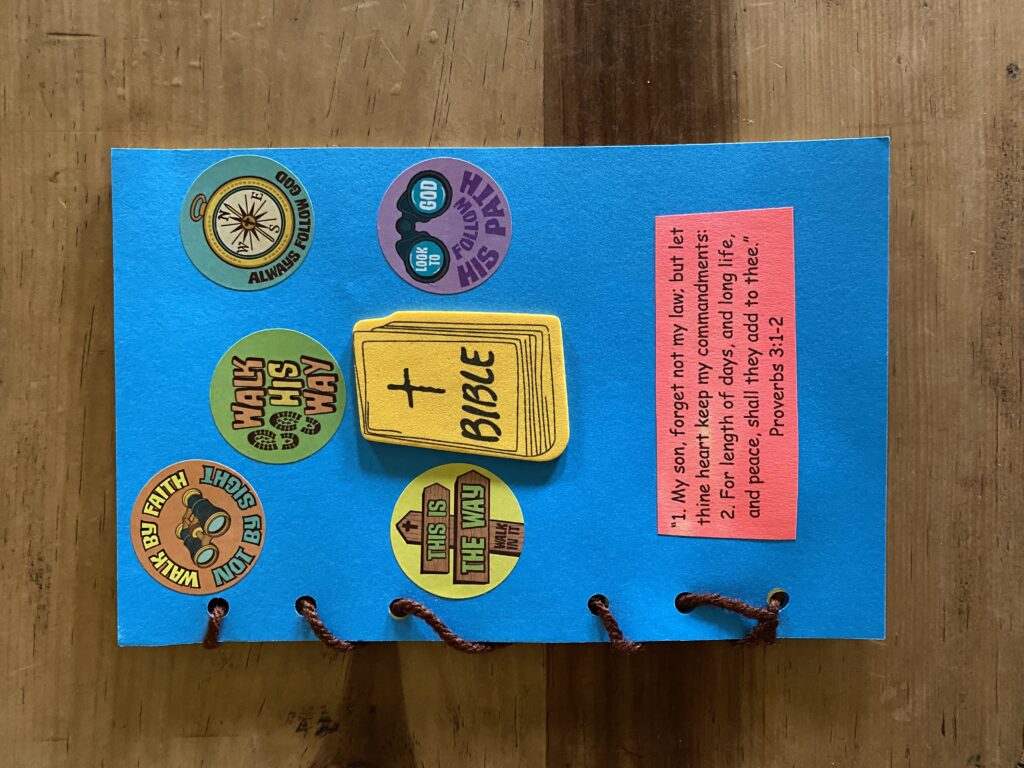
    We made Bible markers and added stickers. This was to remind us of how important God’s Word was to King Hezekiah.
  • Nicodemus

    For God sent not his Son into the world to condemn the world; but that the world through him might be saved.
    John 3:17

    Jesus had many personal encounters with different men and women – some who committed themselves to Him, and Jesus to them; and some, who did not.

    There was a man of the Pharisees, named Nicodemus, a ruler of the Jews” (John 3:1). The Pharisees were a part of the religious leaders of the day. Jesus had been teaching in the synagogues and the Temple. When Nicodemus had a question about Jesus’ teachings, he went to Jesus, Himself, by night for the answers. “2. The same came to Jesus by night, and said unto him, Rabbi, we know that thou art a teacher come from God: for no man can do these miracles that thou doest, except God be with him. 3. Jesus answered and said unto him, Verily, verily, I say unto thee, Except a man be born again, he cannot see the kingdom of God” (John 3:2–3). See that Jesus knew the heart of Nicodemus. Nicodemus did not come to challenge what Jesus taught (as we know many religious leaders did), but he truly wanted to understand who Jesus was and why He had come. Jesus went straight to the heart of the matter. Unless a man gives up his old life, being born again, he cannot “see the kingdom of God.” See the following verse to understand “the kingdom of God”: “Neither shall they say, Lo here! or, lo there! for, behold, the kingdom of God is within you” (Luke 17:21). Within you means “it is located in your heart and affections; not external.” The kingdom of God cannot be seen with human eyes. That is one reason we refer to being saved as “asking Jesus into one’s heart.” Jesus began to explain this to Nicodemus.

    4. Nicodemus saith unto him, How can a man be born when he is old? can he enter the second time into his mother’s womb, and be born? 5. Jesus answered, Verily, verily, I say unto thee, Except a man be born of water and of the Spirit, he cannot enter into the kingdom of God. 6. That which is born of the flesh is flesh; and that which is born of the Spirit is spirit… 9. Nicodemus answered and said unto him, How can these things be? 10. Jesus answered and said unto him, Art thou a master of Israel, and knowest not these things?” (John 3:4-6, 9-10). Even when Nicodemus did not understand, Jesus patiently explained.

    Jesus had often taught the people of things they knew, yet often they still did not understand. Nicodemus, a “master of Israel”, did not understand. Jesus took him back to the Old Testament Law that Nicodemus knew. “And as Moses lifted up the serpent in the wilderness, even so must the Son of man be lifted up” (John 3:14). Remember: After the people spoke against God in the wilderness, fiery snakes bit them. The people were dying because of snakebites. God told Moses to make a brazen serpent. This serpent was to remind them of their sin against God. Moses held it up, and anyone who looked upon that serpent held high did not die, even though the poisonous snake bit them. (Numbers 21:4-9 to remember the events). Because of this faith, they were physically saved. Jesus reminded Nicodemus of that event, for it took the same kind of faith to be saved from sin – faith in Jesus – for He would take the sin of man upon Himself as he was hung on the cross to die (see 2 Corinthians 5:21).

    Jesus explained this with the following: “15. That whosoever believeth in him should not perish, but have eternal life. 16. For God so loved the world, that he gave his only begotten Son, that whosoever believeth in him should not perish, but have everlasting life. 17. For God sent not his Son into the world to condemn the world; but that the world through him might be saved. 18. He that believeth on him is not condemned: but he that believeth not is condemned already, because he hath not believed in the name of the only begotten Son of God” (John 3:15-18).

     Jesus explained it simply to Nicodemus: Jesus was the teacher from God who came to teach the world how to be saved from sin – to believe in Jesus, God’s Son, for by unbelief, they were condemned to eternal death. See John 3:19-21 to understand that Jesus was the Light who came into the world, and He acknowledged that man loved darkness (their sin) more than the Light (Jesus). As you try to understand Jesus as the Light, imagine a very dark room – with absolutely no light. In that room, one cannot see anything. However, if you turn on a flashlight, you can see the area where the light shines, revealing what was previously hidden. Jesus is just like that – He reveals what is hidden “because their deeds were evil.” Jesus came to drive that darkness away, revealing the sin that had to be removed – but only by the Light, Jesus.  

    We understand that Nicodemus at some point believed in Jesus by the following verses: “Nicodemus saith unto them, (he that came to Jesus by night, being one of them)” (John 7:50). Nicodemus was one of the two that took Jesus’ body and buried it after His death upon the cross (John 19:38-39).

    Nicodemus became a Believer of Jesus.

    Have you chosen to receive the gift of salvation (life) by believing in Jesus?

  • 2 Kings 14-16; 2 Chronicles 25-28: Amaziah, Uzziah (Azariah), Jotham, and Ahaz Lesson 11

    Key Verse

    Behold, the eye of the LORD is upon them that fear him, upon them that hope in his mercy.

    —Psalm 33:18

    Key Verse Thought: Read the key verse. What does it mean to fear the Lord? (A good example is Job. “… Job; and that man was perfect and upright, and one that feared God, and eschewed evil” Job 1:1. He showed his fear by turning from evil.) To fear God is to obey His word. Church is a good place to learn God’s Word.

    Emphasis: To recognize the importance of frequenting the house of the Lord often, knowing that it is there we will learn the fear of the Lord, seeking his mercy upon our lives.

    Lesson Summary: In the lesson before Joel, we remembered the last two who reigned in Judah: Athaliah (an illegitimate queen), and Joash (a good king). Although King Joash made great reformations, he forgot God after Jehoiada (his uncle the priest) died.      

    So far, we have learned of the first eight kings of Judah, with only three good kings so far. In this lesson, we continue in our study of the kings of Judah. We will look at the next four kings of Judah. When Joash was killed, his son Amaziah became king. He reigned for 29 years and was a good king. After killing the servants who killed his father, he began his reign relying upon God. Nevertheless, like many kings before him, he forgot God. It was then that God’s anger was kindled against Amaziah. When Amaziah challenged the king of Israel, Joash, and they fought, he lost the battle. Amaziah turned away from following the Lord, and conspirators killed him in Lachish. His son, Uzziah, became king. 

    Uzziah reigned for 52 years, did that which was right in the eyes of the Lord, and did much good for Judah. Moreover, God blessed him. Uzziah defeated enemies around, built up the cities, the army, and the defenses of the cities in Judah. However, when he was strong, his heart was lifted up. He went to the temple to perform the duty of the priest (he could not because he was not a priest). When rebuked by the priests, he rejected that rebuke, and God struck him with leprosy. His son, Jotham, judged the people until he died. 

    After Uzziah’s death, Jotham became king. He did right in the eyes of the Lord, but he never entered the house of the Lord. When he died, his son Ahaz became king. He was a very bad king – for he did not right in the eyes of the Lord, but walked in the ways of the kings of Israel. He made images for Baalim and burnt his children in the fire to false idols. God delivered him into the hand of Syria. When rebuked by God’s prophet, not only did he reject the rebuke, but he also sought help from another enemy nation. Instead of helping, that enemy nation took more. Ahaz shut up the house of the Lord and made altars in every corner of the city – provoking the anger of God. When he died, his son, Hezekiah, became king. We will learn about him in our next lesson.

    Y2Q2 – Lesson 11 Questions

    Y2Q2 – Lesson 11 Children’s Worksheets

    If you are doing this lesson with younger children, the following is a craft idea:

    We made a Ten Commandments to remember the importance of obeying God’s Word.
  • Do you Believe?

    “He that believeth on him is not condemned: but he that believeth not is condemned already, because he hath not believed in the name of the only begotten Son of God.”
    John 3:18

    The many miracles Jesus did, and the many things Jesus taught were very important – for many people believed upon Him, becoming His followers. However, we can understand that not all who saw and heard believed. Jesus explained how one must come to Him – not with an educated mind, challenging the things of God (as the religious leaders continually did). After teaching some of the people, children were brought to Jesus. The disciples tried to keep the children from Jesus. However, Jesus was displeased. He called for the children to come to Him. Jesus then explained to the people how to receive the kingdom of God (receive means “to accept an offer deliberately and readily”). Understand the kingdom of God by the following: When the Pharisees asked Jesus when it should come, read His reply. “And when he was demanded of the Pharisees, when the kingdom of God should come, he answered them and said, The kingdom of God cometh not with observation” (Luke 17:20). Not with observation means, “you cannot see it with human eyes.” He went on to say. “Neither shall they say, Lo here! or, lo there! for, behold, the kingdom of God is within you” (Luke 17:21). Within you means “it is located in your heart and affections; not external.” That is one reason we refer to being saved as “asking Jesus into your heart.” You cannot see it with your eyes. Jesus wanted the people to understand this. To children, things are simpler, less convoluted. The gospel message is very simple – one must only believe – just as a child. In other words, simply believe and receive without question.

    And when he was gone forth into the way, there came one running, and kneeled to him …” (Mark 10:17a). The placement of this event with this one that comes running to Jesus is interesting. It follows the recording of Jesus explaining that one must come to His kingdom as a child. Keep that thought in mind as we look at this “rich young ruler.” He is called a “young man” in Matthew’s accounting (see Matthew 19:16-22) and a “ruler” in Luke’s accounting (see Luke 18:18-27). He is often called The Rich Young Ruler.

    He asked Jesus, “Good Master, what shall I do that I may inherit eternal life?” (Mark 10:17b). Read the events. “18. And Jesus said unto him, Why callest thou me good? there is none good but one, that is, God. 19. Thou knowest the commandments, Do not commit adultery, Do not kill, Do not steal, Do not bear false witness, Defraud not, Honour thy father and mother. 20. And he answered and said unto him, Master, all these have I observed from my youth. 21. Then Jesus beholding him loved him, and said unto him, One thing thou lackest: go thy way, sell whatsoever thou hast, and give to the poor, and thou shalt have treasure in heaven: and come, take up the cross, and follow me. 22. And he was sad at that saying, and went away grieved: for he had great possessions” (Mark 10:18-22).

    In this event, the first thing we notice is that the young ruler thought he had to “do” something to inherit eternal life (see Mark 10:17). He had already obeyed God’s Word (the Law), but Jesus told him what was lacking (see Mark 10:20). His faith was in his earthly possessions – not in Jesus. Jesus wanted His disciples to understand the difference. One cannot do anything to inherit eternal life, but believe in Jesus.

    23. And Jesus looked round about, and saith unto his disciples, How hardly shall they that have riches enter into the kingdom of God! 24. And the disciples were astonished at his words. But Jesus answereth again, and saith unto them, Children, how hard is it for them that trust in riches to enter into the kingdom of God! 25. It is easier for a camel to go through the eye of a needle, than for a rich man to enter into the kingdom of God. 26. And they were astonished out of measure, saying among themselves, Who then can be saved? 27. And Jesus looking upon them saith, With men it is impossible, but not with God: for with God all things are possible” (Mark 10:23-27). See that Jesus called them “children.” He was talking to His disciples – those who believed upon Him. Yet in that explanation, one can almost sense that Jesus wanted them to remember that one must come to Him as a child – not with anything they can bring. One must have faith just trusting and believing in Jesus.

    When Peter acknowledged that they had given their all (see Mark 10:28), Jesus explained that they would be rewarded in heaven. While they lived on the earth, man may not see Jesus’ followers as important, but in heaven, God will reward them according to their faithfulness to Him. The Rich Young Ruler chose unwisely, while Jesus’ disciples chose wisely. For one must come to Jesus, simply with the heart and mind of a child, just believing in Jesus. One has to believe in the heart – not actually having to see the “kingdom of God” with the eyes. Then one must follow Jesus.

    Have you come to Jesus, simply with the heart as a child in faith, just believing in Jesus?

  • Joel: A Message in a Plague of Locusts: Lesson 10

    Key Verse

    If we confess our sins, he is faithful and just to forgive us our sins, and to cleanse us from all unrighteousness. —1 John 1:9

    Key Verse Thought: Read today’s Key Verse. Do you know what it means to confess (means “to admit; to confess your guilt exposing yourself for punishment”)? God will forgive when we confess our sin.

    Emphasis: We are to recognize the destruction sin does, not only to a nation, but also to each life. We are to place our hope in Christ, obeying and pleasing Him, not the things of this world.

    Lesson Summary: We need to remember what we have learned about Judah so far: after King Jehoshophat, the nation of Judah had a time of bad kings. King Jehoram (King Jehoshaphat’s son) married wicked King Ahab’s daughter, Athaliah. He too, was a wicked king. Jehoram’s son, Ahaziah, was yet another wicked king. He had only reigned one year when Jehu killed him (when he was visiting the king of Israel, Jehoram). When King Ahaziah’s mother, Athaliah, heard her son was dead, she made herself queen – killing all of the seed royal (except for one that was hidden – Jehoash). During this time of wicked kings, we learned that the house of God had become in great disrepair. When Jehoiada the priest revealed Jehoash as king of Judah, wicked Queen Athaliah was killed and the house of God was repaired. This is most likely the time that the book of Joel took place.

    The book of Joel begins with, “The word of the LORD that came to Joel ….”   Joel prophesied to Judah during the reign of Jehoash (Joash) that began in Second Kings chapter twelve. As we study, we will find that God directs His Words to the priests and the elders (remember that Jehoash was only seven years old when he became king, and Jehoiada the priest counseled him). God spoke, and Joel relayed God’s message to the people. After seeing a plague of locusts, Joel warned of a coming invasion that he compared to that plague of locusts. Just as a plague of locusts completely destroys everything in its path, so the enemies of God would do to His people unless they repented of their sins against God. Joel called for the people to repent.   

    Joel continued his cry with an alarm warning of the “day of the Lord.” God’s people would be taken captive, but when they repented, God would restore the years that the locust had eaten. God’s judgment would fall upon the enemy nations and hope would once again be restored, and Judah will dwell forever.

    Y2Q2 – Lesson 10 Questions

    Y2Q2 – Lesson 10 Children’s Worksheets

    If you choose to do a craft with younger children, the following is an idea:

    We made a frame and decorated it with the verses Joel 2:12a and 13a.