Tag: Pilgrims

  • Strangers and Pilgrims

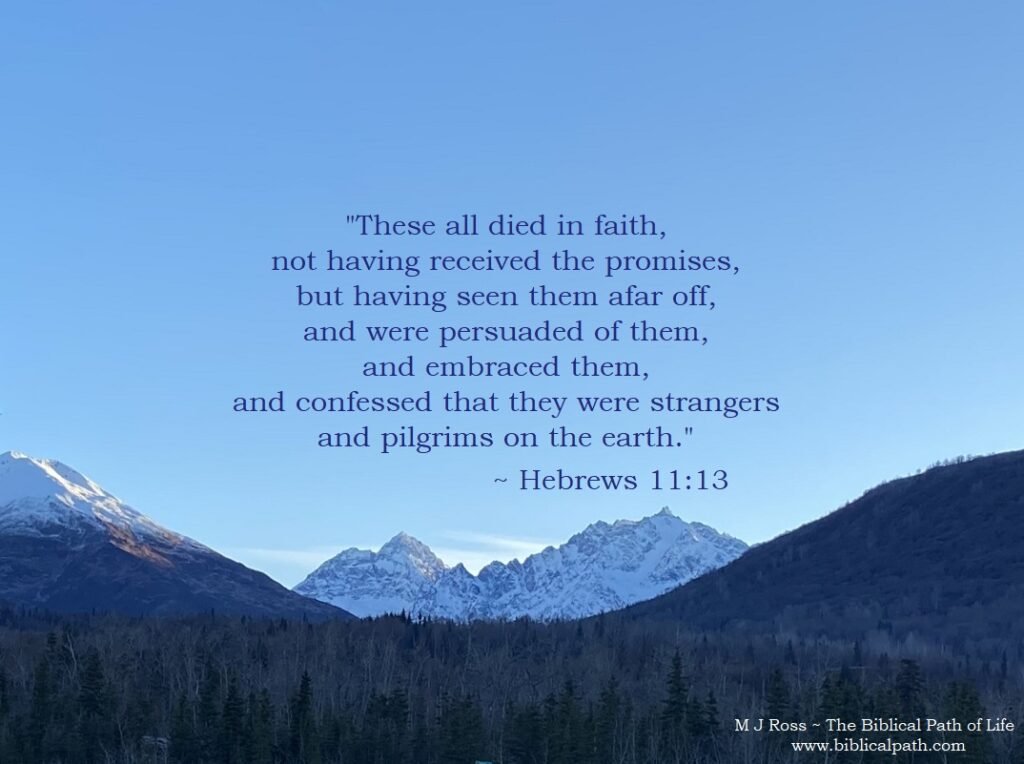
    “These all died in faith, not having received the promises, but having seen them afar off, and were persuaded of them, and embraced them, and confessed that they were strangers and pilgrims on the earth.”

    Hebrews 11:13

    Is it possible to please God? The Bible declares that it is possible. “But without faith it is impossible to please him: for he that cometh to God must believe that he is, and that he is a rewarder of them that diligently seek him” (Hebrews 11:6). However, one cannot please God without faith. Faith here means “a knowledge of, assent to and confidence in certain divine truths, especially those of the gospel as produces good works.” There is a list of people recorded in the eleventh chapter of Hebrews who believed God is, by faith, and then lived diligently seeking Him. They believed God’s promises. The most important, life-changing promise of God, was that He would send One, Jesus, who would bring reconciliation between man and God (see Genesis 3:15). Each of the people listed in Hebrews chapter eleven diligently sought God, trusting that God would reward them for their faithfulness to Him; for they looked forward to Jesus’ coming. “These all died in faith, not having received the promises, but having seen them afar off, and were persuaded of them, and embraced them, and confessed that they were strangers and pilgrims on the earth” (Hebrews 11:13). Persuaded means “to be convinced; to believe.” Embraced means “to welcome; to receive gladly – referring to the promises.” They believed and gladly received these promises.

    Many lived by faith as “strangers and pilgrims”, obviously differently, for others often recognized God was with them. Is the New Testament the only place these faithful (whom God was with) are mentioned? Recall just a few described as such in the Old Testament:

    • Abraham: Others recognized this: “… Abimelech and Phichol the chief captain of his host spake unto Abraham, saying, God is with thee in all that thou doest” (Genesis 21:22), see also
    • Isaac: Others recognized this: “And they said, We saw certainly that the LORD was with thee …”Genesis 26:28.
    • Joseph: “2. And the LORD was with Joseph, and he was a prosperous man; and he was in the house of his master the Egyptian. 3. And his master saw that the LORD was with him …” (Genesis 39:2-3).
    • Moses: “According as we hearkened unto Moses in all things, so will we hearken unto thee: only the LORD thy God be with thee, as he was with Moses” (Joshua 1:17). God had been with Moses and promised to be with Joshua, too. “And the LORD said unto Joshua, This day will I begin to magnify thee in the sight of all Israel, that they may know that, as I was with Moses, so I will be with thee” (Joshua 3:7).
    • Phinehas: “And Phinehas the son of Eleazar was the ruler over them in time past, and the LORD was with him” (1 Chronicles 9:20).
    • Joshua: A promise: “And he gave Joshua the son of Nun a charge, and said, Be strong and of a good courage: for thou shalt bring the children of Israel into the land which I sware unto them: and I will be with thee” (Deuteronomy 31:23). And it was fulfilled: “So the LORD was with Joshua …” (Joshua 6:27).
    • Judges (there were thirteen judges): “And when the LORD raised them up judges, then the LORD was with the judge, and delivered them out of the hand of their enemies all the days of the judge …” (Judges 2:18).
    • Samuel: “And Samuel grew, and the LORD was with him …” (1 Samuel 3:19).
    • Young David: “And David behaved himself wisely in all his ways; and the LORD was with him” (1 Samuel 18:14). Others recognized this: “Then answered one of the servants, and said, Behold, I have seen a son of Jesse the Bethlehemite … and the LORD is with him” (1 Samuel 16:18); see also 1 Samuel 18:12, 28.
    • King David: “So David waxed greater and greater: for the LORD of hosts was with him” (1 Chronicles 11:9).
    • King Solomon: “And Solomon the son of David was strengthened in his kingdom, and the LORD his God was with him, and magnified him exceedingly” (2 Chronicles 1:1).
    • King Jehoshaphat: “3. And the LORD was with Jehoshaphat, because he walked in the first ways of his father David, and sought not unto Baalim; 4. But sought to the LORD God of his father, and walked in his commandments, and not after the doings of Israel” (2 Chronicles 17:3-4).
    • Hezekiah: “And the LORD was with him; and he prospered whithersoever he went forth …” (2 Kings 18:7). And so many more!

    As we remember some from the Old Testament, we acknowledge they believed God, sought after Him, walked with Him, desired to please Him, and God was with them. Christians are to recognize their perseverance. However, not all people chose to live a life pleasing to God. Yet those who chose to walk with God help us recognize the importance of trusting in Christ (who came as God promised), to restore the life that had been lost because of sin. What an encouragement!

    Likewise, Christians today are to reveal an active participation of faith in their lives. “6. As ye have therefore received Christ Jesus the Lord, so walk ye in him: 7. Rooted and built up in him, and stablished in the faith, as ye have been taught, abounding therein with thanksgiving” (Colossians 2:6-7). Stablished means “to turn resolutely in a certain direction; strengthen.” True faith produces good works (a changed life).

    Have you received Jesus, by faith, now walking actively turning resolutely toward Jesus who strengthens us?
  • Through Faith Understand

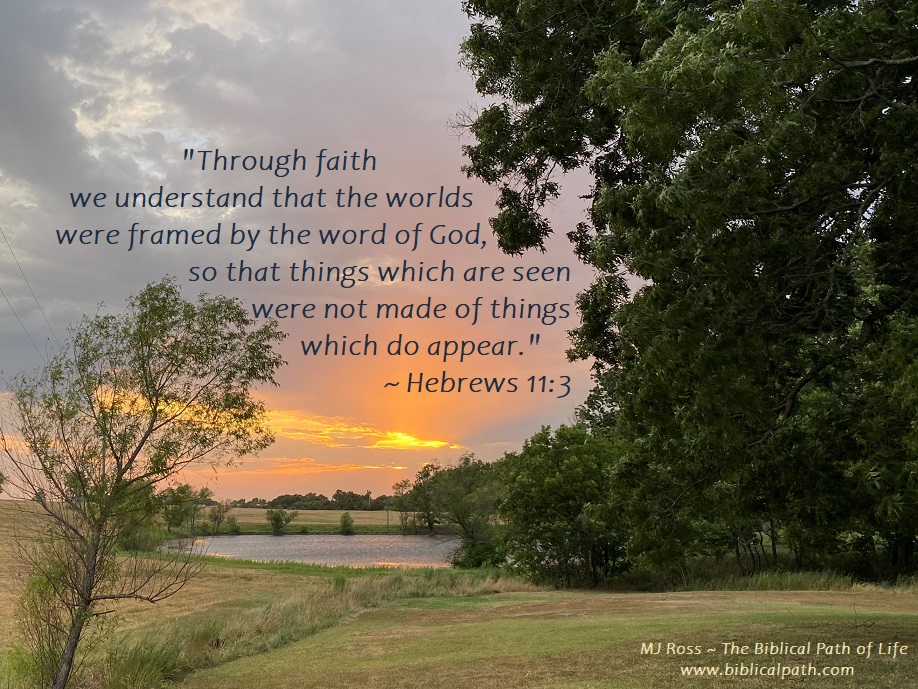
    “Through faith we understand that the worlds were framed by the word of God, so that things which are seen were not made of things which do appear.”
    Hebrews 11:3

    “Now faith is the substance of things hoped for, the evidence of things not seen” (Hebrews 11:1). This verse has appeared in prominent places on many plaques or posters. However, have you ever considered what these words actually mean? To what faith is this verse referring?

    Faith is the substance of things hoped for, the evidence of things not seen means “that persuasion is not the outcome of imagination, but it is based on fact; such as the reality of the resurrection of Christ, and as such it becomes the basis of realistic hope.” Many people who lived in Old Testament times believed that Jesus would come (because God had made that promise). Although they did not live to see the fulfillment of that promise, they lived lives declaring they believed that promise: a life of faith. Consider what Jesus said when He was speaking to the religious leaders in the book of John. “Your father Abraham rejoiced to see my day: and he saw it, and was glad” (John 8:56). Jesus, Himself, recognized Abraham as one who looked forward to His coming. This kind of faith led to the comment in the next verse: “For by it the elders obtained a good report” (Hebrews 11:2). Not only do we understand these people lived believing the promises God made, by faith, today we know that Jesus came – just as God promised.

     However, the following verse is often overlooked: “Through faith we understand that the worlds were framed by the word of God, so that things which are seen were not made of things which do appear” (Hebrews 11:3). The fact that God created the heaven and the earth from nothing in six days and rested on the seventh is challenged in our world today. Other theories are taught, yet none of them has been proven. God, Himself, declared that He created all. “In the beginning God created the heaven and the earth” (Genesis 1:1). This is the first thing that He declared to us. This is the first step of faith. If one does not believe that God created the heaven and the earth, how will one ever believe the rest of the Bible? It is interesting to note that this fact is reiterated right here in Scripture, helping us understand the importance of believing all of the Word of God. This first step of faith will allow one to begin to understand that God loved His creation (man) so much, that He willingly sent His Son, Jesus, to restore the relationship broken by man’s sin. 

    Those people recorded in the eleventh chapter of the book of Hebrews, believed, by faith, that God created the world. This was the first step of faith. They were then able to believe God’s promises by faith. “But without faith it is impossible to please him: for he that cometh to God must believe that he is, and that he is a rewarder of them that diligently seek him” (Hebrews 11:6). We find a great list of people who diligently sought God and lived by faith. Many names listed should be quite familiar: Abel, Enoch, Noah, Abraham, Sarah, Isaac, Jacob, Joseph, Moses, and many others. While reading that listing of faithful men and women from the Old Testament, there are interjections by the writer, helping understand the importance of faith. Remember that the people of faith from the Old Testament believed the promise that God would send One, Jesus, who would bring reconciliation between man and God.

    Each of the people on that list diligently sought God, trusting that God would reward them for their faithfulness to Him, for they looked forward to Jesus’ coming. “These all died in faith, not having received the promises, but having seen them afar off, and were persuaded of them, and embraced them, and confessed that they were strangers and pilgrims on the earth” (Hebrews 11:13).

    • Persuaded means “to be convinced; to believe.” 
    • Embraced means “to welcome; to receive gladly – referring to the promises.”

    These people lived by faith. Read how we are to understand this active participation of faith in one’s life by the following verses: “6. As ye have therefore received Christ Jesus the Lord, so walk ye in him: 7. Rooted and built up in him, and stablished in the faith, as ye have been taught, abounding therein with thanksgiving” (Colossians 2:6-7).

    • faith means “a knowledge of, assent to, and confidence in certain divine truths, especially those of the Gospel, as produces good works.”
    • stablished means “to turn resolutely in a certain direction; strengthen.”

    One must actively become “stablished” in that faith.

    Chapter eleven of Hebrews is often called the “Hall of Faith” because of the many Old Testament men and women who were commended for this faith. They believed God and His Word. These men and women can help one understand the importance of trusting in Christ, who came as God promised, to restore the life that had been lost because of sin. Not only that, but because of their faith, Christians can look back to their perseverance, lending strength in unsure times.

    Have you taken the first step of faith, believing that God created the heaven and earth, enabling you to trust in God’s Son, Jesus?

    Do you remember those who were commended for their faith, allowing them to encourage you in your Christian life?

    http://biblicalpath.com/index.php/how-to-be-saved/