Tag: Heart

  • The Truth Shall Make You Free

    And ye shall know the truth, and the truth shall make you free”

    John 8:32

    In John chapter eight, Jesus was teaching the people. While He was teaching, the scribes and Pharisees brought unto him a woman taken in adultery. They proceeded to tell Jesus what the Law of Moses said should be done. She should be stoned. They asked Jesus what He said about it. “This they said, tempting him, that they might have to accuse him. But Jesus stooped down, and with his finger wrote on the ground, as though he heard them not” (John 8:6).

    So when they continued asking him, he lifted up himself, and said unto them,He that is without sin among you, let him first cast a stone at her” (John 8:7). Jesus just went back to writing on the ground. “And they which heard it, being convicted by their own conscience, went out one by one, beginning at the eldest, even unto the last: and Jesus was left alone, and the woman standing in the midst” (John 8:9). Jesus did not accuse them. He did not have to say anything else. Jesus waited for them to recognize that each and every one of them was a sinner. This is the place that every person who hears Jesus must come: recognize that each person is a sinner (see Romans 3:23).

    10. When Jesus had lifted up himself, and saw none but the woman, he said unto her, Woman, where are those thine accusers? hath no man condemned thee? 11. She said, No man, Lord. And Jesus said unto her,Neither do I condemn thee: go, and sin no more” (John 8:10-11). Jesus did not condemn this woman (see John 3:17). He told her what she must do: “go, and sin no more.” She must have a change of heart and life (see Romans 10:10; Hebrews 10:26, and 2 Peter 2:20-22).

    Jesus then taught the people more. “Then spake Jesus again unto them, saying,I am the light of the world: he that followeth me shall not walk in darkness, but shall have the light of life” (John 8:12). He not only wanted them to recognize He was the light, but all who followed Jesus fully would have that light. This is the second “I Am” statement Jesus made (see the first in John 6:35). All Jews knew that “I Am” is God (remember Moses learned this in Exodus 3:13-14). Jesus is the Son of God.

    However, these Pharisees would not acknowledge Jesus for who He was. Because Jesus understood this, see what He told them. “Then said Jesus again unto them,I go my way, and ye shall seek me, and shall die in your sins: whither I go, ye cannot come” (John 8:21). All who reject Jesus will die in their sin. “I said therefore unto you, that ye shall die in your sins: for if ye believe not that I am he, ye shall die in your sins” (John 8:24). This is the same today. Each person must acknowledge that Jesus is God, the only one who can take away sin and give the gift of eternal life (see Romans 6:23).

    28. Then said Jesus unto them,When ye have lifted up the Son of man, then shall ye know that I am he, and that I do nothing of myself; but as my Father hath taught me, I speak these things” (John 8:28). Jesus wanted them to understand what it was that He came to do: to pay the penalty for man’s sin by His death on the cross (see Romans 5:8, 1 John 2:2, and 1 John 4:10).

    As he spake these words, many believed on him” (John 8:30). At this point, many understood and believed. However, Jesus wanted them to understand it was more than a “mental assent” to Jesus. Belief demands a changed life (see Romans 12:1-2). “31. Then said Jesus to those Jews which believed on him,If ye continue in my word, then are ye my disciples indeed;32. And ye shall know the truth, and the truth shall make you free” (John 8:31-32). The truth of who Jesus is and what He did for me sets me free from sin and death (see Romans 6:14, Romans 8:2, and 1 Corinthians 15:56-57).

    Many of the people Jesus was speaking to believed that it was enough that they were literal children of Abraham, of whom received the promise from God to be His people (see Genesis 12:1-3). “They answered and said unto him, Abraham is our father. Jesus saith unto them, If ye were Abraham’s children, ye would do the works of Abraham” (John 8:39). Jesus had already taught the people the only work one can do for salvation: “28. Then said they unto him, What shall we do, that we might work the works of God? 29. Jesus answered and said unto them,This is the work of God, that ye believe on him whom he hath sent” (John 6:28-29). If you remember, Abraham believed in the Lord (see Genesis 15:6).

    Jesus wanted them to understand this required a change of thinking. “Your father Abraham rejoiced to see my day: and he saw it, and was glad” (John 8:56). Before they had looked forward to the Messiah. Jesus was teaching them that Messiah had come, for Jesus was whom they had been looking.

    Do you notice anything familiar in these teachings of Jesus? Jesus taught the people the way of salvation – only through true belief in Jesus that brings a change of heart and life.

    Have you recognized you are a sinner, who needs Jesus to set you free?

    The Way of Salvation also found in Romans

  • Psalms, Hymns, and Spiritual Songs

    Speaking to yourselves in psalms and hymns and spiritual songs, singing and making melody in your heart to the Lord”

    Ephesians 5:19

    There are many old hymns that we may have forgotten. Today’s music seems to call our attention to things other than the great Scriptural truths that can be found in some of those great, old hymns. There is one that I was reminded of the other day. Once I read the words again, many Scriptures came to my heart and mind. It reminded me again of the importance of praising and singing of God’s grace. However, there are many other things that the following song brings to mind. Read the words of the song “Come, Thou Fount of Every Blessing”.

    Come, Thou Fount of Every Blessing

    Author: Robert Robinson (1758)

    1. Come, Thou Fount of every blessing;
    Tune my heart to sing Thy grace;
    Streams of mercy, never ceasing,
    Call for songs of loudest praise.
    Teach me some melodious sonnet,
    Sung by flaming tongues above;
    Praise the mount! I’m fixed upon it,
    Mount of Thy redeeming love!

    2. Here I raise mine Ebenezer;
    Hither by Thy help I’m come;
    And I hope, by Thy good pleasure,
    Safely to arrive at home.
    Jesus sought me when a stranger,
    Wandering from the fold of God;
    He, to rescue me from danger,
    Interposed His precious blood.

    3. O to grace how great a debtor
    Daily I’m constrained to be!
    Let Thy goodness, like a fetter,
    Bind my wandering heart to Thee.
    Prone to wander, Lord, I feel it,
    Prone to leave the God I love;
    Here’s my heart; O take and seal it;
    Seal it for Thy courts above.

    Consider just a few of the following verses this song brings to mind:

    1. Therefore being justified by faith, we have peace with God through our Lord Jesus Christ: 2. By whom also we have access by faith into this grace wherein we stand, and rejoice in hope of the glory of God” (Romans 5:1-2).

    Every good gift and every perfect gift is from above, and cometh down from the Father of lights, with whom is no variableness, neither shadow of turning” (James 1:17).

    19. Speaking to yourselves in psalms and hymns and spiritual songs, singing and making melody in your heart to the Lord; 20. Giving thanks always for all things unto God and the Father in the name of our Lord Jesus Christ” (Ephesians 5:19-20).

    Then Samuel took a stone, and set it between Mizpeh and Shen, and called the name of it Ebenezer, saying, Hitherto hath the LORD helped us” (1 Samuel 7:12).

    4.What man of you, having an hundred sheep, if he lose one of them, doth not leave the ninety and nine in the wilderness, and go after that which is lost, until he find it?5.And when he hath found it, he layeth it on his shoulders, rejoicing” (Luke 15:4-5).

    9. The heart is deceitful above all things, and desperately wicked: who can know it? 10. I the LORD search the heart, I try the reins, even to give every man according to his ways, and according to the fruit of his doings” (Jeremiah 17:9-10).

    But every man is tempted, when he is drawn away of his own lust, and enticed” (James 1:14).

    Read Romans 7:15-25.

    12. Therefore, brethren, we are debtors, not to the flesh, to live after the flesh. 13. For if ye live after the flesh, ye shall die: but if ye through the Spirit do mortify the deeds of the body, ye shall live. 14. For as many as are led by the Spirit of God, they are the sons of God” (Romans 8:12-14).

    Thou wilt shew me the path of life: in thy presence is fulness of joy; at thy right hand there are pleasures for evermore” (Psalm 16:11).

    Thou wilt keep him in perfect peace, whose mind is stayed on thee: because he trusteth in thee” (Isaiah 26:3).

    Nevertheless the foundation of God standeth sure, having this seal, The Lord knoweth them that are his. And, Let every one that nameth the name of Christ depart from iniquity” (2 Timothy 2:19).

    But ye are a chosen generation, a royal priesthood, an holy nation, a peculiar people; that ye should shew forth the praises of him who hath called you out of darkness into his marvellous light:” (1 Peter 2:9).

    The entire chapter of Isaiah 25 is good to ponder upon. It is a great example for us to remember to offer God praises for what He has done.

    Thou wilt shew me the path of life: in thy presence is fulness of joy; at thy right hand there are pleasures for evermore” (Psalm 16:11).

    With my whole heart have I sought thee: O let me not wander from thy commandments” (Psalm 119:10).

    This is just a sampling of the verses that this song brings to mind – and there are many more. The greatest hymns will bring God’s Word to one’s heart and mind. It will help keep those Scriptures and principles they teach to remain in the heart and mind. One of the best ways to remember things – music. “Speaking to yourselves in psalms and hymns and spiritual songs, singing and making melody in your heart to the Lord” (Ephesians 5:19).

    Do you speak to yourself in psalms, hymns and spiritual songs remembering and praising the Lord?

  • Taste and See That the Lord is Good

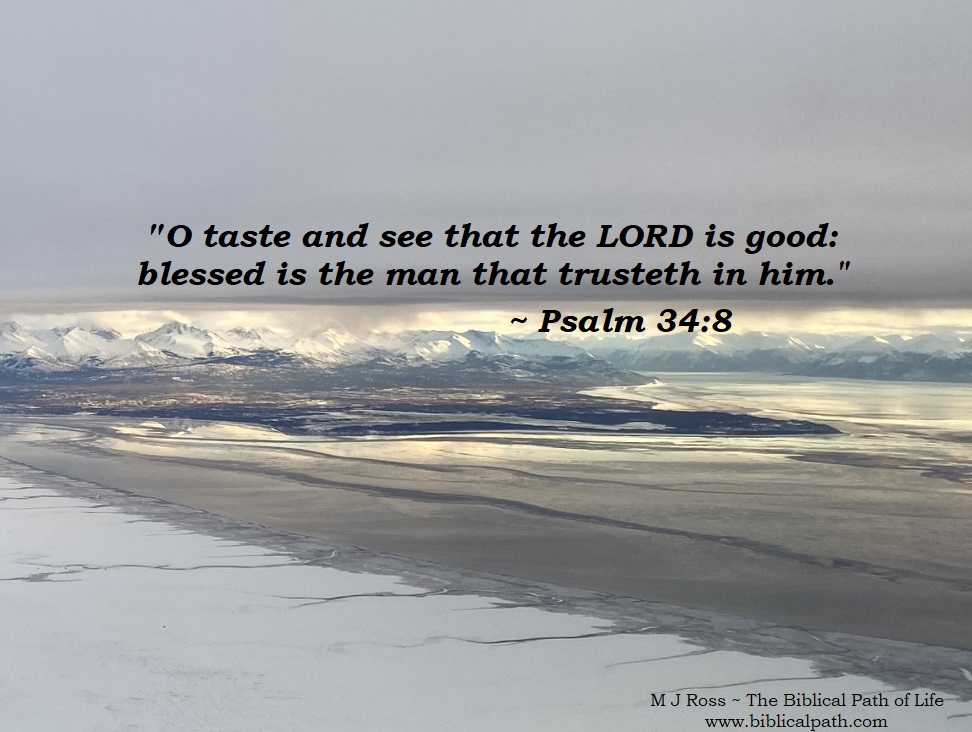
    O taste and see that the LORD is good: blessed is the man that trusteth in him.

    Psalm 34:8

    David was known as a man after God’s own heart. “And when he had removed him, he raised up unto them David to be their king; to whom also he gave testimony, and said, I have found David the son of Jesse, a man after mine own heart, which shall fulfil all my will” (Acts 13:22). The amazing part of this: God knew this before David was even chosen to become king of Israel.

    If you remember, King Saul continually disobeyed God. When God declared the kingdom would be removed from Saul and his family, read what Samuel told King Saul: “But now thy kingdom shall not continue: the LORD hath sought him a man after his own heart, and the LORD hath commanded him to be captain over his people, because thou hast not kept that which the LORD commanded thee” (1 Samuel 13:14). After one final chance, God told Samuel to declare the kingdom was rent from Saul’s family: “And Samuel said unto him, The LORD hath rent the kingdom of Israel from thee this day, and hath given it to a neighbour of thine, that is better than thou” (1 Samuel 15:28). We find out who that man is in the next chapter. “Then Samuel took the horn of oil, and anointed him in the midst of his brethren: and the Spirit of the LORD came upon David from that day forward…” (1 Samuel 16:13).

    It is good to know that God knew David’s heart. And David knew God. However, that did not prevent events of life from happening. There was a time when King Saul was after David (for even King Saul recognized God’s hand upon David). Saul wanted to kill David. David spent many years fleeing from King Saul. There was one occasion in particular where David had to flee the country. He ended up in the presence of an enemy king, Achish (Abimelech). They knew who David was, a mighty warrior in Israel’s army. David was afraid. “And he changed his behaviour before them, and feigned himself mad in their hands, and scrabbled on the doors of the gate, and let his spittle fall down upon his beard” (1 Samuel 21:13). When David behaved in this manner, the king thought David was mad (crazy). David was allowed to depart and escape (see 1 Samuel 21:10 – 21:1).

    David recognized that even though he was in a terrible place, it was God who delivered him from the hand of the enemy king. He wrote a Psalm to remember and praise God for taking care of him in such a time. “4. I sought the LORD, and he heard me, and delivered me from all my fears … 6. This poor man cried, and the LORD heard him, and saved him out of all his troubles. 7. The angel of the LORD encampeth round about them that fear him, and delivereth them. 8. O taste and see that the LORD is good: blessed is the man that trusteth in him” (Psalm 34:4-8). David sought God in his time of trouble. And God heard and delivered him. Notice that David called himself “This poor man”. When he cried unto the Lord, “the LORD heard him, and saved him out of all his troubles.” David understood what God did for him. He wanted others to recognize and do the same thing when one found themselves in trouble. “O taste and see that the LORD is good: blessed is the man that trusteth in him” (Psalm 34:8). David was fleeing from King Saul because Saul recognized David would be the king to replace him. The trouble was not something that David was looking for or dove into of his own accord. There is a great difference when one seeks trouble because of selfish desires or choosing to sin willfully. However, when trouble comes as one seeks after God, trying to please Him, God will help that one. Remember what David recognized: “The angel of the LORD encampeth round about them that fear him, and delivereth them” (Psalm 34:7).

    This is a great lesson for Christians today who choose to set their hearts to follow after God and the things of God. God will be with those who fear Him when trouble finds them. It is up to us to keep our hearts upon God and to cry out for help in times of trouble.

    Have you set your heart to seek after God?

    Do you call out for Him in times of trouble?

  • Lesson 12: Paul Before Rulers: Acts 24 – 26

    Key Verse

    But sanctify the Lord God in your hearts: and be ready always to give an answer to every man that asketh you a reason of the hope that is in you with meekness and fear:

    —1 Peter 3:15

    Key Verse Thought: Read the Key Verse. Sanctify means “to regard as holy; to withdraw from the fellowship with the world by gaining fellowship with God.” Once we have given our heart wholly to God, we will be ready at anytime to tell anyone about Jesus. In this lesson, we will discover that Paul was always ready to tell anyone he was around about Jesus.

    Emphasis: We are to be willing and able to share one’s personal testimony (of when Jesus called upon one’s heart and the response to that call). In addition, to be able to tell what Jesus is doing in their life (the job Jesus has called them to do).

    Lesson Summary: In our last lesson, we learned that when the religious leaders in the Temple accosted Paul, the chief captain saved Paul’s life by arresting him. When the chief captain found out about the plot against Paul’s life, he sent Paul by night to Caesarea. Because the chief captain found nothing worthy of death, he sent Paul to Felix, the governor, to hear Paul’s case.

    In this lesson, we will find that Felix, the governor, wanted to hear the words of Paul’s accusers first, and then he would hear Paul. After hearing both sides of the case, Felix found nothing worthy of Paul’s death – but he kept Paul in custody. Felix, along with his wife Drusilla, visited Paul several times. When they visited, they asked Paul questions about “the faith in Christ” (see Acts 24:24). We will find out what came of these discussions.

    When Festus succeeded Felix, Paul was still not released – to please the Jews. Festus did make a trip to Jerusalem talking with the religious leaders, but he would not send Paul to them. Festus agreed to hear the religious leaders’ case against Paul, giving Paul an opportunity to defend himself. Paul then appealed to Caesar (see Acts 25:11).

    King Agrippa visited Festus, and Festus told him of the troubles of Paul. Moreover, Festus wanted to hear from Paul himself. When Paul spoke before King Agrippa, he gave his personal testimony. He told of his life apart from Jesus, and the call Jesus extended to him. Paul told of his trust in Jesus, and the job given to him as a messenger to the Gentile people, preaching Jesus to them. Paul then invited King Agrippa to respond to the Gospel message. We will learn of King Agrippa’s response in this lesson.

    Note to teachers: A very important aspect of this lesson (if you are teaching a group) would be good to give your students an opportunity to give their own personal testimony. It may feel difficult if it is the first time they have shared, but it is important that they learn how to share with others – for it is the duty of each Christian to tell others what Jesus did for them.

    Y3Q2 – Lesson 12 Questions

    Y3Q2 – Lesson 12 Children’s Worksheets

    If you are teaching this to young children, the following is a craft idea to help them remember this lesson:

    We decorated a foam cross with stickers to help remember the Gospel Message that Jesus is now alive!

  • Lesson 11: Paul Arrested: Acts 21:27 – 23

    Key Verse

    And all the city was moved, and the people ran together: and they took Paul, and drew him out of the temple: and forthwith the doors were shut.

    —Acts 21:30

    Key Verse Thought: Read the Key Verse. Remember that in our last lesson, we learned that the people were opposed to Paul preaching Jesus, and they took him. We will learn in this lesson Paul’s response, and what he said to the people who rose up against him.

    Emphasis: To understand that people may not like us when we tell about Jesus (for they rejected Paul and his testimony). It is important that Christians not only remember when Jesus called upon our heart, but that we are willing to share that with others (our personal testimony).

    Lesson Summary: After learning of Paul’s third missionary journey in our last lesson, we read that he returned to Jerusalem bringing a report. He told the Christians how God had blessed their journey by the many Gentiles that had been reached for Jesus. The Jews rejoiced with him. However, when Paul went to the Temple, he was accosted by an uprising of the Asian Jews. We ended our last lesson with them laying hands upon Paul.

    As we begin this lesson, we will find that the entire city becomes involved in this uprising, and they drew Paul out of the Temple. As they were beating Paul, the chief captain heard and took Paul, then having him bound with chains. This chief captain spared Paul’s life. Paul was then given the opportunity to share his testimony with the people, including the chief captain. We will learn that a testimony is a personal sharing of when Jesus called upon one’s heart, the response to that call, and what God has done in one’s life since. Paul took time to share, briefly, of the sinner he once was. He then told of the specific call that Jesus extended to him, inviting Paul to become a believer in Jesus. Paul then told of his response to that call. He proceeded to shared with the people what Jesus wanted him to do with his life – go specifically to the Gentiles and preach Jesus to them. After learning of Paul’s personal testimony, we are going to learn that it is important for each Christian to be able to give his/her own personal testimony of Jesus’ call, and each response. If you are teaching this lesson to a group, it would be a great encouragement to your students if you were to share with them your personal testimony at a specific place in this lesson. You will then be encouraged to challenge them to come prepared (the next time you meet together to study God’s Word), to share their own personal testimony of Jesus’ call to them.

    After Paul gave his testimony, the people still rejected him. Nevertheless, God encouraged Paul. Even when there was a plot against Paul, his life was spared again. The chief captain then sent Paul to the governor, Felix, so his case could be heard.

    Y3Q2 – Lesson 11 Questions

    Y3Q2 – Lesson 11 Children’s Worksheets

    If you are teaching this to children, the following is a craft idea to help them remember this lesson:

    We made Bible markers with the plan of salvation on them. This is to help them remember the Scriptures that teach one how to be saved.

    Read the Scriptures on How to be Saved.

    The Biblical Path of Life – Year Three, Quarter Two is now available through Amazon.

  • The Response of the Heart

    “And it shall come to pass, that whosoever shall call on the name of the Lord shall be saved.”

    Acts 2:21

    In the early days of the church, there were varied responses to the Gospel Message of Jesus. Many readily believed. However, most of the religious leaders refused. We can read that their rejection became progressively worse.

    • First, we learn that some people were pricked in their heart, and they believed in Jesus (see Acts 2:37):

    When Peter preached in Acts 2, all of the house of Israel should have recognized Jesus. “Therefore let all the house of Israel know assuredly, that God hath made that same Jesus, whom ye have crucified, both Lord and Christ” (Acts 2:36). Christ means “the Savior of the world.” They were to believe Jesus is the Savior of the world. But, how did they respond? “Now when they heard this, they were pricked in their heart, and said unto Peter and to the rest of the apostles, Men and brethren, what shall we do?” (Acts 2:37). When they heard the Gospel message preached, they were “pricked in their heart.Pricked means “greatly pained or deeply moved.” It is important that the Gospel message had a movement in their heart. Sometimes we call this “conviction” (which means “found guilty of an offense”). However, it is more important what those people did with that movement. Peter told them what they must do. “38. Then Peter said unto them, Repent, and be baptized every one of you in the name of Jesus Christ for the remission of sins, and ye shall receive the gift of the Holy Ghost. 39. For the promise is unto you, and to your children, and to all that are afar off, even as many as the Lord our God shall call” (Acts 2:38-39). The people had to take action: repent. Repent means “to imply pious sorrow for unbelief and sin, and a turning from them to God and the gospel of Christ. To think differently; a change of mind demanding a change of action.” Repentance is a response between a sinful man and God. Baptism is an outward testimony of what happened to that individual’s heart. Notice that God “called” them. Call means “God’s call through the Gospel message.” God must call the person. What did the people do once they understood? “Then they that gladly received his word were baptized: and the same day there were added unto them about three thousand souls” (Acts 2:41). Those who believed in Jesus, responded to God’s call. There were three thousand people who believed!

    • Then we learn some religious leaders were cut to the heart, but they sought counsel to slay those who preached Jesus (see Acts 5:33):

    Peter preached another great sermon in Acts 3. He wanted the people to recognize that not only was Jesus God’s Son, but that this people had chosen to release a murderer instead of Jesus. However, Peter excused them because of their ignorance. “And now, brethren, I wot that through ignorance ye did it, as did also your rulers” (Acts 3:17). But Peter was there to help them understand – so they would not remain ignorant, by reminding them of the prophets words that are found throughout the Old Testament. “But those things, which God before had shewed by the mouth of all his prophets, that Christ should suffer, he hath so fulfilled” (Acts 3:18). Peter preached Jesus from the Old Testament (see Acts 3:20-26). Because the religious leaders did not like what Peter and John preached, they arrested them (see Acts 4:3). “Howbeit many of them which heard the word believed; and the number of the men was about five thousand” (Acts 4:4). Nevertheless, many others believed.

    Peter proceeded to preach Jesus to the religious leaders: “Neither is there salvation in any other: for there is none other name under heaven given among men, whereby we must be saved” (Acts 4:12). The religious leaders told them to quit preaching Jesus. However, the Apostles preached and taught daily – even after being put in prison. When they were ordered to quit teaching in Jesus’ name, they understood it was more important to obey and please God, rather than man (see Acts 5:29). Peter continued by preaching Jesus to these religious leaders. How did they respond to the Gospel message? “When they heard that, they were cut to the heart, and took counsel to slay them” (Acts 5:33). They beat the Apostles, told them to not speak in the name of Jesus, and let them go. Instead of receiving the Gospel message of Jesus, they rejected it and wanted to kill the messengers.

    • Finally, we find they were cut to the heart and killed the messenger, Stephen.

    And Stephen, full of faith and power, did great wonders and miracles among the people” (Acts 6:8). The rulers of the synagogue rose up and disputed with Stephen. “And they were not able to resist the wisdom and the spirit by which he spake” (Acts 6:9). After lying about Stephen and setting up false witnesses against him, Stephen was allowed to speak. He preached from the Old Testament addressing the false accusations against him. “Ye stiffnecked and uncircumcised in heart and ears, ye do always resist the Holy Ghost: as your fathers did, so do ye.” (Acts 7:51). These men had not kept God’s Word (see Acts 7:53). “When they heard these things, they were cut to the heart, and they gnashed on him with their teeth” (Acts 7:54). Although they were cut to the heart, they rejected Jesus and His Word. They then killed the messenger. Instead of repenting, these religious leaders took Stephen out and stoned him.

    Many believed in Jesus. However many rejected Him. The choice was up to each individual.

    Have you been pricked in your heart when you heard the Gospel Message of Jesus?

    Have you responded to the call of God through the Gospel message?

    What is the Gospel Message of Jesus Christ?

  • Seasoned with Salt

    Let your speech be alway with grace, seasoned with salt, that ye may know how ye ought to answer every man.

    Colossians 4:6

    Some people are born with a gift of having a ready answer for any question or comment. Often times that answer can encourage one. However, there are also times when the ready answer is not what one needs to hear at all. A Christian is to “Let your speech be alway with grace, seasoned with salt, that ye may know how ye ought to answer every man” (Colossians 4:6). But what does that mean?

    The first part teaches us, “Let your speech be alway with grace”. Speech is easily understood as one’s conversations, and the words one speaks. This verse helps us understand what kind of speech we should use: “alway with grace”. What is grace? Grace means “the external form or manner of words or discourses as gratefulness, agreeableness, acceptableness.” Often times it is easy to speak in the heat of the moment, without this grace in our speech. This is one of the things Christians are to improve in their lives. Why is this so important? Remember how Paul encourages us with his example in Corinthians. “Now thanks be unto God, which always causeth us to triumph in Christ, and maketh manifest the savour of his knowledge by us in every place”(2 Corinthians 2:14). Savour means “a good odor as accompanying an acceptable sacrifice.” Knowledge means “spoken of what is known; doctrine.” Paul understood what God was able to do through his faithful testimony for Christ, portrayed in the way he lived and spoke. Everywhere Paul went he shared Jesus and the doctrine of salvation – making it known in “every place.” Wherever Paul went, the people were called to a time of decision – either accept Jesus, or reject Jesus. “15. For we are unto God a sweet savour of Christ, in them that are saved, and in them that perish: 16. To the one we are the savour of death unto death; and to the other the savour of life unto life. And who is sufficient for these things?” (2 Corinthians 2:15-16). Paul understood the importance of his words and lifestyle. At all times, the world looks at Christians. Christians’ lives are either a savor of death unto death or savor of life unto life. This teaches that Christians are either a witness for the world, turning people from Christ because of their words and lives, or Christians are a witness for Christ in the way they respond correctly to the things in this life.

    Once Christians understand the importance of their speech, they need to understand: seasoned with salt, that ye may know how ye ought to answer every man” (Colossians 4:6b). Seasoned with salt means “a word or discourse that is appropriate or proper.” Back in the old days, most people knew all of the purposes of salt; for it was a necessity of life. Consider three of the most important uses for salt. These are still useful for today.

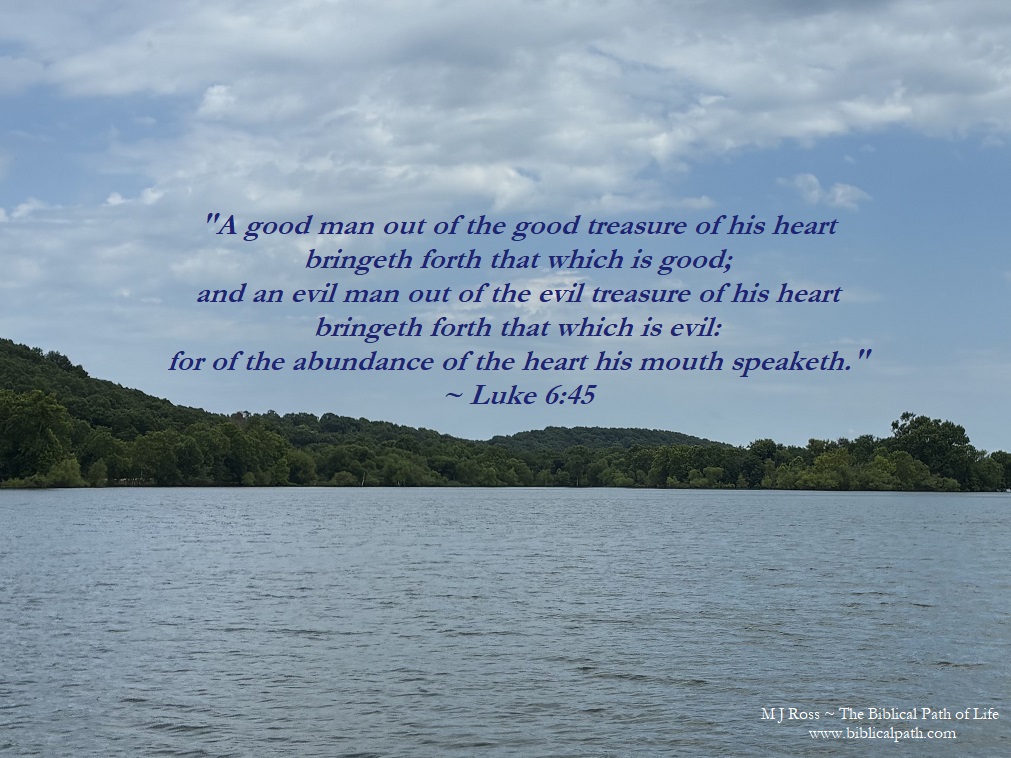
    First, salt is often used to season food, giving it taste. Many foods would be tasteless without salt. It is important for Christians to have the Bible hidden in their hearts, allowing His Word to come out in their conversations and answers in life. Psalm 119 is all about the importance of having God’s Word in one’s heart. Christians should read it often, and put much of it into their hearts. What is placed in the heart will come out in one’s speech and lifestyle (see Proverbs 4:23).

    Second, salt is used to prevent corruption and instead be used to preserve. Christians’ lives should be a constant rebuke to the corruption of sin, and an encouragement to choose life. Remember: “For to be carnally minded is death; but to be spiritually minded is life and peace” (Romans 8:6).

    Finally, consider that salt creates one to be thirsty. One of the greatest things Christian’s lives should do is to cause others to want what they have – Jesus Christ.

    How are Christians able to do these things? Right before this, Paul encouraged Christians what to do to help them to become more like Christ: “Continue in prayer, and watch in the same with thanksgiving” (Colossians 4:2). Continue means “steadfastness and faithfulness in the outgoings of the Christian life, especially in prayer.” Paul then gave instructions as to how to “continue” that Christian walk. “Walk in wisdom toward them that are without, redeeming the time” (Colossians 4:5). Wisdom means “the skill in the affairs of life; practical wisdom; wise management as shown in forming the best plans; sound judgment and good sense.” Them that are without means “those not belonging to church; not Christians.” This helps us understand the importance of living a faithful Christian life. Christians’ lives are to be lived consistently, so that anyone who sees them (especially the lost: those without Christ) will know, with certainty, that they are Christians. Remember the important way we have now learned to do this. “Let your speech be alway with grace, seasoned with salt, that ye may know how ye ought to answer every man” (Colossians 4:6). What Christians say and the way they respond to situations must be Christ-like. Having God’s Word hidden in the heart will enable one to “know how ye ought to answer every man.” Each Christian is to live every aspect of his or her life so that at any point someone sees them, that person will see Jesus in the Christian’s life.

    Is your speech seasoned with salt, knowing how to answer those without Christ, teaching them how they can know Him?

    How to know Jesus

  • A Book of Remembrance

    Then they that feared the LORD spake often one to another: and the LORD hearkened, and heard it, and a book of remembrance was written before him for them that feared the LORD, and that thought upon his name.”

    Malachi 3:16

    God sent Malachi with a message for His people, beginning with the priests who were just practicing a religion and not serving God according to His Word. The priests, and then the people, had fallen into sin once again. Malachi addressed many of the same sins that Nehemiah dealt with in the lives of God’s people.

    God had Malachi remind the Jews of the great love God had for His people. Yet, God’s people were not living as His people – for they sinned and did not even recognize how great their sin had become. Malachi’s burden was to reveal to the people just how far from God they had fallen.

    One important thing God wanted the people to understand was written in the second chapter. “If ye will not hear, and if ye will not lay it to heart, to give glory unto my name, saith the LORD of hosts, I will even send a curse upon you, and I will curse your blessings: yea, I have cursed them already, because ye do not lay it to heart” (Malachi 2:2). Not only would they not hear God, they had not taken His Words to heart: “if ye will not lay it to heart”. The things that one lays to heart are the things that are the most important to one. So much so that these are the things that make one who they are (as in character, beliefs, attitudes, actions, etc.). This verse was directed to the priests in Malachi’s day. This means that they were not allowing God’s Word to enter into their hearts, making a difference in their lives. Because they had not heard or laid to heart God’s Word, they were in a sinful condition before God. The priests thought they were doing fine because they practiced a religious system, but God knew the condition of their hearts. Because of the condition of the priests, the people in like manner, were also in sin.

    Some of the blatant sins of the day were listed in Malachi. In the midst of that list, see what God said, “… Return unto me, and I will return unto you, saith the LORD of hosts …” (Malachi 3:7b). God continually extended an invitation for the people to return to God, in repentance and change of heart, and God would return to His people. If they would return to God, obeying His commands, God’s people would not be able to contain the blessings He had in store for them.

    During this time, there were still a few people who truly feared God. God recognized those few who rejected the sin and obeyed God’s commands. “16. Then they that feared the LORD spake often one to another: and the LORD hearkened, and heard it, and a book of remembrance was written before him for them that feared the LORD, and that thought upon his name. 17. And they shall be mine, saith the LORD of hosts, in that day when I make up my jewels; and I will spare them, as a man spareth his own son that serveth him” (Malachi 3:16-17). God not only saw them, He heard them. They are His “jewels” for they belong to Him. God knew them and wrote of them in a special book of remembrance. These people obviously loved God and sought to know Him more – for they thought upon His name. Remember that the things that one lays to heart are the things that are the most important to one. So much so that these are the things that make one who they are (as in character, beliefs, attitudes, actions, etc.). When one continually thinks on God, God will continually be in that heart and mind. That is when a change in one’s life can take place. Those that God saw that still feared Him, “spake often one to another: and the LORD hearkened, and heard it” (Malachi 3:16a). They obviously encouraged each other often, and God heard.

    This is a good thing to remember today. Much encouragement comes from sharing with others who also fear and serve God. “But exhort one another daily, while it is called Today; lest any of you be hardened through the deceitfulness of sin” (Hebrews 3:13). God does not expect us to “go it alone”. We learn to not commune with evil ones, for they will corrupt our lives (“Be not deceived: evil communications corrupt good manners” 1 Corinthians 15:33). Instead, we are to fellowship with those who walk in the light (because Jesus is the Light). “5. This then is the message which we have heard of him, and declare unto you, that God is light, and in him is no darkness at all. … 7. But if we walk in the light, as he is in the light, we have fellowship one with another, and the blood of Jesus Christ his Son cleanseth us from all sin” (1 John 1:5, 7). God gives Christians with whom to fellowship and grow in Christ.

    As we read in Malachi, God keeps a “book of remembrance” of those who trust in God, fear Him, think on Him, and speak often with one another. One day, God will “open the books” (see Daniel 7:10 and Revelation 20:12). What do you want God to have written about you?

    Are you one who has “feared the LORD, and that thought upon his name” becoming more like Him?

  • Purpose in Your Heart

    But Daniel purposed in his heart that he would not defile himself with the portion of the king’s meat, nor with the wine which he drank: therefore he requested of the prince of the eunuchs that he might not defile himself.”

    Daniel 1:8

    The book of Daniel tells of Daniel and his three friends. The happenings in these lives are some of the more familiar events in the Bible. Most people have heard these “stories” often. However, it is important to understand that these are not just “stories”, but historical occurrences in actual people’s lives.

    Daniel was most likely born during the reign of the last good king of Judah, Josiah, and lived while the prophets Jeremiah and Ezekiel spoke. If you remember, King Josiah sought the Lord, removed idol worship, and repaired the house of the Lord. While the repair of the Temple was taking place, they found a book of the Law of Moses (see 2 Chronicles 34:14). After hearing God’s Word, King Josiah read it to all of the people in Judah. “And the king stood in his place, and made a covenant before the LORD, to walk after the LORD, and to keep his commandments, and his testimonies, and his statutes, with all his heart, and with all his soul, to perform the words of the covenant which are written in this book” (2 Chronicles 34:31). There was a change in the king’s life. He chose to serve God.

    Daniel and his three friends, Hananiah, Mishael, and Azariah, were most likely taken during the first siege of Nebuchadnezzar when many nobles and princes were taken captive (about nineteen years before Jerusalem fell). Remember that God allowed Babylon to come up against Jerusalem because they had predominately forsaken God for idol worship).

    King Nebuchadnezzar wanted the best of the young men of Judah to be set aside, to teach them the things of the Chaldeans. It appears the objective here was to make them forget everything about their previous life in Judah, becoming as the Babylonians. We read of four particular young men: Daniel, Hananiah, Mishael, and Azariah. Each of these young men obviously had parents who had not forsaken God (notice the meanings of their names below), but who still served Him in spite of the idolatry around them. Keep in mind that they heard the Word of the Lord read, and hearing it had obviously made a difference in their hearts and lives as well. The names of these four young men were changed. It appears that the name changes were to make them forget the God of their youth, and instead acknowledge the false gods of Babylon. Notice what their names mean and what their names were changed to:

    • Daniel means God is my judge; Daniel was changed to Belteshazzar:Prince of Baal, Bel will protect
    • Hananiah means God is Gracious; Hananiah was changed to Shadrach: illuminated by the sun-god
    • Mishael means Who is like God; Mishael was changed to Meshach: who is like the moon-god and
    • Azariah means God is my Help; Azariah was changed to Abednego: servant of Nego

    Their new names honored Babylonian gods.

    When King Nebuchadnezzar gave the order to eat the king’s meat and drink his wine, and their names, which had honored God, were taken from them, these young men recognized that their commitment to God was being challenged. “But Daniel purposed in his heart that he would not defile himself with the portion of the king’s meat, nor with the wine which he drank: therefore he requested of the prince of the eunuchs that he might not defile himself” (Daniel 1:8). When Daniel purposed in his heart to obey God rather than man, recognize what God did. “Now God had brought Daniel into favour and tender love with the prince of the eunuchs” (Daniel 1:9).

    In Daniel’s asking the prince of the eunuchs to permit these four young men to eat vegetables and drink water for ten days instead of the king’s choice foods, it was to allow the Lord to have a chance to prove Himself (see Daniel 1:10-16). When these young men appeared in better condition than any of the others did, they were allowed to continue their diet for the three years. Read what God did for them when they choose to walk in the ways of God. “As for these four children, God gave them knowledge and skill in all learning and wisdom: and Daniel had understanding in all visions and dreams” (Daniel 1:17). Even more than that, see what was discovered when they were presented to King Nebuchadnezzar. “19. And the king communed with them; and among them all was found none like Daniel, Hananiah, Mishael, and Azariah: therefore stood they before the king. 20. And in all matters of wisdom and understanding, that the king enquired of them, he found them ten times better than all the magicians and astrologers that were in all his realm” (Daniel 1:19-20). Because of their decision, choosing to remain faithful to God’s Word, God blessed them. “And Daniel continued even unto the first year of king Cyrus” (Daniel 1:21). Especially notice God allowed Daniel to live through the entire captivity.

    These four young men had been born in a land where they had learned of God. They were carried away to a pagan land. There, they chose to continue to serve God.

    Today, most people have been born into a pagan land. It is your choice: to trust in Christ and “purpose in your heart” to live for Him, or to live like the pagans.

    Have you “purposed in your heart” to obey God and His Word, in spite of the condition of the world around you?

  • What is Required

    He hath shewed thee, O man, what is good; and what doth the LORD require of thee, but to do justly, and to love mercy, and to walk humbly with thy God?”

    Micah 6:8

    Micah was an Old Testament prophet. He called the people to “hear” God’s Words that God gave Micah to deliver. He warned the people that God saw their sin, and judgment was coming because of habitual sin. Micah spoke mainly to Judah during the reign of King Hezekiah. King Hezekiah heard the message from God delivered by Micah, and this prompted King Hezekiah to make great reformations in Judah (see Jeremiah 26:18). Because Hezekiah sought God during those days, God defeated the Assyrian army for them (see 2 Kings 18-19).

    Like many prophets before him, Micah reminded the people where they had failed, calling for the people to repent and to have a right relationship with God. Recognize just how foul the people’s understanding of God had become. “6. Wherewith shall I come before the LORD, and bow myself before the high God? shall I come before him with burnt offerings, with calves of a year old? 7. Will the LORD be pleased with thousands of rams, or with ten thousands of rivers of oil? shall I give my firstborn for my transgression, the fruit of my body for the sin of my soul?” (Micah 6:6-7). They honestly had become so influenced by the bad kings (think of King Ahaz who offered his son as a sacrifice to the god Molech), that they actually believed God would accept the sacrifice of a firstborn child to gain forgiveness from God. By asking these questions of God, they revealed their hearts toward God.

    It would be good to remember back to King Saul. He thought the offering was more important than obeying God’s Word. Samuel reminded him that it was a right heart, not outward actions that God wanted. “And Samuel said, Hath the LORD as great delight in burnt offerings and sacrifices, as in obeying the voice of the LORD? Behold, to obey is better than sacrifice, and to hearken than the fat of rams” (1 Samuel 15:22). These thoughts help us understand the Old Testament viewpoint that religious ritual devoid of spiritual reality and a life that is dedicated to the Lord is worthless (see Psalm 40:6-8; Isaiah 1:10-20).

    What does God want? What does He require? God had already told them what He required of them – they had just chosen to disregard God’s commands. “He hath shewed thee, O man, what is good; and what doth the LORD require of thee, but to do justly, and to love mercy, and to walk humbly with thy God?” (Micah 6:8). This is the same message God had preached to the people from the beginning of time. All God expects from His people is for them to walk humbly with Him. Remember the following: “4. Hear, O Israel: The LORD our God is one LORD: 5. And thou shalt love the LORD thy God with all thine heart, and with all thy soul, and with all thy might. 6. And these words, which I command thee this day, shall be in thine heart: 7. And thou shalt teach them diligently unto thy children, and shalt talk of them when thou sittest in thine house, and when thou walkest by the way, and when thou liest down, and when thou risest up” (Deuteronomy 6:4-7). After reading how far the people had gotten from God, can you understand why God wanted them to constantly talk about His commands and teach them to their children? Then they would constantly be reminded of what God’s Words were. Even with the Law in the Old Testament, the people did not understand that they could not become a righteous person in and of themselves. “Wherefore the law was our schoolmaster to bring us unto Christ, that we might be justified by faith” (Galatians 3:24). All of the Law was to reveal that they were a sinful people who had nothing to offer, but deserved the penalty of death before a Holy God. “For the wages of sin is death; but the gift of God is eternal life through Jesus Christ our Lord” (Romans 6:23).

    Remember Cain. He rose up and killed his brother because God did not accept his sacrifice. Cain had a religious ritual, but he did not have a spiritual reality – coming before God with a true heart. God saw Cain’s heart (which was revealed to us by the killing of his brother). Where does this leave one?

    Remember what Jesus said when the people asked what work they needed to do. “28. Then said they unto him, What shall we do, that we might work the works of God? 29. Jesus answered and said unto them, This is the work of God, that ye believe on him whom he hath sent” (John 6:28-29). Later, Paul and Silas tell a man what to do when he asks: “30. And brought them out, and said, Sirs, what must I do to be saved? 31. And they said, Believe on the Lord Jesus Christ, and thou shalt be saved, and thy house” (Acts 16:30-31). Faith is the opposite of works. One must believe on Jesus because He is the one who paid the penalty for sin (His death on the cross), enabling one to be saved. It is then, and only then, that one is able to do what God requires: “to do justly, and to love mercy, and to walk humbly with thy God” (see Micah 6:8). When you read Galatians 5:22-23, this explains that these actions are only enabled by the Holy Spirit which is given to one when they are saved.

    Have you trusted in Jesus, enabling you to do justly, and to love mercy, and to walk humbly with thy God?

    How to be Saved