Tag: Christians

  • Wholly Follow the Lord

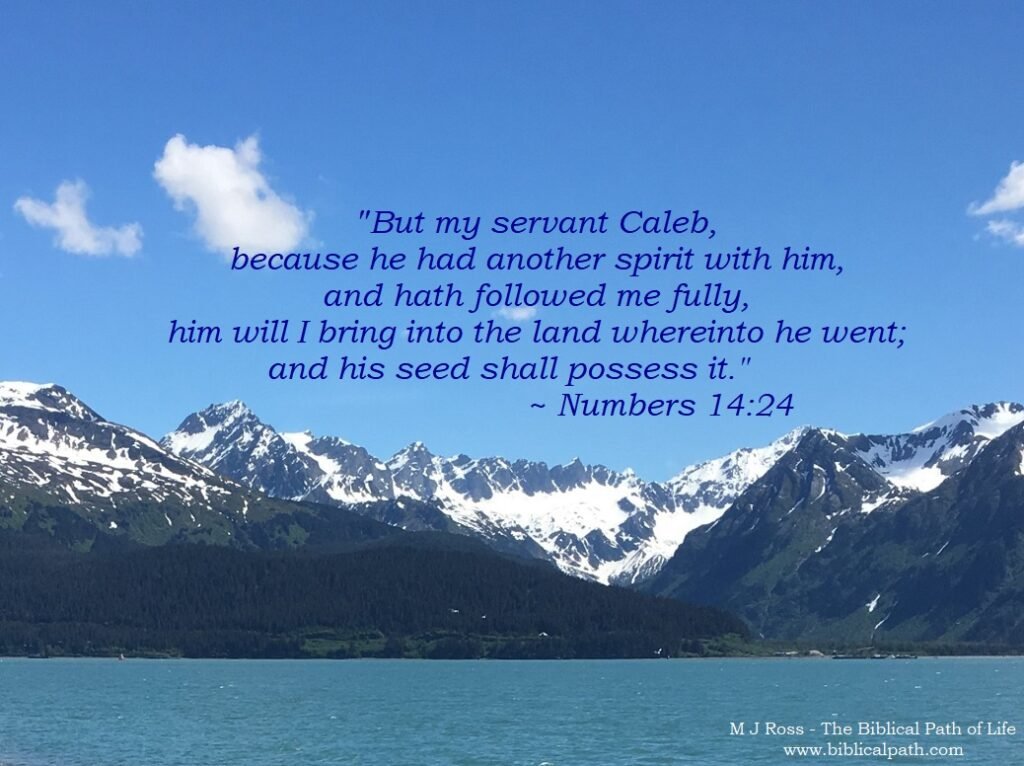
    “But my servant Caleb, because he had another spirit with him, and hath followed me fully, him will I bring into the land whereinto he went; and his seed shall possess it.”

    Numbers 14:24

    Joshua and Caleb are famously known for being the only two of the twelve spies who believed God would allow them to posses the Promised Land. We remember Joshua. God chose him to victoriously lead His people into the Promised Land after Moses’ death and the forty years of wanderings. But have you ever taken time to consider the man Caleb?

    The twelve spies brought a report after searching Canaan land for forty days. Ten declared “surely it floweth with milk and honey” and showed the fruit of the land (including “a branch with one cluster of grapes, and they bare it between two upon a staff” see Numbers 14:23, 27). However, they also reported that the people were strong, with walled cities, the men were of great stature, and the sons of Anak were giants “and we were in our own sight as grasshoppers, and so we were in their sight” (see Numbers 13:28, 32-33). Joshua and Caleb understood and believed that God would give them the land just as He had promised. “And Caleb stilled the people before Moses, and said, Let us go up at once, and possess it; for we are well able to overcome it” (Numbers 13:30). Caleb tried to convince the people, but they tried to stone Joshua and Caleb (see Numbers 14:6-10). The people refused to enter the land. After Moses interceded for the people, God declared all of that disbelieving generation (all over the age of twenty) would die in the wilderness and not enter into the Promised Land (see Numbers 14:26-35). “10. And the LORD’S anger was kindled the same time, and he sware, saying, 11. Surely none of the men that came up out of Egypt, from twenty years old and upward, shall see the land which I sware unto Abraham, unto Isaac, and unto Jacob; because they have not wholly followed me” (Numbers 32:10-11). The people did not wholly follow God. “Save Caleb the son of Jephunneh the Kenezite, and Joshua the son of Nun: for they have wholly followed the LORD” (Numbers 32:12). Caleb and Joshua would enter the land for they “wholly followed the LORD.”

    This is all very familiar to us. However, consider why God allowed Caleb to enter into the land. “But my servant Caleb, because he had another spirit with him, and hath followed me fully, him will I bring into the land whereinto he went; and his seed shall possess it” (Numbers 14:24). God declared that His servant, Caleb, followed Him fully. That is an amazing statement made by God. There are not many people who fully (or wholly) followed God. Caleb (and Joshua) stood strong for the Lord even when the whole nation refused to obey God and His Word. Caleb had to wander in the wilderness with the rest of God’s people for those forty years. Through those years, Caleb followed the Lord. He was with the people as they conquered the land, beginning with Jericho. Caleb reminded Joshua. “7. Forty years old was I when Moses the servant of the LORD sent me from Kadeshbarnea to espy out the land; and I brought him word again as it was in mine heart. 8. Nevertheless my brethren that went up with me made the heart of the people melt: but I wholly followed the LORD my God” (Joshua 14:7-8). Caleb declared he “wholly followed the LORD my God.” He was ready to possess the land promised to him. “And now, behold, the LORD hath kept me alive, as he said, these forty and five years, even since the LORD spake this word unto Moses, while the children of Israel wandered in the wilderness: and now, lo, I am this day fourscore and five years old” (Joshua 14:10). Caleb was now eighty-five years old, yet he was not finished. God had more for him to do. “Now therefore give me this mountain, whereof the LORD spake in that day; for thou heardest in that day how the Anakims were there, and that the cities were great and fenced: if so be the LORD will be with me, then I shall be able to drive them out, as the LORD said” (Joshua 14:12). Do you remember who the Anakims were? They were the giants that caused the people to be afraid and refuse to enter the land. Even after all of these years, Caleb was not afraid of them and wanted to defeat them. And he did (see Joshua 15:13-14). “Hebron therefore became the inheritance of Caleb the son of Jephunneh the Kenezite unto this day, because that he wholly followed the LORD God of Israel” (Joshua 14:14). Notice that Caleb’s greatest victory (and greatest reward) was not accomplished until he was eighty-five years old. He never quit wholly following the Lord. He believed what God said: “Save Caleb the son of Jephunneh; he shall see it, and to him will I give the land that he hath trodden upon, and to his children, because he hath wholly followed the LORD” (Deuteronomy 1:36).

    The difference between Caleb and the rest of God’s people was that he believed and wholly followed the Lord. The same should be true of Christians today. Nevertheless, most Christians live like the nation of Israel: afraid of the giants in the land. If Christians would believe God and commit to wholly follow the Lord, the giants would be defeated, just as they were for Caleb. Age did not deter Caleb, do not let it deter you.

    Have you refused to wholly follow the Lord because you are afraid of the “giants of the land”?
  • Strangers and Pilgrims

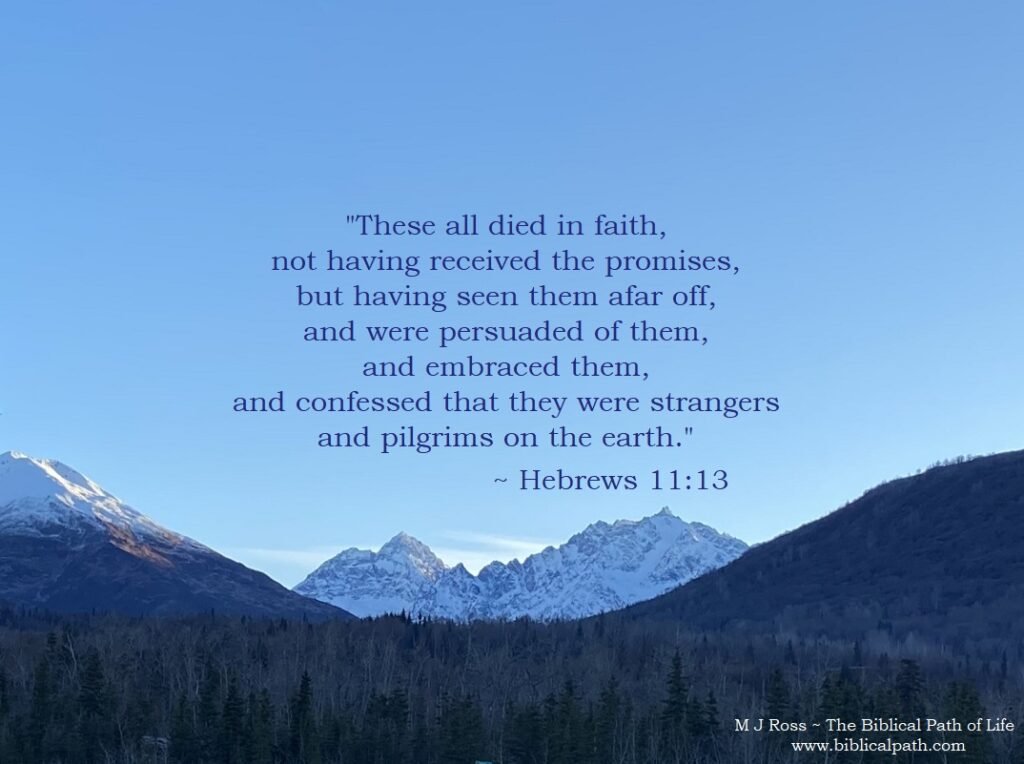
    “These all died in faith, not having received the promises, but having seen them afar off, and were persuaded of them, and embraced them, and confessed that they were strangers and pilgrims on the earth.”

    Hebrews 11:13

    Is it possible to please God? The Bible declares that it is possible. “But without faith it is impossible to please him: for he that cometh to God must believe that he is, and that he is a rewarder of them that diligently seek him” (Hebrews 11:6). However, one cannot please God without faith. Faith here means “a knowledge of, assent to and confidence in certain divine truths, especially those of the gospel as produces good works.” There is a list of people recorded in the eleventh chapter of Hebrews who believed God is, by faith, and then lived diligently seeking Him. They believed God’s promises. The most important, life-changing promise of God, was that He would send One, Jesus, who would bring reconciliation between man and God (see Genesis 3:15). Each of the people listed in Hebrews chapter eleven diligently sought God, trusting that God would reward them for their faithfulness to Him; for they looked forward to Jesus’ coming. “These all died in faith, not having received the promises, but having seen them afar off, and were persuaded of them, and embraced them, and confessed that they were strangers and pilgrims on the earth” (Hebrews 11:13). Persuaded means “to be convinced; to believe.” Embraced means “to welcome; to receive gladly – referring to the promises.” They believed and gladly received these promises.

    Many lived by faith as “strangers and pilgrims”, obviously differently, for others often recognized God was with them. Is the New Testament the only place these faithful (whom God was with) are mentioned? Recall just a few described as such in the Old Testament:

    • Abraham: Others recognized this: “… Abimelech and Phichol the chief captain of his host spake unto Abraham, saying, God is with thee in all that thou doest” (Genesis 21:22), see also
    • Isaac: Others recognized this: “And they said, We saw certainly that the LORD was with thee …”Genesis 26:28.
    • Joseph: “2. And the LORD was with Joseph, and he was a prosperous man; and he was in the house of his master the Egyptian. 3. And his master saw that the LORD was with him …” (Genesis 39:2-3).
    • Moses: “According as we hearkened unto Moses in all things, so will we hearken unto thee: only the LORD thy God be with thee, as he was with Moses” (Joshua 1:17). God had been with Moses and promised to be with Joshua, too. “And the LORD said unto Joshua, This day will I begin to magnify thee in the sight of all Israel, that they may know that, as I was with Moses, so I will be with thee” (Joshua 3:7).
    • Phinehas: “And Phinehas the son of Eleazar was the ruler over them in time past, and the LORD was with him” (1 Chronicles 9:20).
    • Joshua: A promise: “And he gave Joshua the son of Nun a charge, and said, Be strong and of a good courage: for thou shalt bring the children of Israel into the land which I sware unto them: and I will be with thee” (Deuteronomy 31:23). And it was fulfilled: “So the LORD was with Joshua …” (Joshua 6:27).
    • Judges (there were thirteen judges): “And when the LORD raised them up judges, then the LORD was with the judge, and delivered them out of the hand of their enemies all the days of the judge …” (Judges 2:18).
    • Samuel: “And Samuel grew, and the LORD was with him …” (1 Samuel 3:19).
    • Young David: “And David behaved himself wisely in all his ways; and the LORD was with him” (1 Samuel 18:14). Others recognized this: “Then answered one of the servants, and said, Behold, I have seen a son of Jesse the Bethlehemite … and the LORD is with him” (1 Samuel 16:18); see also 1 Samuel 18:12, 28.
    • King David: “So David waxed greater and greater: for the LORD of hosts was with him” (1 Chronicles 11:9).
    • King Solomon: “And Solomon the son of David was strengthened in his kingdom, and the LORD his God was with him, and magnified him exceedingly” (2 Chronicles 1:1).
    • King Jehoshaphat: “3. And the LORD was with Jehoshaphat, because he walked in the first ways of his father David, and sought not unto Baalim; 4. But sought to the LORD God of his father, and walked in his commandments, and not after the doings of Israel” (2 Chronicles 17:3-4).
    • Hezekiah: “And the LORD was with him; and he prospered whithersoever he went forth …” (2 Kings 18:7). And so many more!

    As we remember some from the Old Testament, we acknowledge they believed God, sought after Him, walked with Him, desired to please Him, and God was with them. Christians are to recognize their perseverance. However, not all people chose to live a life pleasing to God. Yet those who chose to walk with God help us recognize the importance of trusting in Christ (who came as God promised), to restore the life that had been lost because of sin. What an encouragement!

    Likewise, Christians today are to reveal an active participation of faith in their lives. “6. As ye have therefore received Christ Jesus the Lord, so walk ye in him: 7. Rooted and built up in him, and stablished in the faith, as ye have been taught, abounding therein with thanksgiving” (Colossians 2:6-7). Stablished means “to turn resolutely in a certain direction; strengthen.” True faith produces good works (a changed life).

    Have you received Jesus, by faith, now walking actively turning resolutely toward Jesus who strengthens us?

  • Have Thine own way, Lord!

    “But in a great house there are not only vessels of gold and of silver, but also of wood and of earth; and some to honour, and some to dishonour.”

    2 Timothy 2:20

    God had sent Jeremiah to watch a potter work a piece of clay, making it into a vessel (see Jeremiah 18:1-4). Jeremiah recognized that God is the Potter and we are the clay. The Potter took the clay and fashioned it into a vessel to be used. We understand this to be a picture of God dealing with individual people. Our choice: to receive or reject God’s work.

    God deals with patience and mercy with all vessels. Notice that He deals with them – not as lifeless clay, but as creatures with a free will. Why? “Who will have all men to be saved, and to come unto the knowledge of the truth” (1 Timothy 2:4). God has unlimited power over the clay. Yet, He allows freedom; God will yield to our choice. He gives ample opportunity to reveal any inclination one might have of obeying God. We gain some insight into this in Romans. “20. Nay but, O man, who art thou that repliest against God? Shall the thing formed say to him that formed it, Why hast thou made me thus? 21. Hath not the potter power over the clay, of the same lump to make one vessel unto honour, and another unto dishonour?” (Romans 9:20-21). Honor means “by analogy esteem (especially of the highest degree), or the dignity itself.” Dishonor means “it refers to dishonor, disgrace.” Take note that the clay is in His hand and under His control, yet while working with the individual, God gives ample opportunity to reveal any inclination that one might have of obeying God. Nevertheless, there are those who challenge the Potter (God). Some clay (vessel) that God is shaping will not take His designing. But, God is long-suffering. “The Lord is not slack concerning his promise, as some men count slackness; but is longsuffering to us-ward, not willing that any should perish, but that all should come to repentance” (2 Peter 3:9). Some rebel against God’s plan, and that one continues on under the judgment of the God it questions. God hates sin and it must be dealt with, but His mercy goes out to the vessel involved. If we insist upon destroying ourselves, He will allow us to do that. If we insist upon not being repentant, and instead choose to be disobedient and/or rebellious, He will give us our desire – at least the fruits of that choice. Yet, God patiently waits for His people to allow Him to shape and mold them into what He wants them to be. Keep in mind: The Potter has an intended purpose for us. He has a goal. We may frustrate that goal. Remember that some become vessels of honor, some vessels of dishonor.

    Understanding there are vessels of honor and dishonor, read the following verses: “But in a great house there are not only vessels of gold and of silver, but also of wood and of earth; and some to honour, and some to dishonour” (2 Timothy 2:20).Vessels of gold and silver are vessels of honor. Read a description of such a one from Psalms. “23. The steps of a good man are ordered by the LORD: and he delighteth in his way. 24. Though he fall, he shall not be utterly cast down: for the LORD upholdeth him with his hand” (Psalm 37:23-24). Vessels of wood and earth are vessels of dishonor. One can recognize a vessel of dishonor in Isaiah. “Woe unto him that striveth with his Maker! Let the potsherd strive with the potsherds of the earth. Shall the clay say to him that fashioneth it, What makest thou? or thy work, He hath no hands?” (Isaiah 45:9). When we refuse God’s will, we are injuring ourselves, or depriving ourselves of the joy and satisfaction of being where God wants us to be, fulfilling His purpose for our lives . Remember: “For we are his workmanship, created in Christ Jesus unto good works, which God hath before ordained that we should walk in them” (Ephesians 2:10). God has a plan. It is our job, as Christians, to submit to Him and walk in it (see also 2 Timothy 2:21). The key to what kind of a vessel we will be is determined by how we respond to the Potter’s touch and our obedience to His Word. “23. And whatsoever ye do, do it heartily, as to the Lord, and not unto men; 24. Knowing that of the Lord ye shall receive the reward of the inheritance: for ye serve the Lord Christ. 25. But he that doeth wrong shall receive for the wrong which he hath done: and there is no respect of persons” (Colossians 3:23-25). There are many who refuse to submit fully to God and His Word. The defects are not in the Potter but in the clay.

    The following song is a great reminder of this lesson.

    Have Thine own way, Lord!

    Author: Adelaide A. Pollard (1906)

    1. Have Thine own way, Lord! Have Thine own way!
    Thou art the Potter, I am the clay.
    Mold me and make me After Thy will,
    While I am waiting, Yielded and still.

    2.Have Thine own way, Lord! Have Thine own way!
    Search me and try me, Master today!
    Whiter than snow, Lord, Wash me just now,
    As in Thy presence Humbly I bow.

    3.Have Thine own way, Lord! Have Thine own way!
    Wounded and weary, Help me I pray!
    Power, all power, Surely is Thine!
    Touch me and heal me, Saviour divine!

    4.Have Thine own way, Lord! Have Thine own way!
    Hold o’er my being, Absolute sway!
    Fill with Thy Spirit, Till all shall see
    Christ only, always, Living in me!

    Are you where God wants you to be, submitting to the Potter’s hand, fulfilling what He has planned for your life?

  • Lesson 8: Growing in Grace: 2 Peter

    Key Verse

    But grow in grace, and in the knowledge of our Lord and Saviour Jesus Christ. To him be glory both now and for ever. Amen.

    —2 Peter 3:18

    Key Verse Thought: Read the Key Verse. Do you realize what it means to grow (examples may be: to become stronger, taller, bigger, smarter, better at something, etc.)? It is important to recognize that one grows in more ways that just physically. In this lesson, we will learn the importance of growing in our Christian life – spiritually. It is important for Christians to grow in their Christian life – just as in the physical life.

    Emphasis: We are to understand the importance of continually growing in the Christian life, watching and waiting for Jesus to return. Christians are to remember that when one grows in the Christian life, the relationship with Jesus grows as well. But especially: if Christians are not growing, they are digressing in that Christian life, becoming ineffective Christians.

    Lesson Summary: The book of 2 Peter is the fourth book in the fifth division of the New Testament: Nine Letters to the Jewish Church. The Apostle Peter wrote it to Christians, encouraging them to grow in their Christian life. It is relevant to Christians today, just as it was to the Jewish Christians during the New Testament period.

    Peter began by reminding them of their like faith in Jesus. He then taught them the importance of growing in that Christian faith. We will learn that as we grow in the knowledge of Jesus, our relationship with Him grows as well. There is also a warning for one who lacks the qualities of a growing, Christian life: he is compared to one who is blind and cannot see afar off.

    As always, there is a warning of false teachers. Peter then cites examples of angels, and even some from the Old Testament, of those whom God “spared not.” Peter included a warning of those who had a “knowledge of the Lord”, who after they knew, turned from it, whose “latter end is worse with them than the beginning.”

    Before Peter closed, he reminded the Christians not to forget that the Day of the Lord would come as a thief in the night for those who were not watching for His return. However, before that day came, Christians had much to do: live a holy and godly life, look for Jesus’ return, hasting the return of Jesus by winning others to the Lord (remembering that Jesus is longsuffering, not willing that any perish), and so much more. Most importantly, Christians are to “grow in grace, and in the knowledge of our Lord and Saviour Jesus Christ” (2 Peter 3:18).

    Y3Q4 – Lesson 8 Questions

    Y3Q4 – Lesson 8 Children’s Worksheets

    If you are teaching this to younger children, the following is a craft idea to help them remember this lesson:

    We colored and cut out a flower and flower pot. We then cut a slit in the construction paper where we glued the pot. We entered the flower stem into that slit, enabling us to cause the flower to “grow”. We included the verse 2 Peter 3:18.

    The Biblical Path of Life Year Three – Quarter Four is available through Amazon.

  • Lesson 7: Become Lively Stones: 1 Peter

    Key Verse

    Ye also, as lively stones, are built up a spiritual house, an holy priesthood, to offer up spiritual sacrifices, acceptable to God by Jesus Christ.

    —1 Peter 2:5

    Key Verse Thought: Read today’s Key Verse. As you read this verse, understand it better with the following definitions:

    • Lively stones means “to live as Christians”
    • Spiritual house means “spoken of things in a higher and spiritual sense, not literal, as in: Christians as the spiritual house or temple of God”
    • Holy priesthood means “referring to all Christians who are said to offer spiritual sacrifices”
    • Spiritual sacrifices means “spoken of things in a higher and spiritual sense, not literal, as in Christians in their service, obedience, praise offered to God; an offering or oblation (see Romans 12:1 and Hebrews 13:15-16)”

    In this lesson, we will learn how to become “lively stones”.

    Emphasis: In this lesson, we are to remember the hope we have in Jesus that allows us to become “lively stones”, living a Christ-like life: no longer living in the flesh, but according to the will of God. We are to know Christians must learn to think and act discreetly, using sound judgment and become self-disciplined – in order to resist the devil, for he wants to destroy Christians.

    Lesson Summary: Peter was one of Jesus’ twelve disciples. He became a great leader in establishing the church after Jesus’ ascension. He wrote this letter to the Jewish Christians who scattered during persecutions.

    Peter began by reminding them of what Jesus had done by his life, death, and resurrection, which gave all Christians a “lively hope”: the assurance of salvation and eternal life in heaven. Because of that “lively hope”, Peter taught Christians not only how to be holy, but to become “lively stones”: just how to live as Christians. He then called upon Christians, as dearly beloved, teaching them how to live: as citizens, employees, in sufferings, with spouses, and in fellowship with other believers, etc. A Christian’s life should be lived so that no one doubts that that one is really a Christian – and in that life, each Christian is a witness for Jesus, leading others into a life with Christ. Peter gave Jesus as our ultimate example, and then gave Noah’s faith as an example from the Old Testament.

    Finally, Peter taught to live soberly: to think and act soberly, discreetly, and to use sound judgment and moderation; to be self-disciplined. By standing fast in our faith, living soberly, Christians are enabled to resist the devil, our adversary. And God promised to help.

    Y3Q4 – Lesson 7 Questions

    Y3Q4 – Lesson 7 Children’s Worksheets

    If you are teaching this lesson to younger children, the following is a craft idea to help them remember this lesson:

    We decorated a paper with Noah’s Ark Stickers remembering Noah’s faith as an example from the Old Testament given in 1 Peter 3 .

    The Biblical Path of Life – Year Three, Quarter Four is available through Amazon.

  • Lesson 6: Christians Show Faith by Works: James

    Key Verse

    But be ye doers of the word, and not hearers only, deceiving your own selves.

    —James 1:22

    Key Verse Thought: Read today’s Key Verse. What is the difference between hearing about something and actually doing it? Which is more real? How important is it for children to actually do what their parent has told them to do compared to just hearing what was said and not fulfilling the task (i.e.: taking out the trash, making their bed, cleaning their room, coming home at the appointed time, etc.). Will there be reward, or trouble? Depends on whether they did what was commanded of them, or if they just “heard” what was said. In this lesson, we will look at the difference. We will learn it is most important to do what God’s Word teaches, and not just hear what God’s Word teaches.

    Emphasis: In this lesson, we are to understand the importance of not only hearing what God’s Word teaches, but doing what God’s Word teaches. It is important for the world to see a person is truly a Christian by the way that one lives their life – as a life pleasing to God, obeying the Bible. Remember that Abraham was considered righteous and called the friend of God when he did what God asked of Him.

    Lesson Summary: After learning in Hebrews again that salvation is by faith, we will recognize in this lesson that that faith is coupled with works.

    James, the half brother of Jesus, wrote the book of James to the Jews scattered abroad, but it is also relevant to Christians today. Many think this may be the earliest written New Testament book. James did not become a Christian until after Jesus’ death, burial, and resurrection. He witnessed Jesus’ ascension and returned to wait in the upper room (see Acts 1:14). We will begin this lesson by remembering who James was.

    Throughout the book of James, we will find many wise things applicable to the Christian life – much like the book of Proverbs in the Old Testament. James taught practical ways to live a Christian life. He began by teaching one to understand the difference between trials and temptations. One must also understand that faith alone is dead; however, faith is justified by works. Two Old Testament examples are given to reveal this. James encourages Christians to choose to be wise, learning how to live right, compared to living wrong. He reminds Christians that they cannot live like the world, for friendship with the world is enmity with God. Instead, a Christian is to draw nigh unto God, enabling that Christian to resist the devil. We will read a warning that when a Christian knows to do what is right but does not do it, it is sin. A Christian will show his faith by the Christ-like life he leads. Finally, we will learn about effectual prayer that avails much.

    Y3Q4 – Lesson 6 Questions

    Y3Q4 – Lesson 6 Children’s Worksheets

    The Biblical Path of Life – Year Three, Quarter Four is available through Amazon.

  • Lesson 7: The Gospel Message Spreads: Acts 11:19-12

    Key Verse

    Fear none of those things which thou shalt suffer: behold, the devil shall cast some of you into prison, that ye may be tried; and ye shall have tribulation ten days: be thou faithful unto death, and I will give thee a crown of life.

    —Revelation 2:10

    Key Verse Thought: Read today’s Key Verse. As you read this verse, begin to understand the importance of standing fast in the Christian faith – even if persecution comes. In this lesson, we will learn of one who was killed for his faith and one who was imprisoned for his, yet both men remained faithful.

    Emphasis: As you look at this lesson, recognize the significance of spreading the Gospel message, and the importance of ministering to new Christians as they grow in the Lord. Christians are to understand that being a faithful witness may leave us open for persecution – but we are to remember to be faithful, just like James and Peter.

    Lesson Summary: We have learned that church was being persecuted, which was causing the Gospel message to be scattered into the areas around (including Samaria). Nevertheless, as we learned in our last lesson, even while there was persecution, Peter continued to do what God asked him to do. He learned that anyone could be saved – Jew or Gentile. He witnessed the Roman centurion, Cornelius, his household, and many of his friends become Believers. Peter then reported back to the Believers in Jerusalem that God could save anyone.

    In this lesson, we find that the church continued to grow – in spite of persecution. So much so, that Barnabas was called from Jerusalem and was sent out to minister to the numerous Believers. When he saw the many blessings of God, he encouraged the people to adhere to the teachings of Jesus, growing closer to Him, and to continue telling others about Jesus. Barnabas then went to Tarsus, found Saul, and brought him back to help in the ministry, “… And the disciples were called Christians first in Antioch” (Acts 11:26). Then they began to minister to those in need.

    After this, the persecution intensified. Herod took James, the brother of John, and killed him for his faith. Then because it pleased the religious leaders, Herod put Peter in prison. We will learn in this lesson what happened when the church met together and prayed for Peter.

    Herod was an enemy of God and the Christians. In this lesson, we will see an instance when God allowed His people to see their enemy destroyed.

    Y3Q2 – Lesson 7 Questions

    Y3Q2 – Lesson 7 Children’s Worksheets

    If you are teaching this lesson to children, the following is a craft idea to help them remember this lesson.

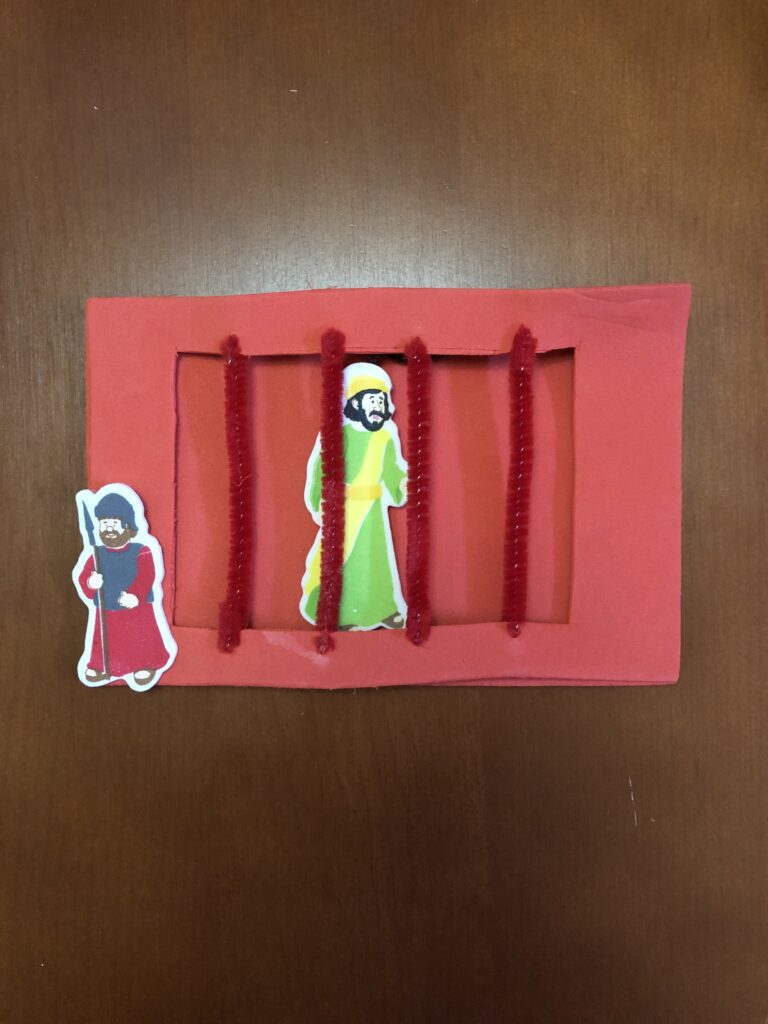
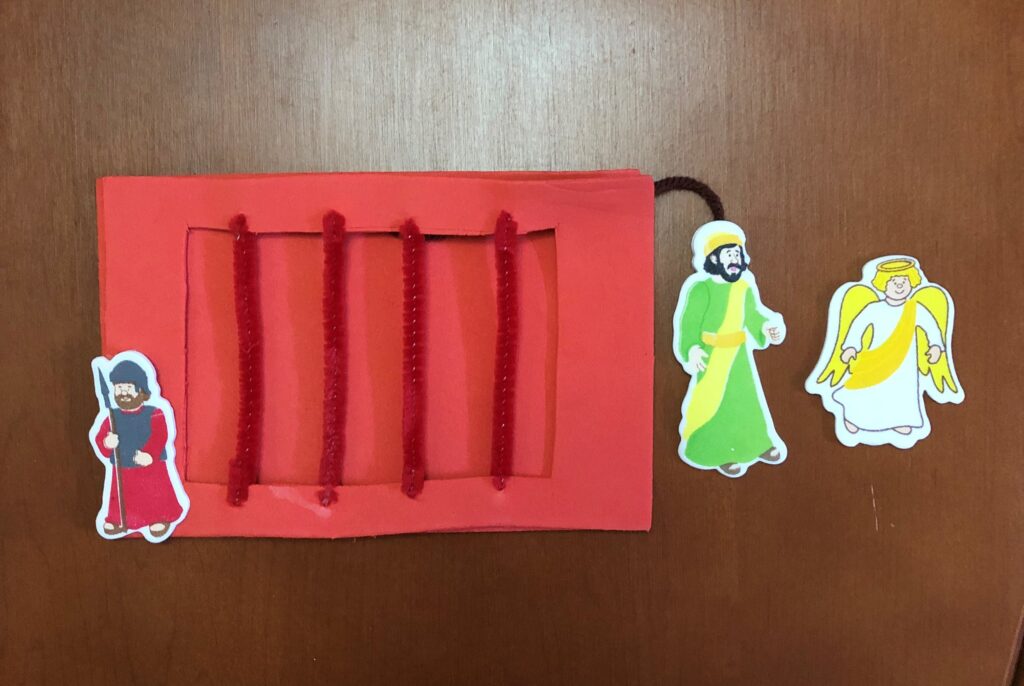
    We made a jail from foam and pipe cleaners. We added stickers of a soldier gurading the jail, and yarn attached to allow Peter to escape from the jail.

    The Biblical Path of Life – Year Thee, Quarter Two is available through Amazon.

  • Called to be Saints

    “Unto the church of God which is at Corinth, to them that are sanctified in Christ Jesus, called to be saints, with all that in every place call upon the name of Jesus Christ our Lord, both theirs and ours:”

    1 Corinthians 1:2

    We most often call people who have trusted in Jesus for salvation “Christians”. This implies that the one who has given that heart and life to Jesus has become Christ-like. Did you realize that in the New Testament, the name “Christian(s)” is only used three times? (“… And the disciples were called Christians first in Antioch” Acts 11:26b.) Another name given for those who have chosen to follow Christ is “disciple”. They are called “disciple” (or disciples) thirty times. Two times they are called “Believers”. However, the most prevalent name is “saints”. We should remember when the Lord sent Ananias to speak to Saul (the persecutor of the new followers of Christ). “Then Ananias answered, Lord, I have heard by many of this man, how much evil he hath done to thy saints at Jerusalem” (Act 9:13). Those in Jerusalem who had trusted in Jesus were called “saints”. Many of the letters in the New Testament are addressed to the “saints.” (See Romans, 1 Corinthians, Ephesians, Philippians, and Colossians.) Saints means “holy, set apart, sanctified, consecrated; its fundamental ideas are separation, consecration, devotion to God; separated morally.” Even more interesting, the name “saint” is interchangeable with the word “holy” in several verses. In these verses, the meaning for saint and holy are the same. It is this definition of the word “saint” or “holy” that each Christian should attain.

    Why is it important to understand that those we call Christians are also known as “saints”? There are specific instructions to those called “saints” or “holy”. Because of this, it is important to know what these instructions are so that we can follow them.

    Paul wrote a letter to the Christians in Rome. “To all that be in Rome, beloved of God, called to be saints: Grace to you and peace from God our Father, and the Lord Jesus Christ” (Romans 1:7). Take notice that the declared that they were “called to be saints”. He does this again in 1 Corinthians. “Unto the church of God which is at Corinth, to them that are sanctified in Christ Jesus, called to be saints, with all that in every place call upon the name of Jesus Christ our Lord, both theirs and ours” (1 Corinthians 1:2). Notice again that Paul declares that “all that in every place call upon the name of Jesus Christ” are “called to be saints”. Called means “called, invited, welcomed, appointed.; the called ones are those who have received the divine call having conformed to God’s saving purposes.” What is one who has been called to be a saint (holy) to do? “1. I beseech you therefore, brethren, by the mercies of God, that ye present your bodies a living sacrifice, holy, acceptable unto God, which is your reasonable service. 2. And be not conformed to this world: but be ye transformed by the renewing of your mind, that ye may prove what is that good, and acceptable, and perfect, will of God” (Romans 12:1-2). Note Paul wrote, “holy, acceptable unto God”. Remember, this means “holy, set apart … its fundamental ideas are separation, consecration, devotion to God; separated morally.” This kind of life is acceptable unto God. How is one to do this?

    Peter gave us instructions. “14. As obedient children, not fashioning yourselves according to the former lusts in your ignorance: 15. But as he which hath called you is holy, so be ye holy in all manner of conversation; 16. Because it is written, Be ye holy; for I am holy” (1 Peter 1:15-16). Remember, this “holy” is the same word as “saint”. Conversation means “behavior, lifestyle.” Once one has been called to be holy (a saint), that life is to change from the old lifestyle and be holy (live a life in devotion to God) in all behavior.

    Paul wrote instructions to the saints (holy) in the letter to the Colossians. “12. Put on therefore, as the elect of God, holy and beloved, bowels of mercies, kindness, humbleness of mind, meekness, longsuffering; 13. Forbearing one another, and forgiving one another, if any man have a quarrel against any: even as Christ forgave you, so also do ye. 14. And above all these things put on charity, which is the bond of perfectness. 15. And let the peace of God rule in your hearts, to the which also ye are called in one body; and be ye thankful. 16. Let the word of Christ dwell in you richly in all wisdom; teaching and admonishing one another in psalms and hymns and spiritual songs, singing with grace in your hearts to the Lord. 17. And whatsoever ye do in word or deed, do all in the name of the Lord Jesus, giving thanks to God and the Father by him” (Colossians 3:12-17). This is a great listing for us as “Saints” today to use to transform our hearts and lives. This will produce a Christ-like lifestyle. We can then be Christians (Christ-like). It will allow us to be able to encourage other Christians as well. Paul gives a great listing to help us understand what kind of life Christ wants us to live and why (“see Ephesians 4:12-32).

    Have you been called to be a saint?

    Do you then choose to live a life that is changed, holy and acceptable unto God?

    Find out how to become a “Saint”.

  • Is Church Important?

    “Not forsaking the assembling of ourselves together, as the manner of some is; but exhorting one another: and so much the more, as ye see the day approaching.”

    Hebrews 10:25

    Jesus’ earthly parents took Him to the Temple when He was a child, and He continued to go as an adult. He not only went to the Temple, but also the synagogue. The synagogues had become common places of Bible teaching and worship. They were started during the Babylonian captivity. Because the people had no Temple in which to worship God, they began to meet in smaller groups for worship and biblical instruction. According to Jesus’ actions, He not only went to the synagogue regularly, but He taught there often as well.

    Jesus’ parents took Him to the Temple the first time shortly after He was born (see Luke 2:27). They took Jesus to the Temple when he was twelve years old (see Luke 2:46). When Jesus was an adult, He still went to the Temple and the synagogue often. “And he came to Nazareth, where he had been brought up: and, as his custom was, he went into the synagogue on the sabbath day, and stood up for to read” (Luke 4:16). It was His custom. There are dozens of verses in the Gospels declaring Jesus went to the synagogue and the Temple.

    Do you remember what often happened when Jesus went to the synagogues? Or even the Temple? When he went to the synagogue in his hometown of Nazareth where He read a portion out of Isaiah, see what the people did. “28. And all they in the synagogue, when they heard these things, were filled with wrath, 29. And rose up, and thrust him out of the city, and led him unto the brow of the hill whereon their city was built, that they might cast him down headlong” (Luke 4:28-29). Not only were they angry with Jesus, they wanted to throw Him off of a cliff to kill Him. “But he passing through the midst of them went his way” (Luke 4:30). Nevertheless, Jesus did not quit going to the synagogue or the Temple. When He went, He often taught the people. When Jesus taught, He made known the need for repentance of sin. The people would then be given the choice – to accept Him or reject Him.

    See a few of the following examples:

    • A ruler of the synagogue believed in Jesus to heal his daughter (see Mark 5:22-24, 35-43).
    • The people did not believe in Jesus (see Mark 6:2-6).
    • The people of Jesus’ hometown of Nazareth rejected Him, wanting to kill Him (see Luke 4:16-30).
    • Jesus taught in the Temple, and many did believe on Him (see John 7:28-31).

    Because Jesus went to the Temple and synagogues often, many of the religious leaders heard and believed in Jesus. “Nevertheless among the chief rulers also many believed on him; but because of the Pharisees they did not confess him, lest they should be put out of the synagogue” (John 12:42).

    Today, we do not go to the Temple, for it has been replaced for Christians with the church building. The church building is the place that Christians go to meet in smaller groups for worship and biblical instruction. (Did you notice that was the same function as the synagogue?) Because Jesus found it important to go to the synagogue often, many recognized who Jesus was during the gathering of people in those locations. It was there that God’s Word was taught. Today, Christians are to attend church often. “Not forsaking the assembling of ourselves together, as the manner of some is; but exhorting one another: and so much the more, as ye see the day approaching” (Hebrews 10:25). Not only are we to attend church to learn more about the Bible, helping us to become better Christians, but for much the same reason that Jesus often visited the Temple and the synagogues – to encourage and teach others about Jesus.

    Admittedly, today’s churches are sometimes difficult places to attend regularly. There are obviously problems in some churches. It may even be difficult to find a true Bible believing and teaching church. However, each Christian is encouraged to go more and more often, for time is short. The synagogues Jesus attended were fraught with religiosity. The leaders taught a religious system and tradition more than God’s Word. Jesus was often challenged, met with confrontation, rejected, and at times even attended at the peril of His life. Yet He continued to frequent them regularly. However, while He was there, He taught the truth. Sometimes He said, “as it is written”, and often He referred to what they had heard and told them, “I say unto you” to correct what they had heard.

    Today, we have the complete written Word of God, and it is important that each Christian knows what the Bible teaches. When a Christian goes to church, one can be pretty confident that there is no fear of death. However, there may be challenges, confrontations, or even rejection. But that is no reason to quit attending church (maybe find a new one!). Jesus attended while He lived here on earth. Christians should be just as faithful, praying God will provide a Bible teaching church to attend. Paul encouraged the men he left in charge at the church in Ephesus. Remember what he taught them: “Take heed therefore unto yourselves, and to all the flock, over the which the Holy Ghost hath made you overseers, to feed the church of God, which he hath purchased with his own blood” (Acts 20:28). The church was purchased with the blood of Christ. It is very important to Him.

    Have you found a Bible teaching church in which to attend faithfully?