Tag: Choice

  • Do You Love the Wages of Unrighteousness?

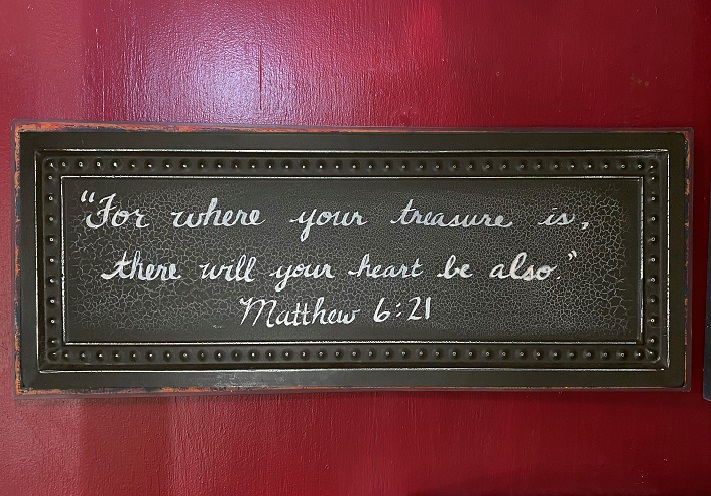
    For where your treasure is, there will your heart be also.
    Matthew 6:21

    Have you ever encountered one called a Christian, who chooses the ways and riches of this present world instead of walking a Christ-like life? This brings to mind a very real man named Balaam from the book of Numbers in the Old Testament.

    Balak, king of Moab, (along with all of the Moabites) were afraid of the Israelites, God’s people. Balak sent for Balaam. He wanted Balaam to curse God’s people. Balak had heard that whomever Balaam cursed was cursed, and whomever he blessed was blessed. Balak sent money with men to give Balaam as payment to come to him and curse the Israelites. God spoke to Balaam and told him not to go with the men and not to curse God’s people, for they were a blessed people. Balaam told the princes of Balak to go home. God would not allow him to go with them.

    Balak sent more men to tell him not to let anything keep him from coming to him – even giving promises of great honor. “And Balaam answered and said unto the servants of Balak, If Balak would give me his house full of silver and gold, I cannot go beyond the word of the LORD my God, to do less or more” (Numbers 22:18). Yet Balaam told the men to stay the night, and wait to see what God would tell him that night. “And God came unto Balaam at night, and said unto him, If the men come to call thee, rise up, and go with them; but yet the word which I shall say unto thee, that shalt thou do” (Numbers 22:20).

    God had already told Balaam not to go. God’s people were only to be blessed, for they were a blessed people. Yet when Balaam was offered honor, a house full of silver and gold, he told the men to wait. Why is that? Do you think he was hoping God would let him go so he could have all of that honor and gold? That night, God told him to go. Do you think that maybe this could have been a test to see what was in Balaam’s heart? Balaam went. “And God’s anger was kindled because he went: and the angel of the LORD stood in the way for an adversary against him …” (Numbers 22:22a). Balaam heard what God said, but he was not listening to what God had told him. God was angry with him for going.

    Balaam rode his donkey, heading to see Balak, king of Moab. The donkey saw the angel of the Lord standing in the way, but Balaam did not. The donkey understood that he was not to continue forward. Balaam was angry at his donkey, and began to hit the donkey when it sat down (Numbers 22:23). The donkey was trying to save his master’s life. God opened the mouth of that donkey, and he spoke to Balaam. And Balaam answered the donkey. He told the donkey that if he had a sword in his hand, he would kill him. “Then the LORD opened the eyes of Balaam, and he saw the angel of the LORD standing in the way, and his sword drawn in his hand: and he bowed down his head, and fell flat on his face” (Numbers 22:31). The angel told Balaam that if it hadn’t been for the donkey, he would have been killed. Why? “behold, I went out to withstand thee, because thy way is perverse before me” (Numbers 22: 32b). Balaam was not supposed to go to speak with King Balak. The angel of the Lord told Balaam to go on to see King Balak, but only speak the words God gave him to speak. Balaam went, told King Balak God’s Words, and blessed God’s people.

    If the events ended here, it might have seemed good. Nevertheless, at some point, Balaam gave King Balak counsel of the way to cause the Israelites to trespass against the Lord (Numbers 31:16). Balaam had not obeyed God. He was to have only spoken the words God gave him to King Balak. He chose to do disobey God, apparently greedy for reward and wages.

    Read the insight about the life of Balaam in the New Testament: “15. Which have forsaken the right way, and are gone astray, following the way of Balaam the son of Bosor, who loved the wages of unrighteousness; 16. But was rebuked for his iniquity: the dumb ass speaking with man’s voice forbad the madness of the prophet. 17. to whom the mist of darkness is reserved for ever. 18. For when they speak great swelling words of vanity, they allure through the lusts of the flesh, through much wantonness 19. While they promise them liberty, they themselves are the servants of corruption: for of whom a man is overcome, of the same is he brought in bondage” (2 Peter 2:15-19). He loved the wages of unrighteousness, and people like him allure through the lusts of the flesh, wantonness, promising liberty, but they are servants of corruption. They end up in bondage. 

    Another insight we read in the New Testament about Balaam: “10. But these speak evil of those things which they know not: but what they know naturally, as brute beasts, in those things they corrupt themselves. 11. Woe unto them! for they have gone in the way of Cain, and ran greedily after the error of Balaam for reward, and perished in the gainsaying of Core. 12. These are spots in your feasts of charity, when they feast with you, feeding themselves without fear: clouds they are without water, carried about of winds; trees whose fruit withereth, without fruit, twice dead, plucked up by the roots” (Jude 1:10-12). It declares that Balaam was in error and went after reward. His end was described as “twice dead, plucked up by the roots.”

    Would you want to be remembered as one who loved the wages of unrighteousness, ending up twice dead?

  • The Choice

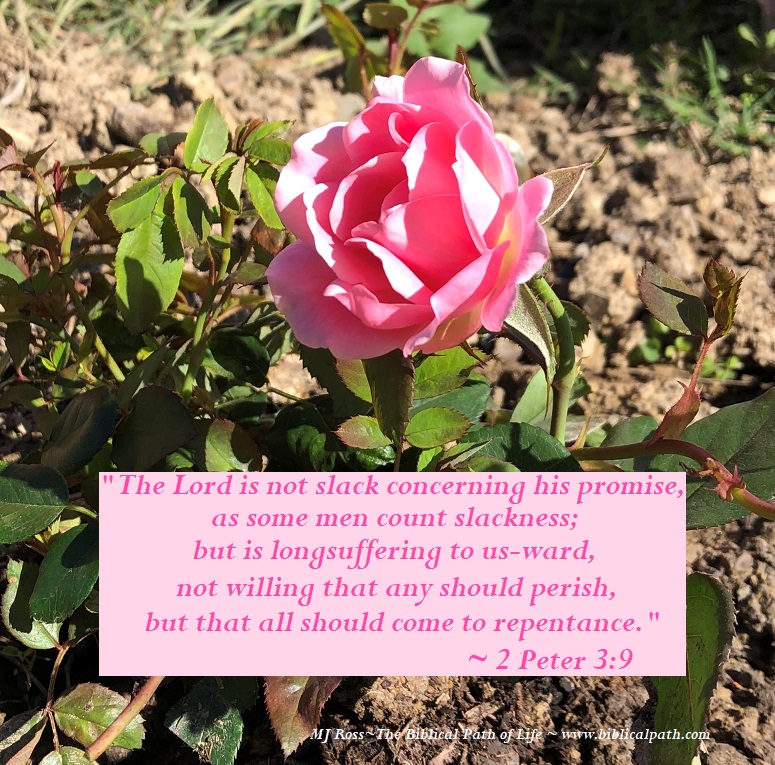
    The Lord is not slack concerning his promise, as some men count slackness; but is longsuffering to us-ward, not willing that any should perish, but that all should come to repentance.
    2 Peter 3:9

    Why do some people believe in Jesus, becoming a Christian, and others do not?

    God gives each person the choice to believe or not.

    One cannot help but remember the brothers Esau and Jacob from the Old Testament book of Genesis. They were twin brothers, yet they were very different. From the events in their lives and the choices they made, one can see that Jacob chose better, for he chose the things of God. Esau on the other hand, chose the things of this world and the satisfaction of his flesh. After hunting one day, Esau came home where Jacob was making some pottage. Esau was willing to sell his birthright for a bowl of pottage – just to satisfy his immediate hunger. After this, Esau took wives of the Hittite’s, not God’s people. Read what his parents thought of this in Genesis 26:35: “Which were a grief of mind unto Isaac and to Rebekah.

    A short time later, Jacob received the blessing instead of Esau. Afterward, see the obedience of one brother, and the disobedience of the other. “6. When Esau saw that Isaac had blessed Jacob, and sent him away to Padanaram, to take him a wife from thence; and that as he blessed him he gave him a charge, saying, Thou shalt not take a wife of the daughters of Canaan; 7. And that Jacob obeyed his father and his mother, and was gone to Padanaram; 8. And Esau seeing that the daughters of Canaan pleased not Isaac his father; 9. Then went Esau unto Ishmael, and took unto the wives which he had Mahalath the daughter of Ishmael Abraham’s son, the sister of Nebajoth, to be his wife” (Genesis 28:6-9). Jacob continued to please his parents (thus pleasing God), and Esau continued to please himself (thus displeasing God).

    Although Esau had many great possessions on this earth (see Genesis 33) and lived in the land of Seir, there is insight given to us in the New Testament. See what God recorded in His Word. “As it is written, Jacob have I loved, but Esau have I hated” (Romans 9:13). We can better understand these words many consider harsh as we read the following verses. “15. Looking diligently lest any man fail of the grace of God; lest any root of bitterness springing up trouble you, and thereby many be defiled; 16. Lest there be any fornicator, or profane person, as Esau, who for one morsel of meat sold his birthright. 17. For ye know how that afterward, when he would have inherited the blessing, he was rejected: for he found no place of repentance, though he sought it carefully with tears” (Hebrews 12:15-17). The condition of Esau seems to be the same condition as one who rejects God and His Word, choosing to please self. Note that this kind of person is one who sins against God (in rejecting the gift of His Son, Jesus). Esau made his choice. Esau gave himself over to the world and its’ ways. When Esau “failed of the grace of God” in this choice, he became a profane person. Esau so hardened his heart “he found no place of repentance, though he sought it carefully with tears.

    Before you harden your heart, rejecting God, read the following encouraging words. “The Lord is not slack concerning his promise, as some men count slackness; but is longsuffering to us-ward, not willing that any should perish, but that all should come to repentance” (2 Peter 3:9). God is not willing that any should perish. No one should harden their heart and not receive the Gospel message of Jesus.

    For I am not ashamed of the gospel of Christ: for it is the power of God unto salvation to every one that believeth …” (Romans 1:16).

    Choose to please yourself, and in doing so fail of the grace of God, or

    Choose to believe in the Gospel of Christ unto Salvation.

    It is your choice!

  • God’s Promise

    For God so loved the world, that he gave his only begotten Son, that whosoever believeth in him should not perish, but have everlasting life.
    John 3:16

    One of the most famous verses in the world is: “For God so loved the world, that he gave his only begotten Son, that whosoever believeth in him should not perish, but have everlasting life” (John 3:16). But has anyone actually stopped to understand what this verse really means?

    God sent His Son, Jesus into the world. He gave His Beloved Son, Jesus, to pay the penalty for each individual person’s sin. The penalty for sin is death. However, because God is a loving and gracious God, He made provision for Jesus to pay for a person’s sin with His life. All one has to do is believe upon Jesus, receiving this great gift. Can you better understand this verse now? “For God so loved the world, that he gave his only begotten Son, that whosoever believeth in him should not perish, but have everlasting life” (John 3:16). Read the next verse in that passage to understand even more so as to why Jesus came: “For God sent not his Son into the world to condemn the world; but that the world through him might be saved” (John 3:17).

    After reading both of those verses, understand that the gift of the pardon for sin is offered – all one has to do is receive it. God wanted each person in the world to be saved from the penalty of sin. This pardon from sin is understood as a promise from God – but only for those who accept that gift.

    What if one chooses to continue in sin, rejecting the gift God offered? “He that believeth on the Son hath everlasting life: and he that believeth not the Son shall not see life; but the wrath of God abideth on him” (John 3:36). This, too, is a promise.

    No one knows what tomorrow may hold. Life is fleeting and short. It is up to each individual to decide. Choose life (with Jesus), or receive the penalty for sin – the wrath of God abiding on him.

    Have you chosen to receive the gift of salvation (life) by believing in Jesus?